SMT Line Integration: What to Prove Before Accepting Equipment
Turn compatibility promises into witnessed board-transfer, data and recovery tests before signing off an SMT line.
5 min read
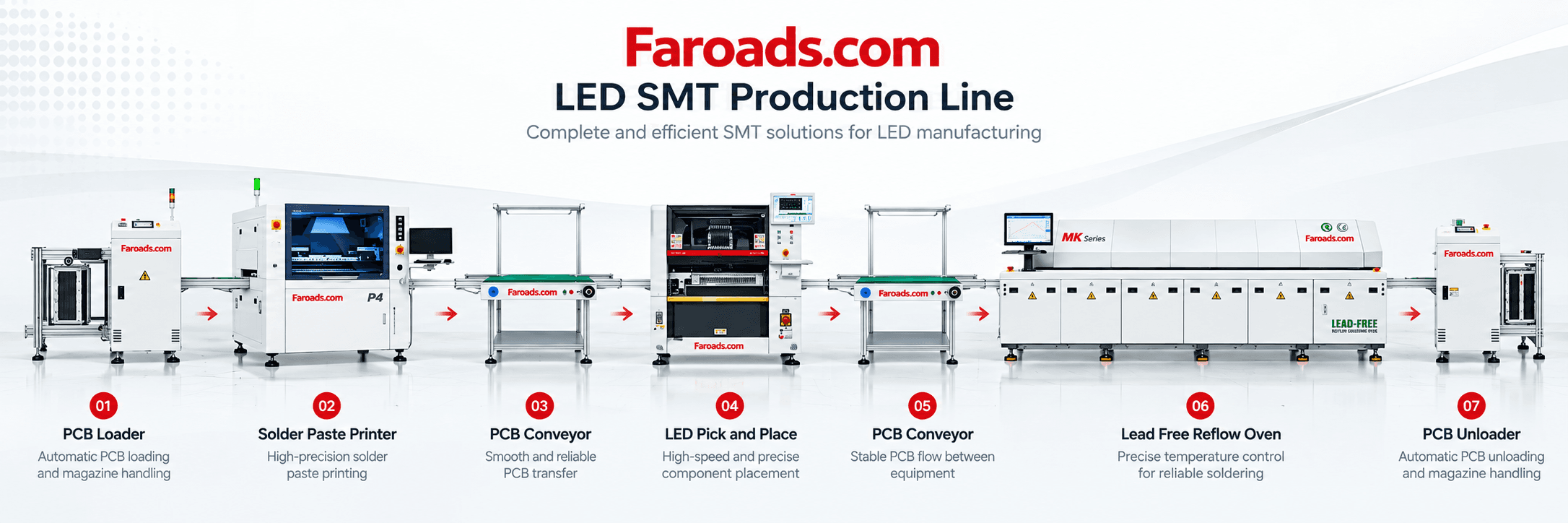
Equipment compatibility should be a demonstrated result, not a phrase in a quotation. A printer, mounter and oven can each operate correctly while the connected line still loses board identity, stops at a transfer or requires manual intervention after a fault.
If you are buying a new line or adding FAROAD equipment to retained machines, write the integration and acceptance plan before committing to the order. The objective is not to create a complicated protocol specification. It is to make every important production handoff someone’s defined responsibility.
Separate three different meanings of integration
Mechanical integration means the board can physically move between neighboring machines. Direction, rail position, height, clearance, support and conveyor settings must align.
Board-flow control means neighboring machines coordinate when a board can transfer. A basic transfer handshake does not establish that a serial number or product recipe follows the board.
Production-data integration means the required identities, results and events reach the correct systems in the agreed form. That might involve machine-to-machine communication, factory software or both.
Price these as separate functions. Otherwise, a quotation describing equipment as “connected” can look complete while leaving the buyer to arrange the data work later. State which functions are mandatory for initial production and which are optional future improvements.
Build an interface register with named owners
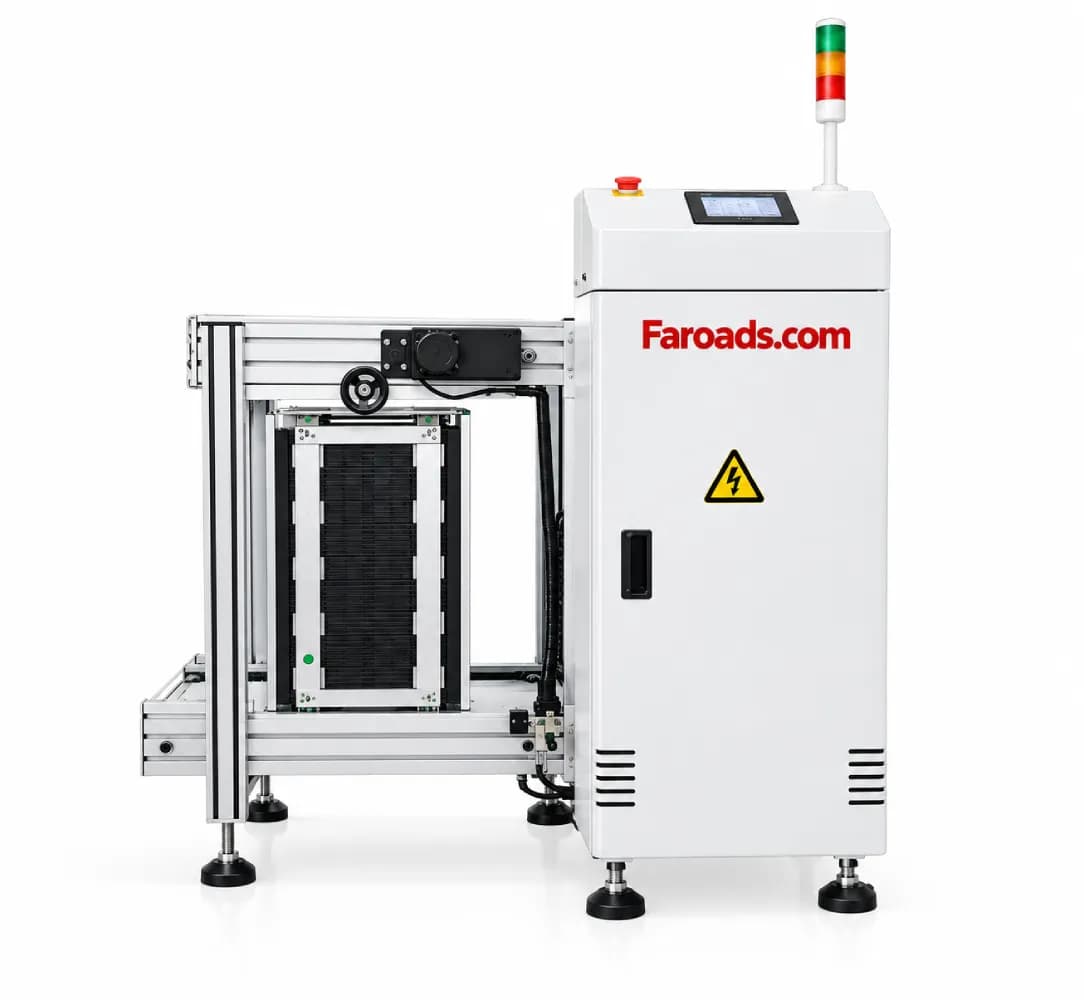
List every adjacent pair of machines, including retained equipment and short conveyors. For each pair, record the model, software version, transfer direction, mechanical requirements, control interface and any board-data exchange required.
Then name the party responsible for completing and testing that boundary. The machine supplier, line integrator and factory IT team may each own different work. A missing owner is a project risk even when all the necessary hardware exists.
For a mixed-vendor retrofit, obtain the retained machines’ interface details early. Include any firmware changes, licenses, cables, gateways or engineering work in the commercial scope. If compatibility depends on an option, identify its part or software designation rather than leaving it as a general promise.
Know what SMEMA and Hermes do—and what they do not prove
SMEMA is commonly used for basic board-transfer coordination. It should not be interpreted as a guarantee of product identity, automatic recipe selection or a complete factory traceability record.
The official Hermes Standard overview describes IPC-HERMES-9852 as an open protocol using TCP/IP and XML to exchange board-related information between machines. That provides a richer basis for board-flow management, but actual functions still depend on the participating implementations.
If Hermes is required, ask for the supported version, relevant options and exact data fields. Specify the behavior you need: for example, maintaining board identity across a transfer or supplying dimensions for an agreed width-setting function. Do not assume a protocol label transfers a complete placement program or proves compatibility with your MES.
For older equipment, a gateway may be a possible integration method. It still needs an explicit design for identity tracking, manual board removal and exception recovery. An adapter is not a substitute for testing the production sequence.
Anchor the FAROAD scope to the ordered configuration
The FAROAD MS-10 product page lists SMEMA interfaces and describes TCP/IP-based MES collection and upload with QR code or barcode recognition. Those descriptions are useful requirements-discussion starting points, not proof of every requested connection.
Ask which functions are included in the quoted configuration, what information is exchanged and how records are associated with boards. Obtain an example output or an agreed data definition where traceability matters.
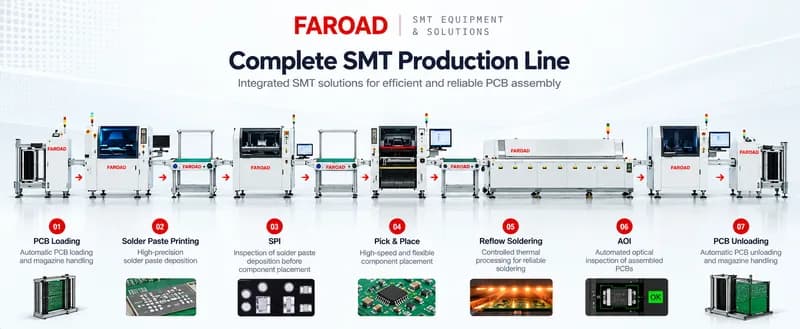
The complete SMT line solution describes configurable digital functions and consideration of existing equipment. Turn the intended functions into an equipment-specific scope. Have the proposal identify where boards are first identified, which stations preserve that identity and which factory system stores the resulting records.
Agree factory acceptance before the machines ship
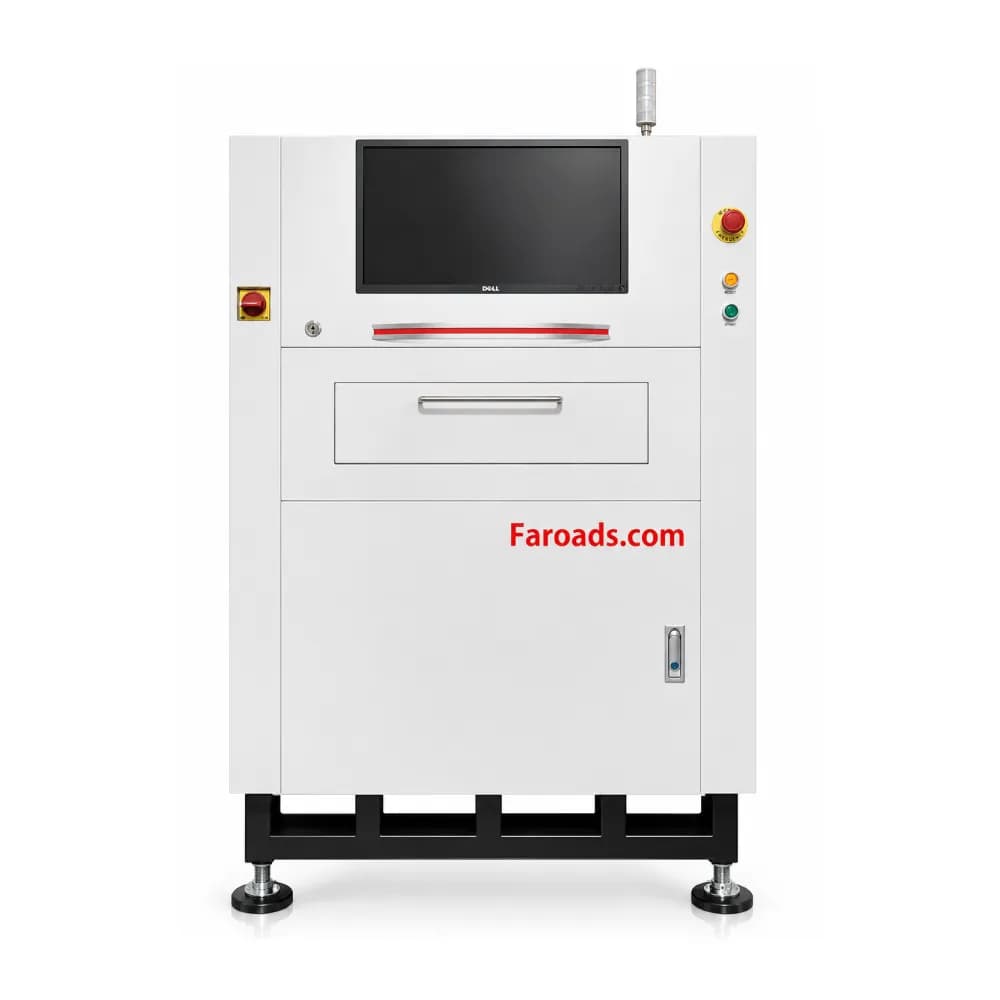
Factory acceptance testing, often called FAT, should address the risks that can reasonably be tested at the supplier’s location. Define the sample panels, configured machines, software versions, operator tasks and evidence to be retained.
Useful transfer tests include normal flow, a receiving machine that is not ready and controlled restart after a stopped transfer. Include the smallest and largest agreed panels. If the final neighboring machine is unavailable, document what simulation was used and what remains to be demonstrated on site.
For data functions, follow several identified panels through the proposed route. Compare the physical sequence with the recorded sequence. Test an unreadable identifier or a deliberately selected wrong product using a safe, agreed procedure. Define whether the required response is a hold, alarm or authorized manual resolution.
Keep safety-related tests under qualified supervision and the manufacturer’s procedures. Acceptance planning is not permission to defeat interlocks or bypass protective functions.
Repeat the right tests after installation
Site acceptance testing, or SAT, checks the delivered installation in its actual environment. Reconfirm interfaces after transport, positioning and utility connection. Use the factory’s real network and production systems for the functions that depend on them.
An illustrative acceptance condition could be: “For the agreed sample sequence, each scanned panel must retain the same identifier through the specified stations and appear once in the receiving record.” That is a template, not a universal standard. Your team must define the sequence length, required fields, allowable exceptions and independent checking method.
Repeat recovery scenarios that matter to the site, such as network interruption or authorized removal of a board. Agree how the line is brought to a safe state and how production resumes without mismatching boards and records. A successful normal run alone does not establish recoverability.
Give exceptions a commercial owner
Separate production-blocking defects from minor documentation or convenience items. For every open item, record the required correction, owner, due date, retest and acceptance authority.
Agree contractual milestones with your commercial and legal teams. The test plan should identify what evidence supports acceptance; it should not invent payment terms after equipment arrives. If part of the integration is deferred, state the temporary operating procedure and its staffing or quality implications.
Also include program backups, configuration records, access arrangements and operator training. Your factory should know how to restore the approved setup and who may change it. A line that only works while the commissioning engineer is present is not a complete operational handover.
Send an integration brief with the RFQ
Provide the equipment list, retained-machine details, board envelope, layout, desired transfer behavior, identity requirements and destination software. Add a short list of required exception and recovery tests.
Request a FAROAD integration proposal that assigns ownership to each boundary and includes FAT, SAT and documentation scope. This makes competing proposals easier to compare and gives acceptance a clear endpoint: the agreed production functions working together, with evidence your team can review.