LED Pick-and-Place Machine or Standard SMT Mounter? How to Choose
Decide between LED-specific placement and a general-purpose mounter by comparing your component mix, board format, feeders and nozzle needs.
5 min read
LED lighting manufacturers face a choice that most electronics assemblers never consider: buy a placement machine designed specifically for LED products, or buy a general-purpose SMT mounter and set it up for lighting boards. Both can place LEDs. The right answer depends on what else is on the board, how the boards are shaped and how many different products the line must run.
This article focuses on that machine-class decision. If your main concern is fitting long panels through the whole line, see our separate guide on long-board LED SMT lines.
What makes an LED placement machine different
A dedicated LED mounter is optimized for a narrow job done very often: placing large quantities of the same lamp-bead packages on wide or long boards. Precision requirements for typical LED packages are generally less demanding than for fine-pitch ICs, so the design emphasis shifts to speed, board size and stable handling of many identical parts.
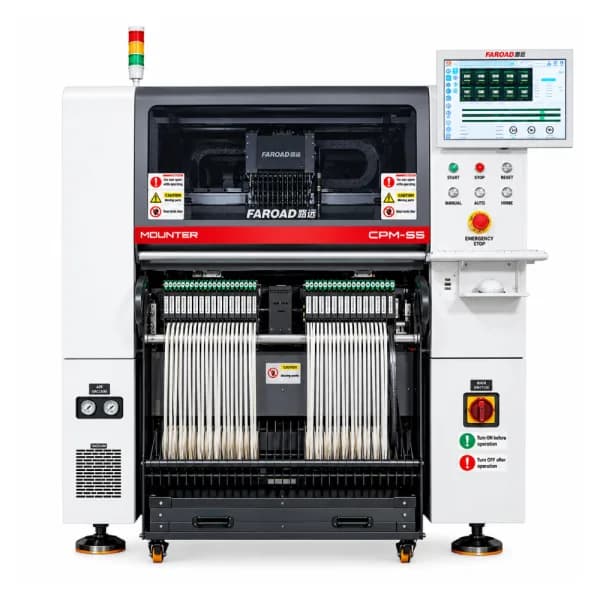
A general-purpose mounter is designed for breadth. It typically handles smaller passives, fine-pitch ICs, larger packages, trays and tubes, with tighter placement accuracy. It may be slower on a board full of identical LEDs, but it can place almost everything else on the bill of materials.
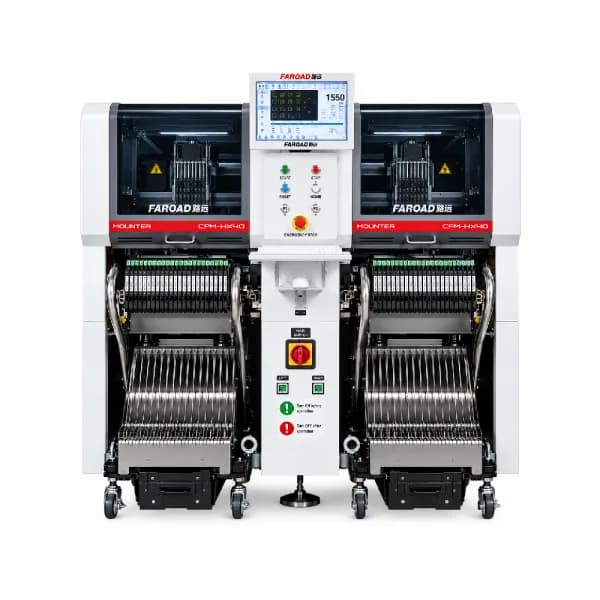
FAROAD's own range shows the split clearly. The LED pick-and-place category groups high-speed lamp-bead machines, a multi-functional DOB machine and a lens mounter, while the general placement range includes modular precision and high-speed machines.
Compare the published specifications side by side
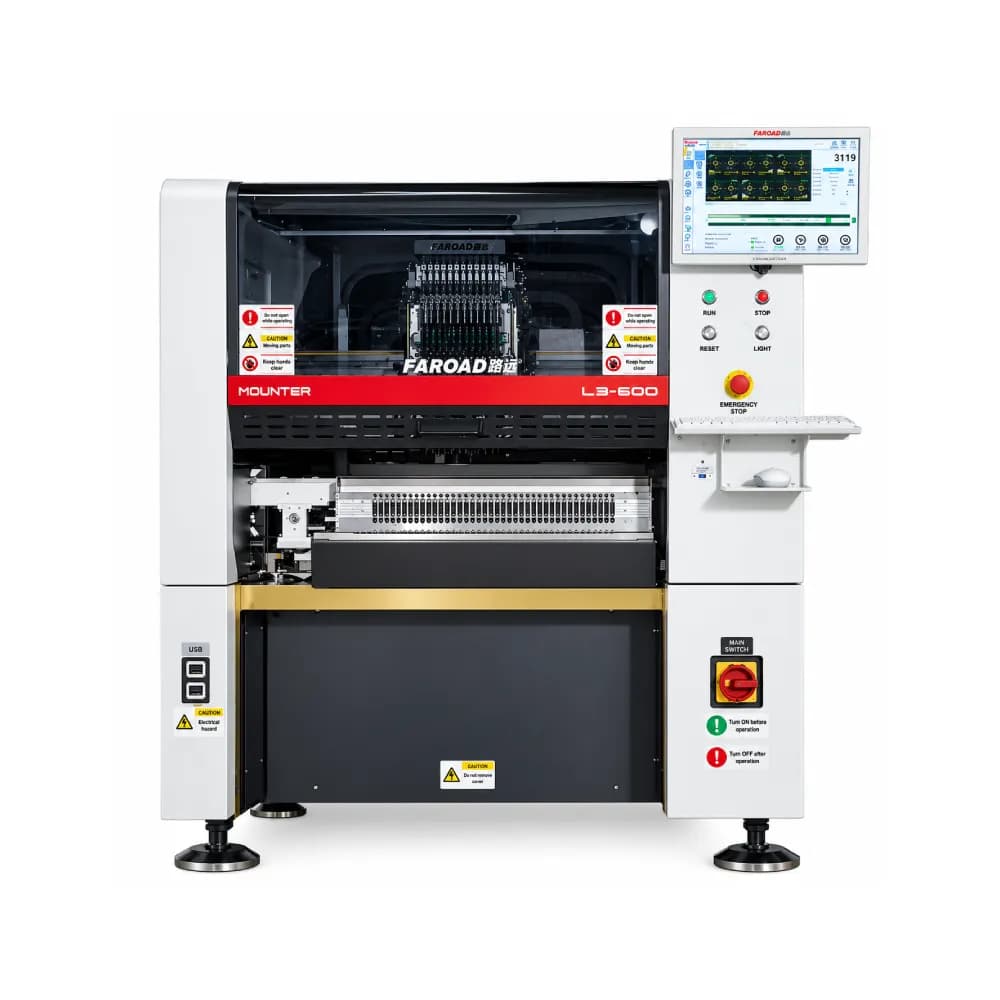
Product specifications illustrate the trade-offs. These are optimum-condition figures from FAROAD product pages, not guaranteed output for your boards.
CPM-L3-600 lamp-bead machine: 70,000 CPH optimum (IPC-9850), ±0.08 mm placement accuracy, components from 1.0 × 0.5 mm (imperial 0402) to 12 × 12 mm, 12-nozzle head, 37 feeder stations in 8 mm terms, boards up to 600 × 400 mm. The CPM-L3-1200 extends board length to 1200 mm.
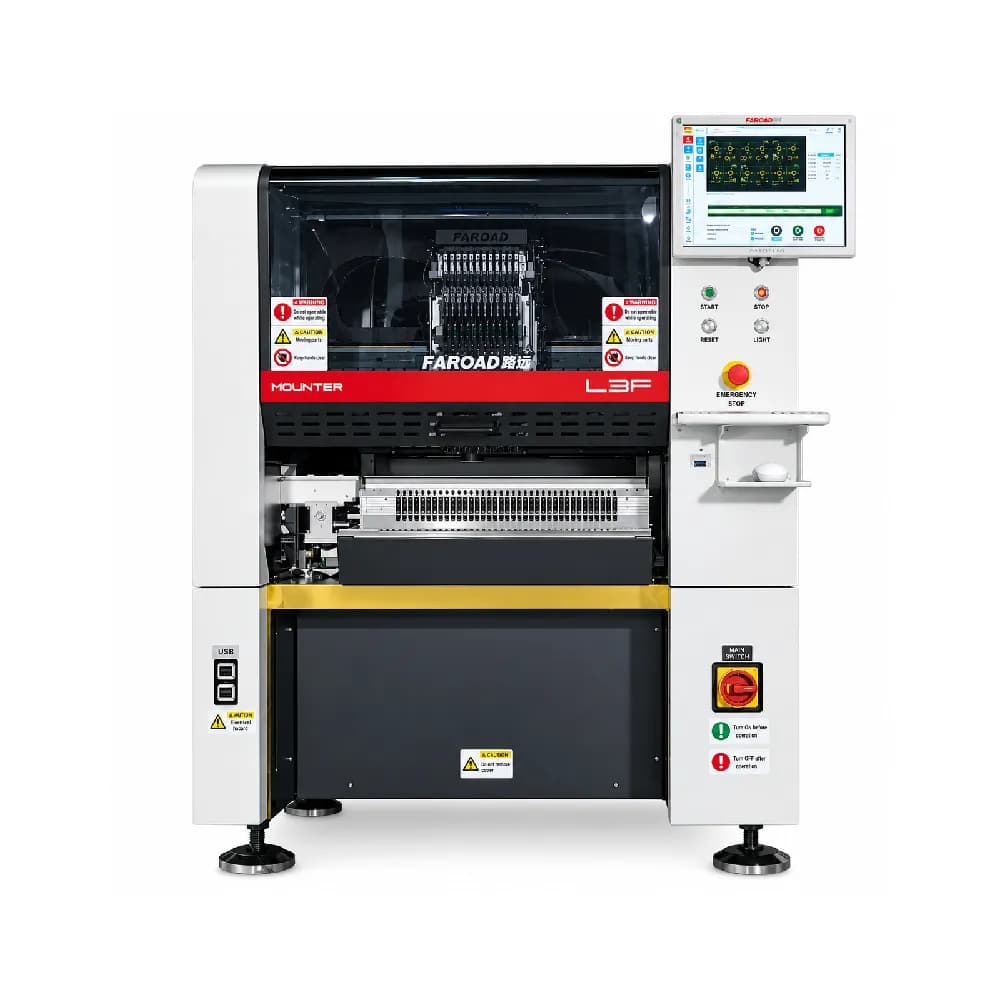
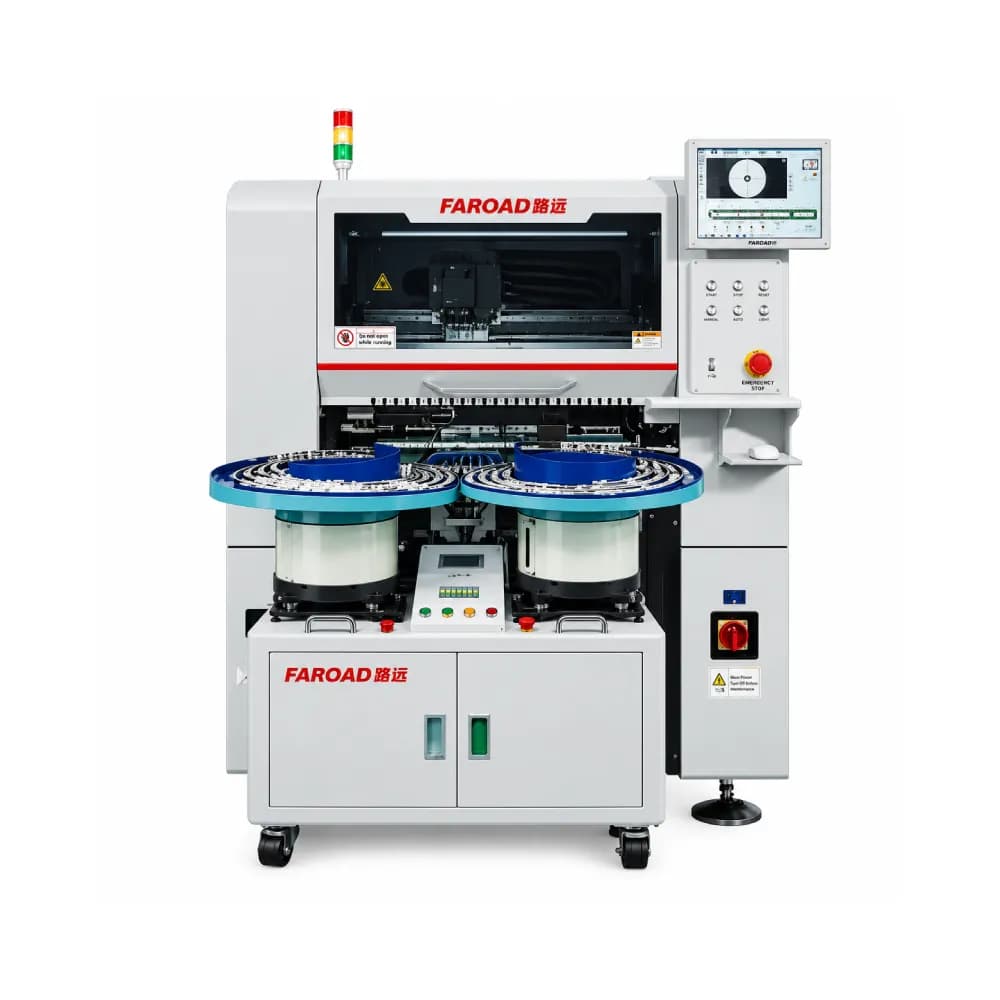
CPM-L3F multi-functional DOB machine: 28,000 CPH optimum, ±0.08 mm, components from imperial 0402 to 20 × 20 mm and up to 24 mm thick, 8-nozzle multi-function head, 20 feeder slots, boards up to 600 × 400 mm in one segment or 1200 × 400 mm in two segments.
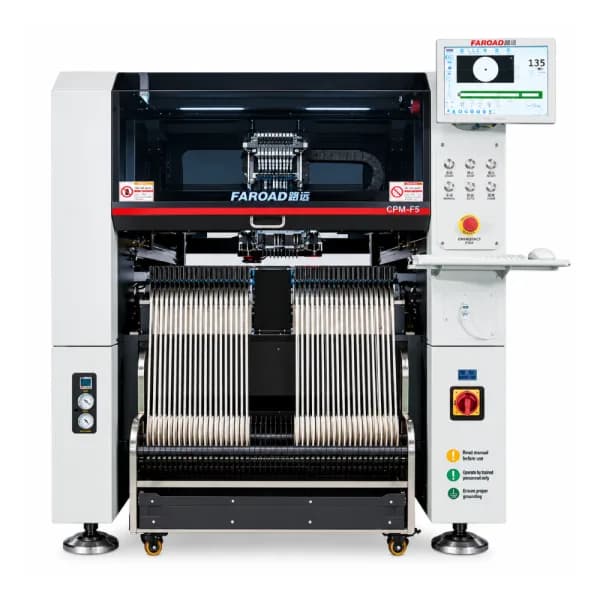
CPM-F5 general modular mounter: 42,000 CPH optimal with its high-speed head, ±0.035 mm high-speed head accuracy, components from imperial 0201 up to 40 × 40 × 25 mm on the multifunctional head, tape widths up to 88 mm plus tube and optional tray feeding, boards up to 510 × 410 mm.
The pattern is clear. LED-specific machines trade fine-pitch capability and package range for speed on lamp beads and long-board handling. The general mounter covers a much wider component range on shorter boards.
Start with the bill of materials
List every part on your typical lighting products and sort them into three groups:
LED packages. The lamp beads themselves, usually many placements of one or a few part numbers.
Driver and control parts. Resistors, capacitors, rectifiers, ICs, inductors and connectors, especially on driver-on-board (DOB) designs.
Special parts. Lenses, tall electrolytic capacitors, odd-form connectors or anything supplied in trays or tubes.
If nearly every placement is an LED package and driver parts are few and simple, a high-speed LED machine is a strong candidate. If the board includes a full driver circuit, check whether a multi-functional LED machine covers those parts, or whether a general mounter is needed alongside or instead. If you also mount lenses, treat that as a separate process requirement; FAROAD offers the CPM-L3T lens mounter for that role.
Check board format and handling
Lighting boards are often long, narrow or supplied as large panels. Confirm the maximum board length each candidate handles in a single pass, and whether long boards are mounted in sections. Ask how the board is supported and clamped during placement, since flexible or thin boards can move.
A general mounter may need an extended-board option or may not accept your longest boards at all. Verify this with your actual panel drawing before comparing prices.
Nozzles and feeders matter for LEDs
LED packages can be damaged by unsuitable pick-up tools, especially domed or silicone-lens types. The ams OSRAM application note on LED pick-and-place tools describes how feeding, machine settings and nozzle design interact, recommends nozzle designs for its own LED packages, and notes that electric feeders generate less vibration than pneumatic ones.
Ask any supplier which nozzles are proposed for your exact LED packages, whether custom nozzles are available, and how feeders are configured. Check the feeder count against your number of part numbers per product, including reels for different brightness or color bins if you run them separately.
Think about product mix and future work
A factory that makes only lighting products for the foreseeable future can benefit from LED-specific speed. A factory that also builds controllers, power supplies or other electronics may get better long-term value from general-purpose capacity, or from a combination of one LED machine and one general mounter.
Map your next two to three years of products before deciding. Equipment that fits today's boards but cannot place next year's driver ICs can force an early second purchase.
Frequently asked questions
Can a standard SMT mounter place LEDs? Yes, if it handles your board size and the right nozzles are used. The question is whether it does so efficiently for boards dominated by LED placements.
Do LED machines need high accuracy? Typical LED packages are less demanding than fine-pitch ICs, which is why LED machines list looser accuracy than general mounters. Check the accuracy required by your own pad design and parts.
What is a DOB pick-and-place machine? DOB means driver on board. A DOB machine, such as the FAROAD CPM-L3F, uses a multi-function head intended to place LEDs and driver components on the same board.
Should I run a trial before buying? Yes. Use your own boards, LED packages and driver parts, and record actual cycle time and placement results.
Get a configuration based on your boards
Send your board drawings, BOM with LED package types, volumes and product roadmap, and request a FAROAD placement recommendation. Ask for LED-specific and general-purpose options to be compared against your actual product mix.