Energy-Efficient Reflow Ovens: What to Compare Before You Buy
How to compare reflow ovens on electricity, heat loss, idle behavior and utilities, using comparable data instead of brochure labels.
5 min read
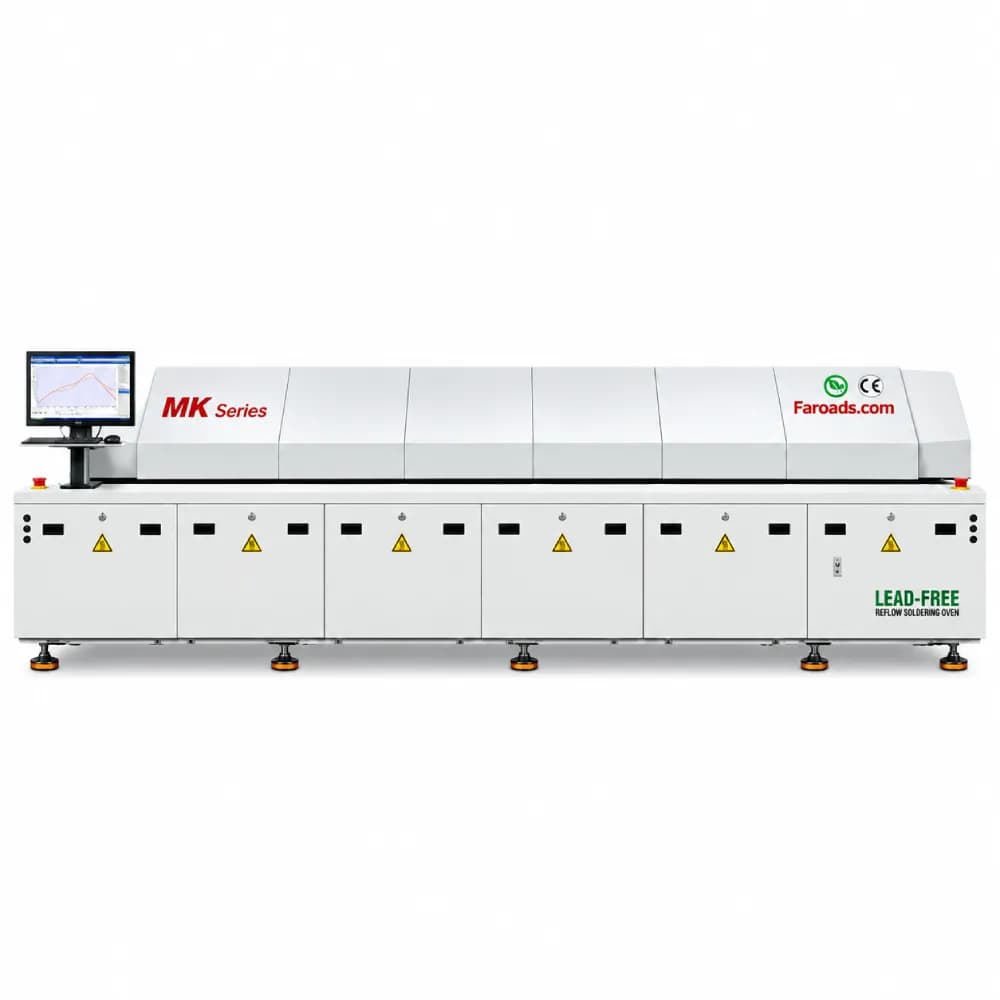
A reflow oven is often the largest continuous electrical load on an SMT line. It heats up before the first board arrives, holds temperature through breaks and changeovers, and pushes hot air through an exhaust system all shift. Over the life of the equipment, that electricity can matter as much as several options on the purchase order.
Many suppliers describe their ovens as energy-saving. The label is not the problem; the lack of comparable data is. This guide explains which figures to ask for, which design features influence consumption, and how to compare two ovens without being misled by numbers measured under different conditions.
What "energy-efficient" should mean on a quotation
For a buyer, an energy-efficient oven is one that delivers the required thermal profile on your boards while drawing less electricity across a realistic shift. That definition has three parts: the profile must be met, the boards must be yours, and the shift must include warm-up, idle time and product changes.
An oven that saves power by struggling to reach peak temperature on a heavy board has not saved anything. Process capability comes first. Energy is the tie-breaker between ovens that can both do the job. If you are still deciding oven length, lane count or atmosphere, settle that first; our reflow oven buying guide covers those choices.
Read starting power and operating power separately
Specification sheets often list two power figures, and they answer different questions.
- Starting power is the load while the oven heats up from cold. It mainly affects electrical service sizing, breaker selection and, in some tariffs, demand charges.
- Normal operating power is the typical load once the oven is at temperature. It drives most of the energy bill.
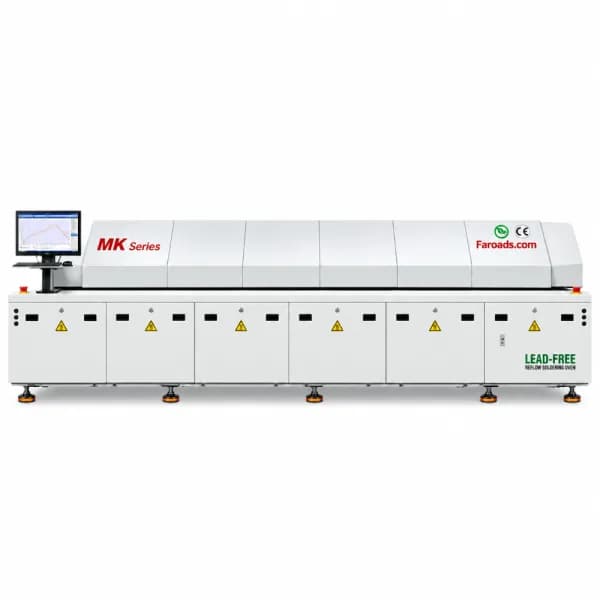
As an example of how these appear in practice, the FAROAD MK-8 page lists a segmented starting power of 28 kW and a normal operating power of 7 kW, with a heat-up time of approximately 15 minutes. Ask every supplier to state both values for the exact configuration quoted, and to say under what load the operating figure was recorded. An empty oven at a moderate recipe will draw less than a loaded oven running a demanding lead-free profile.
Design features that reduce heat loss
Several design choices affect how much heat an oven wastes:
- Insulation. Thicker or better insulation keeps heat inside the tunnel, lowers the external surface temperature and reduces the load the heaters must replace.
- Air circulation efficiency. Well-designed blowers and air paths transfer heat to the board more effectively, so less heater power is needed to hold the profile.
- Heater module design. Modules that are easy to maintain stay efficient longer, because contaminated or damaged elements waste energy.
- Flux management. Flux residue on internal surfaces affects airflow and heat transfer. An effective recovery system helps the oven stay close to its original performance between cleanings.
FAROAD's MK series pages describe drawer-type heating modules, a built-in booster air drum for air circulation, an upgraded flux recovery system and heat insulation that is 50% thicker. Treat features like these as reasons to ask for measured data, not as a substitute for it.
Idle, standby and warm-up habits
Real shifts include gaps: breaks, material shortages, program changes and end-of-shift wind-down. During those periods an oven can keep consuming energy while producing nothing.
Ask each supplier what the controller can do during idle time. Useful questions include whether the oven can lower setpoints or blower speed automatically when no boards arrive, how long recovery to production temperature takes, and whether start-up can be scheduled before the shift so operators are not waiting. A shorter, predictable warm-up also reduces the temptation to leave the oven running overnight.
Exhaust, cooling and other utilities
Electricity is only part of the utility picture. Reflow ovens need exhaust extraction, and the air they remove has often been heated or cooled by your building systems. Ask for the recommended exhaust flow and connection details so your facilities team can estimate the HVAC impact.
Cooling zones, any external water chiller and compressed air for auxiliary functions should be listed too. If you are considering a nitrogen atmosphere, keep that cost separate; our nitrogen reflow oven investment guide covers gas consumption on its own terms.
How MK and MS ovens are positioned
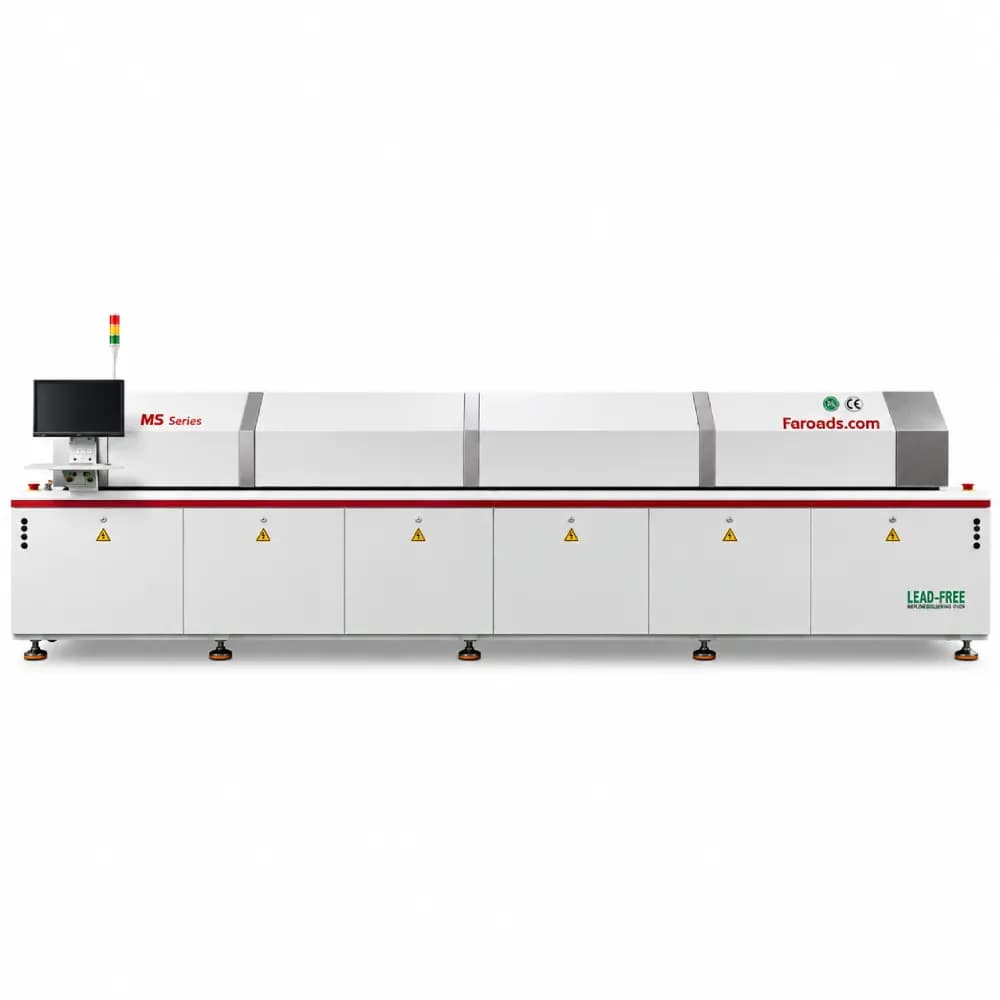
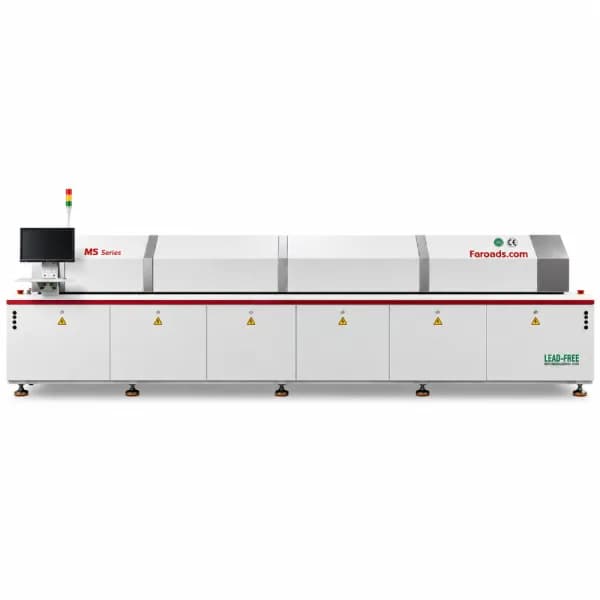
FAROAD groups its energy-saving reflow ovens as the MK series: PC+PLC-controlled lead-free hot air ovens in 8, 10 and 12 heating-zone versions, with single- and dual-track configurations. The MS series is positioned as high-end lead-free ovens with nitrogen-saving rosin recovery, and its pages list an automatic power monitoring and recording system, which is useful if you want to verify consumption over time.
The right series depends on your profile requirements, atmosphere and line integration needs, not on the series name alone. Ask for both if you are unsure and compare them with the same method.
An illustrative running-cost comparison
This example is illustrative; none of the numbers are measured FAROAD data.
Suppose Oven A averages 9 kW over a representative shift and Oven B averages 7 kW for the same boards and profiles. The line runs 4,000 hours a year. The 2 kW difference equals 8,000 kWh per year. At an illustrative electricity rate of $0.12 per kWh, that is $960 per year before demand charges or HVAC effects.
Use your own tariff rather than a national figure. Commercial and industrial rates vary widely by state, and the U.S. Energy Information Administration publishes average electricity prices by state and sector as a starting reference. Canadian and Mexican buyers should use their own utility's published tariff.
Questions to put in your RFQ
- Starting power and normal operating power for the quoted configuration.
- The load condition and recipe behind the operating figure.
- Heat-up time from cold to production temperature.
- Available idle or standby functions and recovery time.
- Exhaust flow, cooling and other utility requirements.
- How energy use can be recorded once the oven is installed.
Frequently asked questions
Is the oven with the lowest power rating always cheapest to run? No. Ratings are often measured under different conditions. Compare consumption on the same boards, profile and shift pattern.
Do more heating zones use more energy? Longer ovens usually have higher starting and operating loads, but they may also allow faster conveyor speeds. Compare energy per board, not just per hour.
Does dual-track change energy use? A dual-track oven of the same length can process more boards per hour, which may lower energy per board if both lanes stay busy.
Can we verify consumption after installation? Yes. Ask whether the oven records power data, or install a separate meter on its supply so you can compare real use against the quotation.
Request utility data with your oven quote
When you request a quotation, include your board sizes, profile requirements, expected hours and local supply details. Ask FAROAD to state the power, heat-up and utility data for the exact oven configuration so you can compare running cost on equal terms.