Inline vs Batch Reflow: When Is a Production Oven the Right Next Step?
How to tell when batch or benchtop reflow is holding your shop back, and what moving to an inline conveyor oven changes in output, consistency and facility planning.
5 min read
Many electronics teams begin soldering surface-mount boards in a batch oven. A drawer or chamber unit is compact, affordable and flexible, which makes it a sensible choice for prototypes and small runs. As orders grow, the same oven can become the slowest and least predictable step in the shop.
This guide explains how the two oven classes differ, where batch reflow still makes sense, and which signs indicate that an inline conveyor oven should be your next investment.
How batch and inline ovens differ
A batch oven heats a stationary load. Boards go into a chamber, the oven runs a time-based profile, and the boards come out once the cycle and cool-down are complete. One recipe runs at a time, and the next load waits.
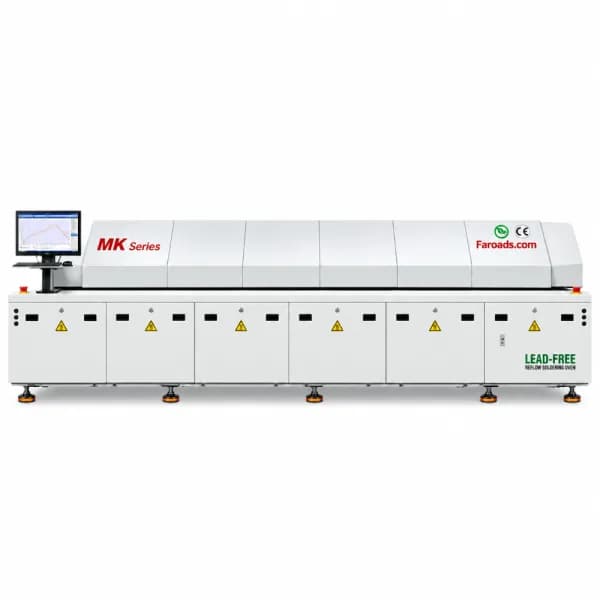
An inline oven works differently. Boards travel on a conveyor through a series of independently controlled heating zones and then through cooling zones. Each zone holds its own temperature, and the board's profile comes from its speed through the tunnel. Boards can follow one another continuously, so the oven is processing several at once.
That difference shapes everything else: throughput, how repeatable each board's profile is, how much operator handling is involved and how the oven connects to the rest of the line.
Where a batch oven still fits
Batch reflow remains a reasonable choice in several situations:
- Prototype and engineering builds with frequent profile experiments.
- Very low volumes where boards are placed by hand or on a desktop machine.
- Specialty work, such as rework or small fixtures, that would complicate a production line.
- Facilities that cannot yet provide the space, three-phase power or exhaust a production oven needs.
Keeping a batch unit for engineering work after buying an inline oven is also common. It frees production capacity from experiments.
Signs you have outgrown batch reflow
Watch for these patterns:
- Boards wait for the oven. Placement finishes faster than reflow can process the output, and work-in-process piles up.
- Results vary by position or load. Boards in different parts of the chamber, or in a fuller load, show different solder results.
- Operators spend time loading and unloading instead of running other parts of the process.
- Larger or heavier boards are hard to profile in the available chamber.
- Customers expect process records that are difficult to produce from manual batches.
- You are planning a production placement machine. If you are already comparing desktop and production pick-and-place options, the oven decision belongs in the same review.
Any one of these can be managed for a while. Several together usually mean the oven is limiting the business.
What an inline oven changes in daily production
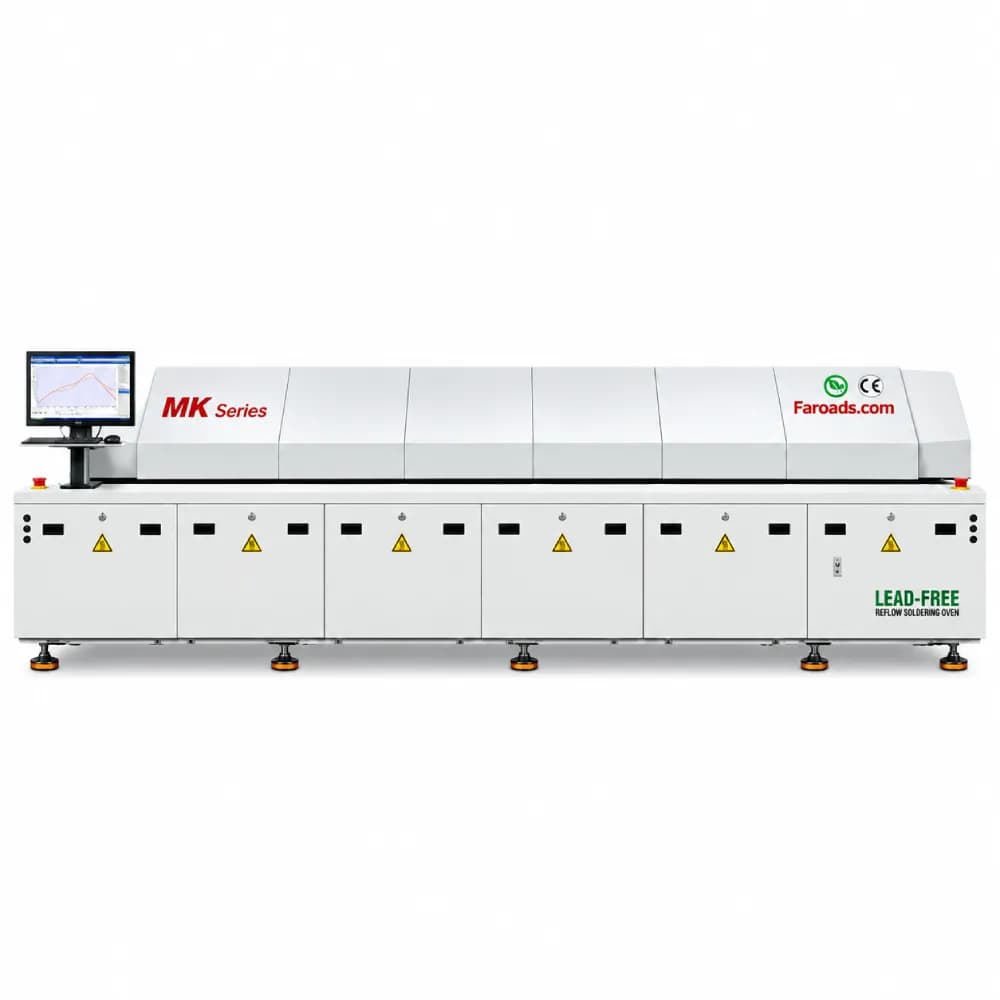
The first change is flow. Boards enter as they are ready and leave in sequence, so placement and reflow can work as one process instead of two stations with a queue between them.
The second is consistency. Because every board passes through the same zones at the same speed, each board experiences essentially the same profile. That makes it easier to keep results stable and to document process settings.
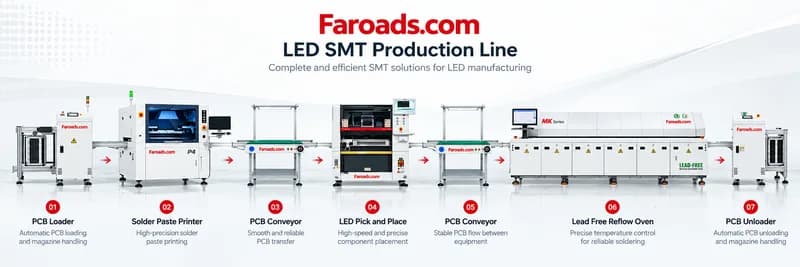
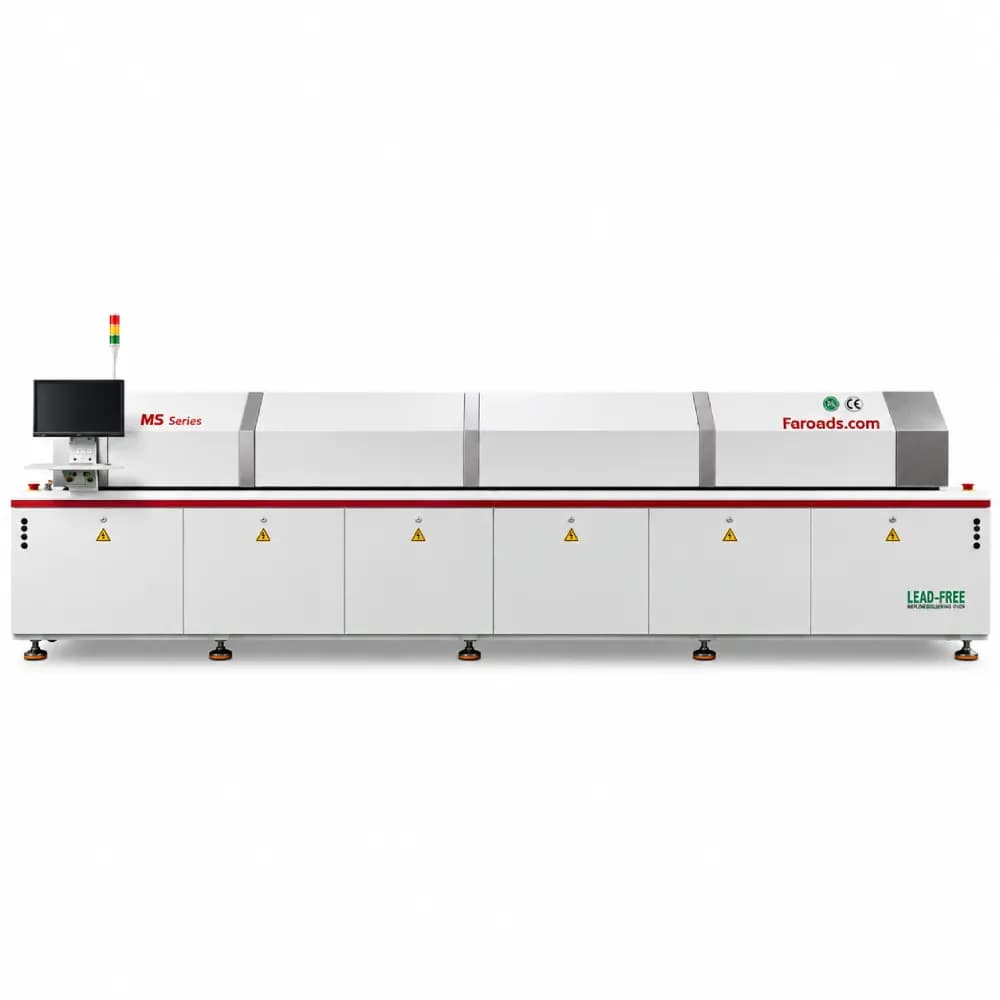
The third is integration. Production ovens are designed to connect to upstream and downstream equipment. For example, FAROAD MS series pages list SMEMA interfaces for line connectivity, conveyor speeds of 300 to 2,000 mm per minute, and MES data upload over TCP/IP with barcode or QR code recognition. Features like these matter once the oven is part of a line rather than a standalone station.
Space, power and facility implications
Moving to inline reflow is a facility project as well as an equipment purchase. Use published figures to plan early. The FAROAD MS-8, an 8+8 zone oven with a 3,142 mm heated length, lists overall dimensions of 5,250 × 1,450 × 1,540 mm, a weight of approximately 2,600 kg and a three-phase 380V 50/60 Hz supply.
Check these points with your facilities team and electrician before ordering:
- Floor space for the oven plus access for maintenance and board handling at both ends.
- Floor loading, delivery route and rigging into the building.
- Electrical service for the required voltage and phase, including any transformer.
- Exhaust ducting and the effect on building ventilation.
Matching the oven to the rest of the line
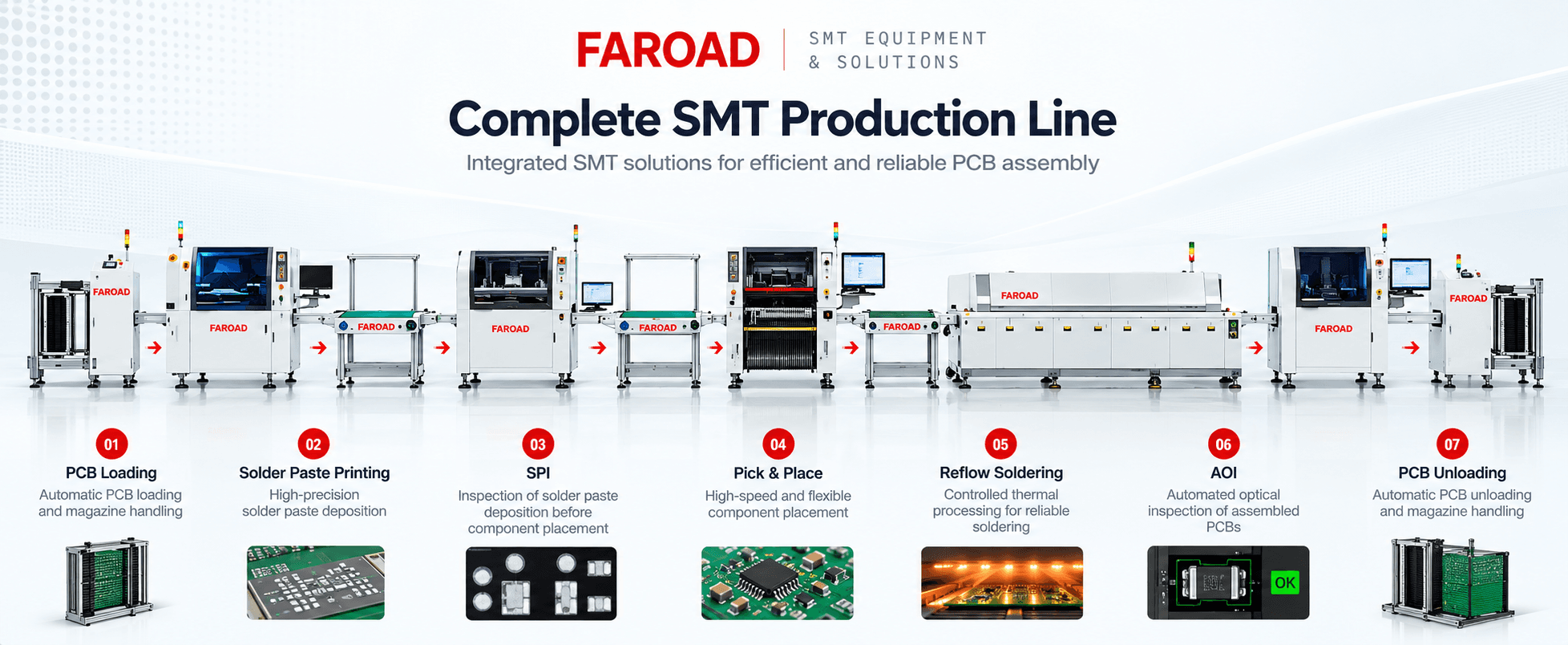
An inline oven should be sized for the line it will serve, not just today's batch volume. Consider the board widths you need now and expect later, component heights above and below the board, and whether single- or dual-track transport fits your plans. These sizing decisions are covered in our reflow oven buying guide, which is the natural next step once the oven class is settled.
A simple way to test the decision
The figures below are illustrative only.
Suppose your batch oven processes four boards per cycle, and each cycle including loading and cool-down takes 10 minutes. That is about 24 boards per hour at best. Now consider an inline oven running at 800 mm per minute with boards spaced every 250 mm along the conveyor. In theory it can accept 3.2 boards per minute, or roughly 190 per hour, if the upstream process can keep it supplied.
The exact numbers will differ for your boards and profiles. The point is to compare the oven's capacity with what your placement process can deliver, then decide whether reflow is the constraint.
Frequently asked questions
Is an inline oven always better than a batch oven? No. For prototypes and very low volume, a batch oven can be the more practical choice. Inline ovens earn their place when flow, consistency and integration matter.
Can a small shop justify an inline oven? It depends on volume, board size and growth plans. If placement output already exceeds batch reflow capacity, the case is often stronger than expected.
Does FAROAD sell benchtop or batch reflow ovens? No. The reflow ovens currently listed on Faroads.com are inline production ovens: the MS, MK and LED-specific MK-MAX series.
What information is needed to size an inline oven? Board dimensions and thickness, component heights, solder paste and profile requirements, target output and available floor space and power.
Plan your first production oven
If your shop is ready to move beyond batch reflow, send your board details, current and expected volumes and facility information, and request a quotation. FAROAD can recommend an inline oven length and configuration, such as the MS-8, based on your actual production plan.