Inline or Offline AOI? Choosing Where Optical Inspection Belongs in Your Line
How to decide between inline and offline AOI, whether inspection belongs before or after reflow, and how to check that an inline AOI machine can keep pace with your line.
4 min read
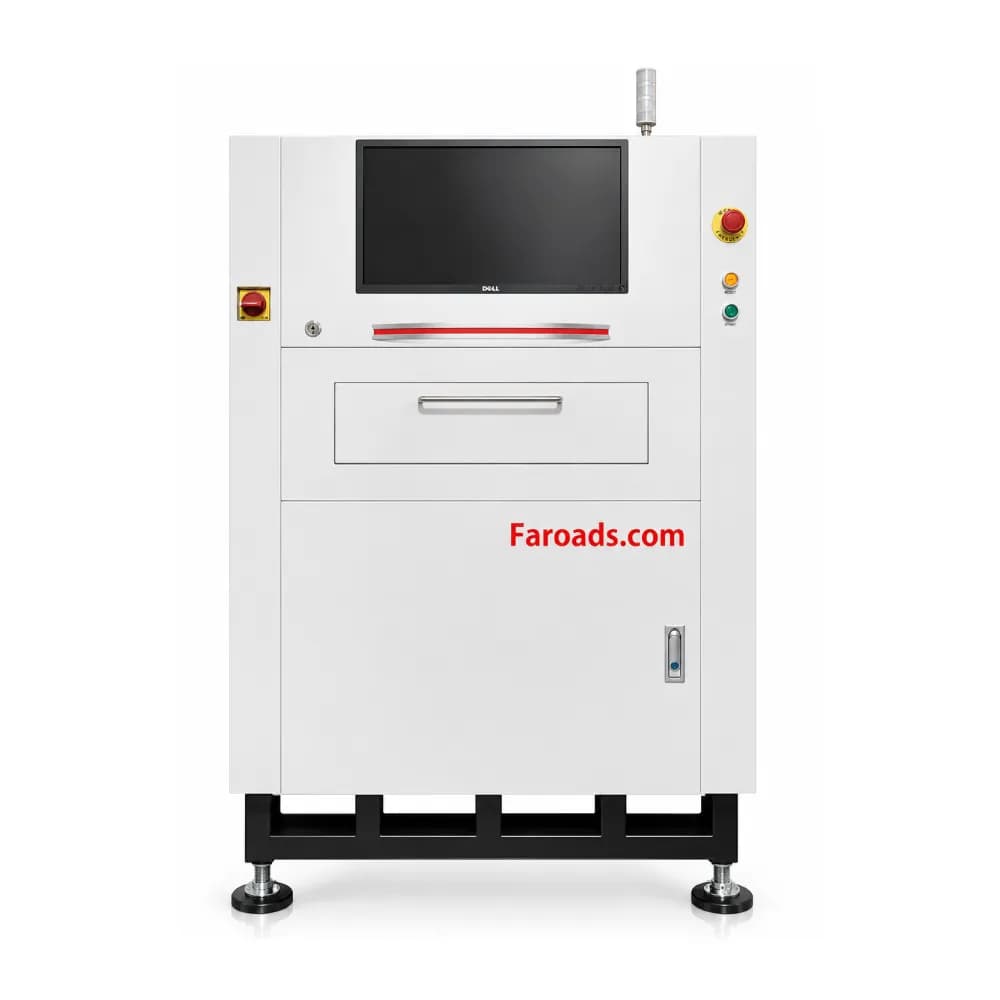
Automated optical inspection (AOI) can be built into the conveyor so every board passes through it, or it can stand beside the line and inspect boards that are brought to it. Both approaches use cameras and software to find missing, shifted or poorly soldered parts. The difference is in how inspection fits your production flow, your staffing and your quality obligations.
This guide helps you decide where AOI belongs. It assumes you have already decided you need optical inspection; if you are still weighing SPI against AOI, start with our guide to SPI and AOI investments.
What inline and offline mean on the factory floor
An inline AOI machine sits between two stations, usually after the reflow oven. Boards arrive on the conveyor, are inspected and move on without anyone touching them. Results are available immediately, and a failed board can be diverted or flagged before it reaches the next step.
An offline AOI machine is loaded by hand, one board or one batch at a time. It does not need to match the line's pace, and one machine can serve several lines. The trade-off is labor and delay: someone has to carry boards to it, and a process problem may continue for a while before the result comes back.
When inline AOI earns its place
Inline AOI is usually the better choice when most of these conditions apply:
- Every board must be inspected. Customers or internal rules require full coverage, not sampling.
- Volumes are steady. The line runs long enough on each product that program setup time is spread over many boards.
- Feedback speed matters. A placement or reflow problem needs to be caught within a few boards, not at the end of the batch.
- Labor is limited. Nobody is available to carry boards to a separate station on every shift.
- Traceability is required. Results and images need to be linked to each board's serial number automatically.
Where offline inspection still makes sense
Offline inspection remains a reasonable choice for prototype and new-product work, very small batches, or as a shared resource across several lines when each line's volume is low. It also serves as a second station for failure analysis, repair verification or occasional products that the inline machine cannot handle.
Many factories end up with both: inline AOI for production and a separate method for engineering work. If you are buying your first AOI for a production line, however, inline is generally the better long-term fit.
After reflow, before reflow, or both
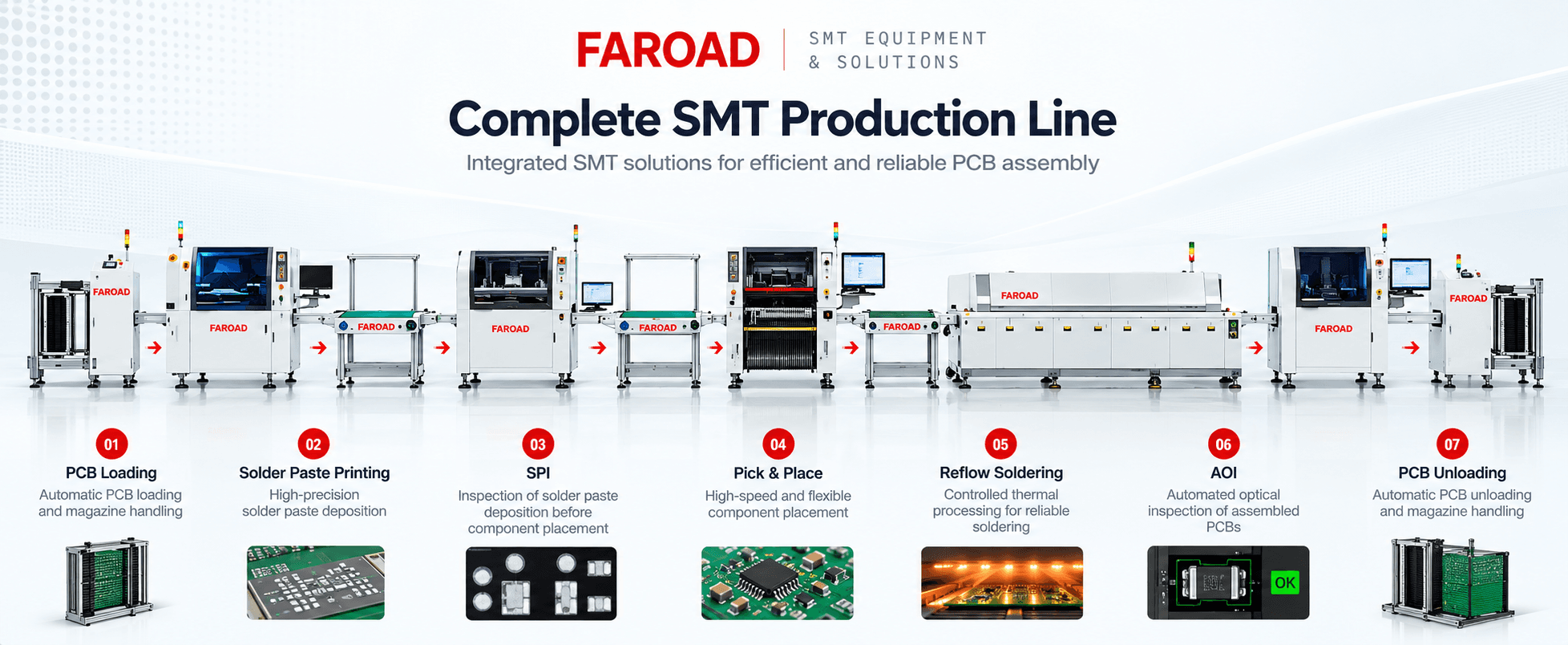
Placement position is a separate decision from inline versus offline.
Post-reflow AOI sees the finished solder joints, so it can detect soldering defects as well as missing or wrong parts. It is the most common single position.
Pre-reflow AOI, placed after the mounter, catches placement errors while they can still be corrected without rework. It cannot judge solder joints. It is most useful for expensive boards or components where reworking after reflow is costly or risky.
Lines with demanding quality requirements sometimes use both. For most buyers, post-reflow AOI comes first, with pre-reflow inspection added when placement-related defects or rework costs justify it.
Check the takt with your own boards
An inline AOI must inspect each board within the line's cycle time, or it becomes the bottleneck. Inspection time depends on board area, the chosen resolution and the number of fields of view (FOV) the camera needs.
Here is an illustrative estimate using published figures for the FAROAD Inpex S510. At 15 μm resolution, its page lists a field of view of 36 × 30 mm and an inspection speed of 230 to 300 ms per FOV. A 200 × 150 mm board would need roughly 6 × 5 = 30 fields of view, or about 7 to 9 seconds of imaging before board transfer and processing. If your line produces a board every 20 seconds, that fits. If it produces one every 6 seconds, the program, resolution or machine choice needs review. Real FOV counts depend on overlap and program design, so ask the supplier to time your actual boards.
Who reviews the calls?
Every AOI flags some boards for review. With inline AOI, someone must be at the review station whenever the line is running. Plan that role before installation, along with who creates and tunes programs for new products.
Features that reduce this workload are worth comparing. The FAROAD Inpex pages describe barcode recognition with automatic program selection and track-width adjustment, centralized management for remote review and offline programming, SPC data charts and full-board image output for traceability.
How FAROAD's inline AOI options line up
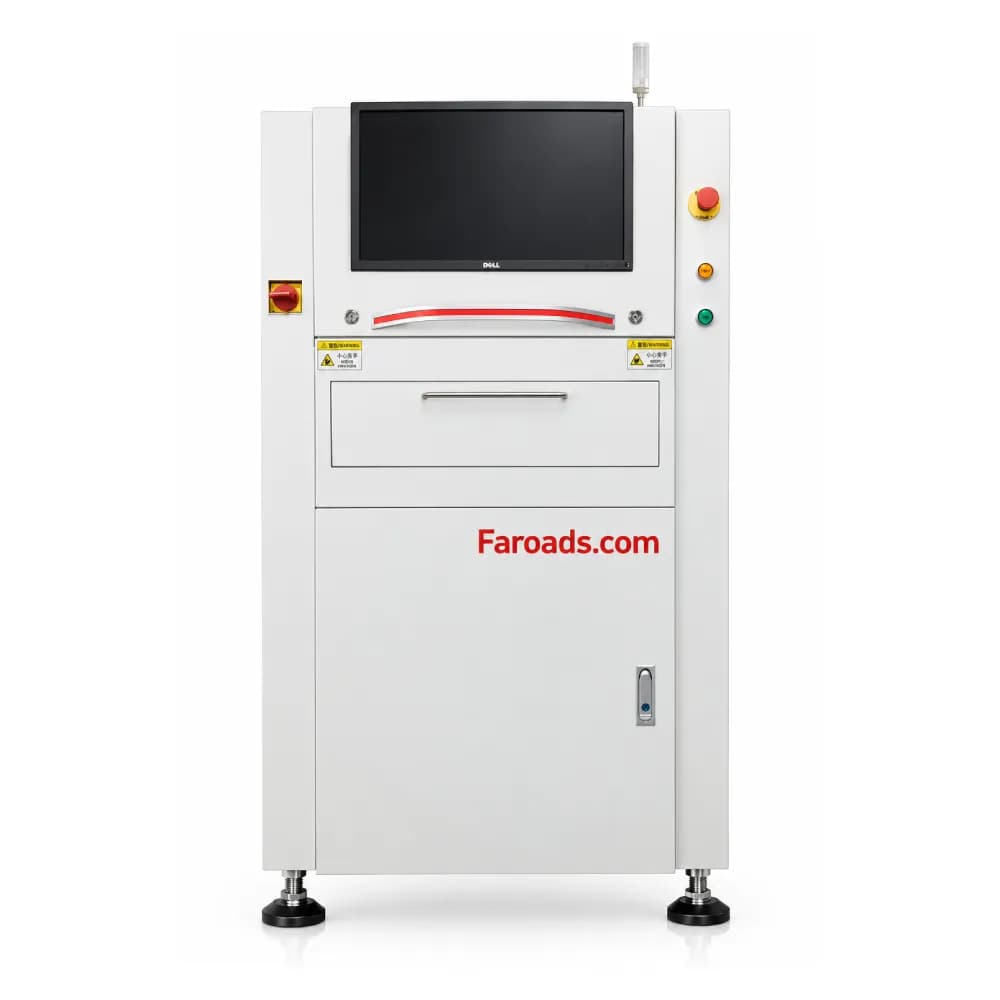
FAROAD's current AOI range is inline. The Inpex S510 is a single-track inline 2D AOI with a 5-megapixel camera as standard (12-megapixel optional) and a listed maximum board size of 460 × 350 mm; the S510D variant supports dual-track operation. The Inpex M400 adds double-sided projection to inspect top and bottom sides, with a 12-megapixel camera and a listed maximum board size of 510 × 460 mm. The M300 variant uses bottom projection only.
Match board size, clearance above and below the board, and whether you need one or both sides inspected to the right model, then confirm cycle time with a trial.
Frequently asked questions
Is offline AOI cheaper? The machine may cost less to integrate, but labor, delay and incomplete coverage add cost over time. Compare total operating cost, not purchase price alone.
Can an inline AOI slow our line? Yes, if its inspection time per board exceeds the line's cycle time. Time it with your largest, densest board before ordering.
Should AOI go before or after reflow? After reflow is the usual first choice because it sees finished joints. Add pre-reflow inspection if placement errors are costly to rework.
Do we need double-sided inspection? Only if components on the bottom side need checking in the same pass. Otherwise a top-side machine is simpler.
Plan the inspection station with your line
Tell FAROAD your board sizes, line cycle time and quality requirements, and we will recommend the AOI position and model that fit. Request a quote with a sample board drawing to receive a timed inspection estimate.