New vs Used SMT Equipment: How to Decide What to Buy
Compare new and used SMT machines on configuration fit, condition evidence, software, parts, support and total cost rather than purchase price alone.
4 min read
Used SMT equipment is widely available, and a pre-owned placement machine or oven can look like an easy way to stretch a budget. Sometimes it is. Other times, savings disappear into missing feeders, software problems, unavailable parts and months of troubleshooting.
The decision is not new versus cheap. It is about which option fits your products, runs reliably and can be supported for as long as you need it. This guide sets out a fair comparison.
When used equipment can make sense
Used equipment can be sensible when you already run the same model and have trained staff, spare feeders and parts; need extra capacity for a defined period; build simple, low-risk products; or have technicians who can assess and repair machines. Verifiable history, a demonstration on your boards and seller support reduce risk.
When new equipment is usually the better choice
New equipment often makes more sense for a first line, products needing current component capability or data connectivity, or a small team that cannot absorb troubleshooting. It can be configured for your boards, feeder quantity, track, software and factory-system connections, with training and warranty terms agreed for that configuration.
Configuration fit is the first test
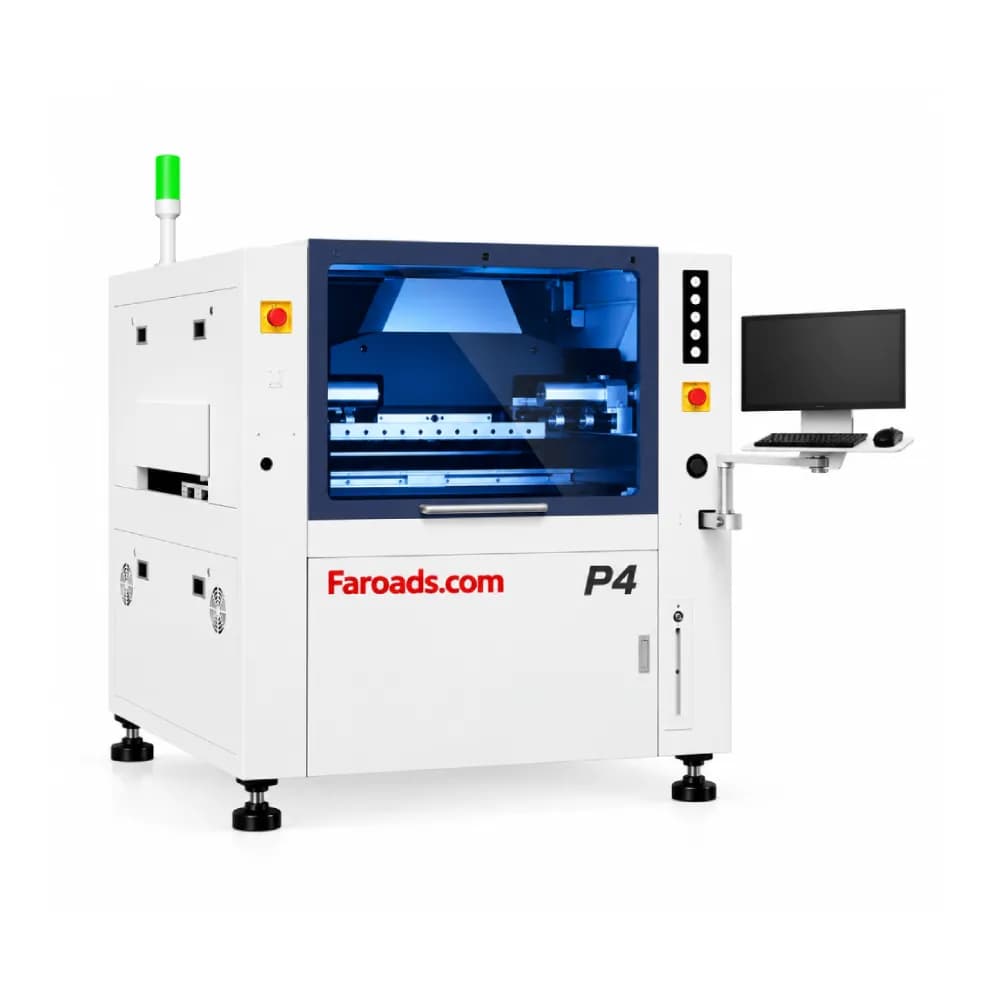
A used machine comes with the previous owner’s configuration. Check maximum and minimum board size and track width; component range; feeder types and quantity; nozzle set and head type; conveyor direction and transfer height; and software version and available options.
A low-priced machine that cannot place your largest connector or accept your board width is not a bargain. Our pick-and-place selection guide explains how to check component coverage and cycle time on real boards.
Ask for evidence of condition
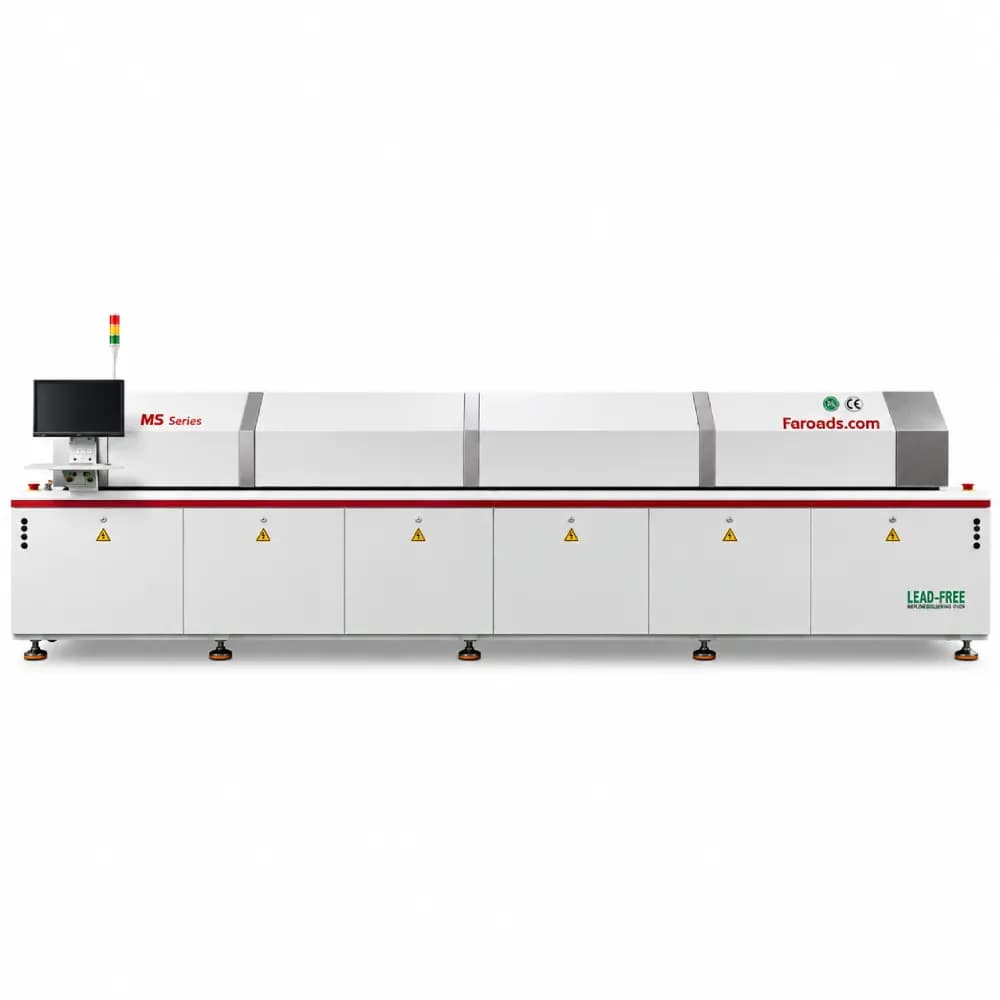
For a used machine, request operating hours or production records where available, maintenance and repair history, calibration records and date, a live demonstration on your boards, and accuracy or thermal-profile results from that demonstration.
For reflow ovens, ask for a profile run on your board and inspect heater, fan and conveyor condition. The reflow oven buying guide covers capacity and profile questions that apply to any oven, new or used.
Check software, licenses and parts supply
Confirm that operating and programming software licenses legally transfer to you and run on supported computer hardware. Ask whether the original manufacturer still supports the model, how long parts will be available and what typical lead times are.
Compare total cost, not just price
These figures are illustrative only, not FAROAD prices or market estimates. Suppose a used placement machine costs $60,000 and a new one $110,000. The used machine needs $12,000 in feeders, $8,000 in repairs and recalibration, and a $5,000 software-license transfer: $85,000 before installation.
If the used machine also produces less on your boards or causes first-year downtime, the gap narrows. If it fits perfectly and needs little work, the saving may be real. Compare actual quotations and your own downtime cost.
Think about the next five years
List expected changes: smaller passives, larger or heavier packages, new board sizes, more product variants, or barcode traceability and factory-system data. Check whether each option can handle those needs and be expanded with feeders, nozzles or modules.
An older machine may already be at the limit of its options, so a future product change could require another purchase. A stable, simple roadmap reduces this risk; a changing one makes it more important.
Do not skip installation and training
Used equipment still needs rigging, installation, leveling, line connection and commissioning. Budget these in both options, and confirm who will train operators and maintenance staff on a pre-owned machine.
Frequently asked questions
Is used SMT equipment reliable?
It can be, depending on age, history and maintenance. Verify reliability through records, inspection and demonstration rather than assuming it.
Does used equipment come with a warranty?
Some sellers offer limited terms; many sell as-is. Get any warranty terms in writing.
Can I mix new and used machines in one line?
Yes, if board transfer, conveyor height, signals and data connections are compatible. Check these before buying.
What is the biggest hidden cost of used equipment?
Often it is missing feeders, nozzles or software options, followed by downtime while parts are found.
Compare with a new configuration
If you are weighing a used machine, compare it with a new configuration specified for your products. Use board data, BOM and volumes to compare both options on the same basis, including installation, training and support.
Compare scope line by line: feeders and nozzles, missing accessories, repairs and calibration, software licenses, freight and import, rigging and installation, operator training, and warranty. For a new machine include required options and an initial spares kit. Use equal delivery terms and realistic downtime assumptions.
Before purchase, document non-negotiables and demo criteria: board sizes, component range, target cycle time on representative boards, accuracy or reflow-profile results, conveyor compatibility and data connections. Ask the seller to record the test conditions and agree acceptance criteria in writing.
A mixed line adds integration work. Confirm conveyor heights, transfer width, interface signals, software versions, feeder compatibility and recipe exchange. An older machine may need an integrator or adapter; reconcile the details with your line drawing before shipment.
For used equipment, keep an inspection record with model and serial information, operating hours, open faults, calibration status, boards tested, software entitlements and parts availability. Written evidence makes the condition and remaining risk easier to compare across sellers.
Further reading:
pick-and-place selection guide
For a new-equipment comparison, browse:
Compare both options with actual board data and expected volumes: