Buying SMT Equipment from a Chinese Manufacturer: A North American Checklist
What US, Canadian and Mexican buyers should confirm about configuration, power, shipping, import, installation and support before ordering SMT equipment from China.
4 min read
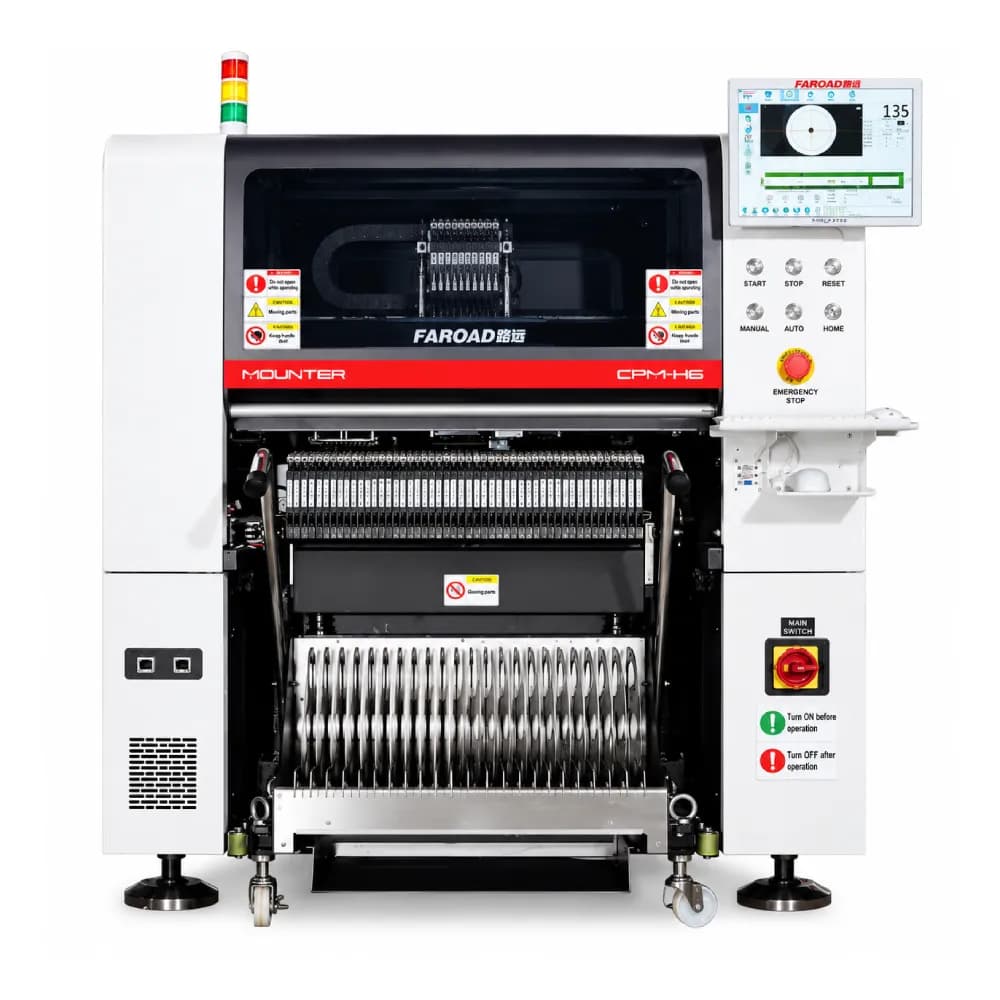
Buying SMT equipment directly from a manufacturer in China can widen your choice of configurations and budgets. It also means you take on decisions that a local distributor would otherwise handle: matching the configuration to your facility, arranging shipping and import, and agreeing who installs and supports the equipment.
This checklist covers the questions to settle before you place an order, whether your plant is in the United States, Canada or Mexico.
Confirm who you are buying from
Start with the basics. Establish whether you are dealing with the manufacturer, a trading company or a reseller, and who will be the contracting party on the purchase agreement. Ask for company registration details, the factory location and the range of equipment the company actually builds.
Published company information is a starting point, not proof. Whatever supplier you assess, ask for copies of any certificates mentioned and check them with the issuing body if they matter to your quality system.
Request references or a factory visit, in person or by live video, if the investment justifies it.
For example, FAROAD’s About page states the company was founded in 2006, is headquartered in Shenzhen and lists ISO9001 and ISO14001 certifications. Treat published information as a starting point, and verify any certificate with its issuing body if it matters to your quality system.
Specify the configuration in writing
A model name is not a specification. Write down the board size range, component range, feeder quantity and types, track configuration, software options, data connections and accessories you are buying. Include conveyor direction and transfer height so the machine fits your line.
Ask for a written technical agreement that lists every included item and option. This prevents disagreements later about what was quoted, especially when product pages show optional equipment alongside standard features.
Match power and utilities to your plant
Electrical supply is one of the most important checks for North American buyers. FAROAD placement machine pages list AC380/420/480V power, and the MS-8 reflow oven page lists 3-phase 380V at 50/60 Hz. Plant distribution varies, so have a qualified electrician compare each machine’s rating with your available supply before ordering.
Ask the supplier whether the machine can be configured for your voltage or whether a transformer is needed, and who supplies it. Confirm compressed air pressure and flow, exhaust connections for reflow ovens, and cooling water needs. Your electrical inspector can identify applicable local listing or field-evaluation requirements; do not assume home-market documents are sufficient.
Plan shipping around weight and size
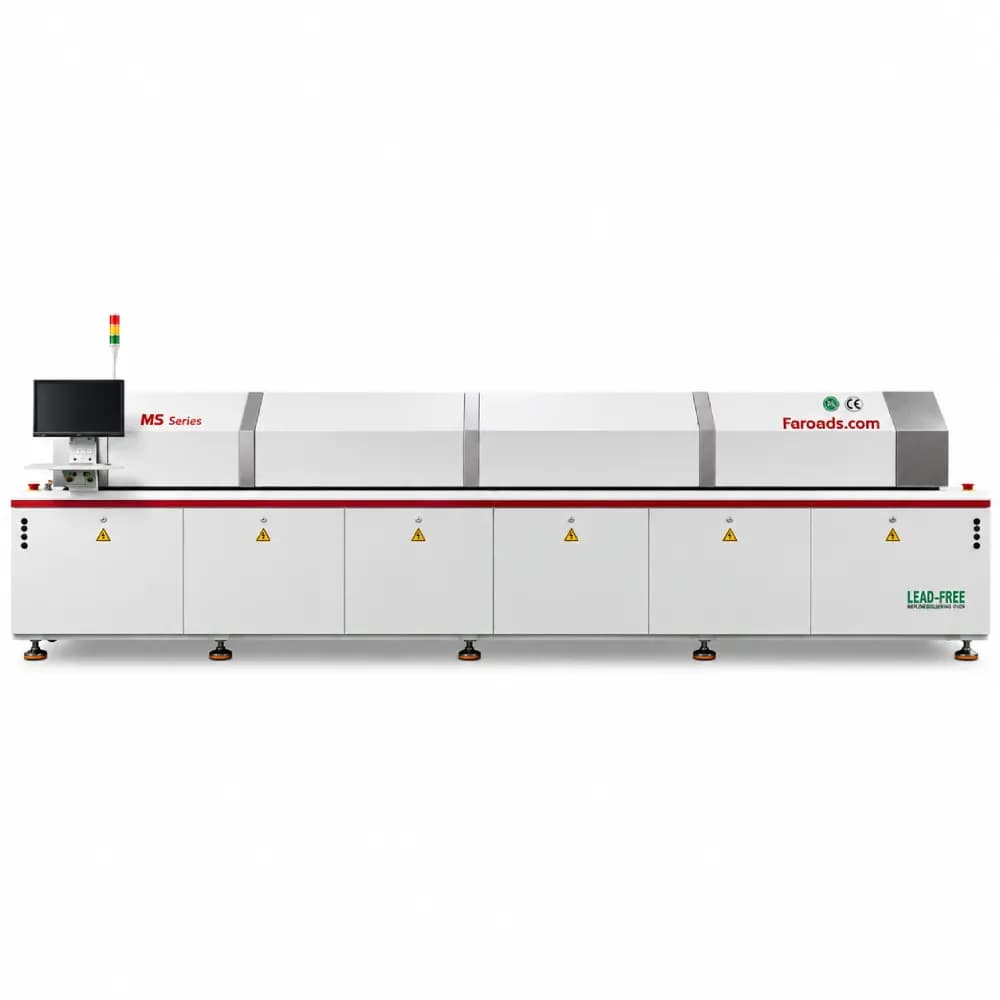
SMT equipment is heavy and long. The FAROAD CPM-H6 page lists approximately 2,760 kg including its feeder cart, and the MS-8 reflow oven page lists approximately 2,600 kg with an overall length of 5,250 mm. Your receiving dock, doorways, floor loading and rigging plan must handle those figures.
Agree the packing standard, use of tilt and shock indicators, and insurance. The contract’s delivery term determines when responsibility and risk pass from seller to buyer; choose it deliberately rather than accepting a default.
Prepare for import before the machines ship
Import requirements depend on the destination country and change over time. For buyers in the United States, consult this official starting point:
U.S. Customs and Border Protection importing guidance
Canadian and Mexican buyers should use their national customs authority and a local broker. Ask your broker to confirm tariff classification, applicable duties and any additional documentation before you agree the price. Make sure the supplier can provide an accurate commercial invoice and packing list with model numbers, weights and dimensions.
Compare landed cost, not the factory price
An overseas quotation is usually stated at a specific delivery point. To compare it with a local offer, add freight, insurance, duties and broker fees, inland delivery, rigging, utility work, installation travel and an initial spare parts kit. Compare every offer at the same delivery point and scope.
Agree installation and acceptance
Decide who installs the equipment, who commissions it and how acceptance is defined. Options include the manufacturer’s engineers on site, remote guidance for your own team, or a local integrator. Each has different cost, scheduling and travel implications.
Define tests before shipment and after installation, with pass criteria based on your boards. Linking payment milestones to agreed acceptance steps protects both sides.
Clarify support, spare parts and training
Ask how technical support is provided, in which language and during which hours, considering the time difference between China and North America. Request a recommended spare parts list for your configuration and plan which parts to keep on site, since overseas shipping adds lead time.
Confirm warranty terms in writing, including what is covered, for how long and how parts and labor are handled. Agree the training scope for operators, programmers and maintenance staff, and the documentation supplied.
Frequently asked questions
Is equipment from a Chinese manufacturer lower quality?
Quality varies by manufacturer and model, as it does everywhere. Judge the specific machine by specifications, references, trial results and acceptance testing.
Who handles customs clearance?
That depends on the agreed trade term. In many cases the buyer, as importer, uses a customs broker. Confirm responsibilities in the contract.
Do I need a transformer?
Possibly. Compare the machine’s published power rating with your plant supply and ask a qualified electrician.
Can one supplier provide a complete line?
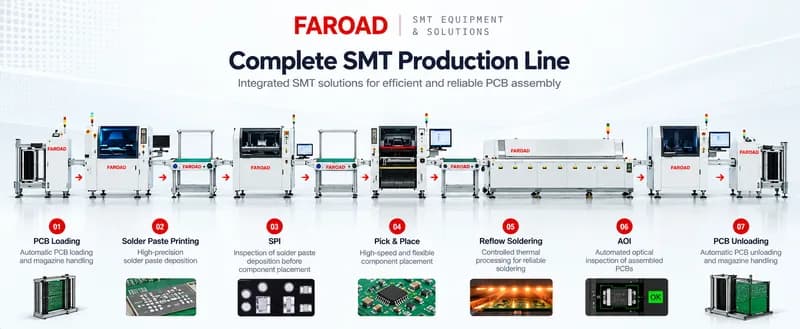
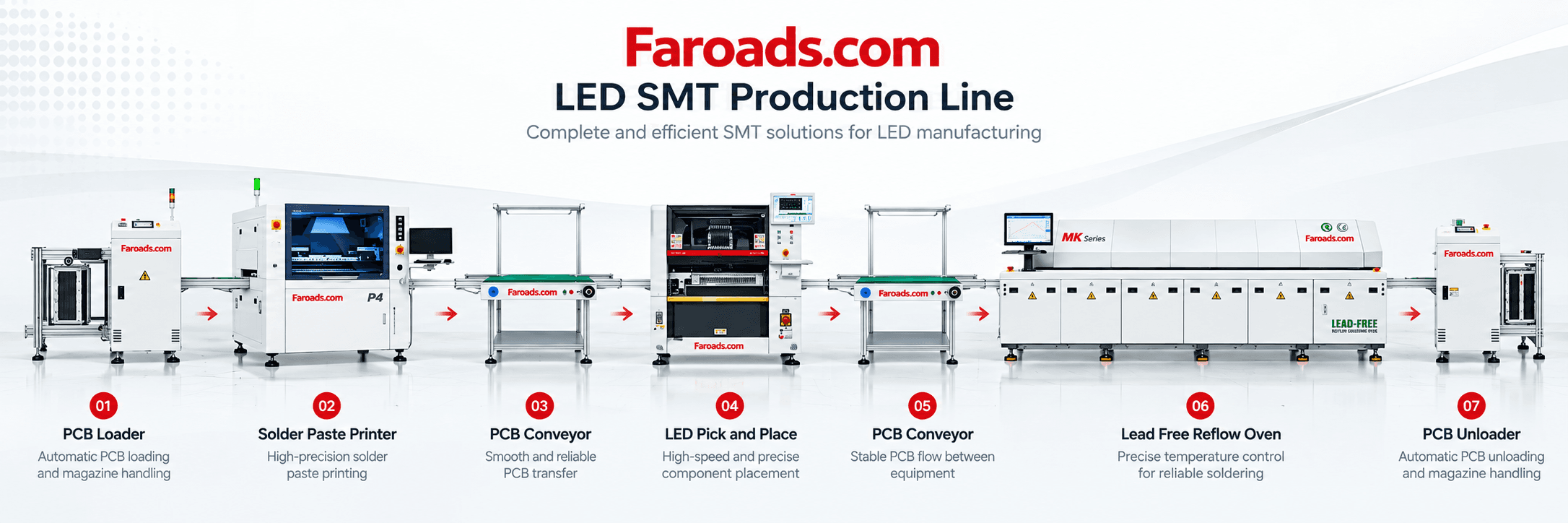
Some manufacturers configure complete lines. Confirm exactly which equipment and services are included, and compare the scope with your production needs.
Start with a detailed inquiry
Send your board data, BOM, volumes, plant voltage, available space and target delivery location. Ask for technical agreement, utility data and shipping weights so your facilities team and broker can plan in parallel.
Further reading:
SMT line integration and acceptance checklist
For complete-line planning, see:
When ready to compare configurations, use the quote request form: