SMT Placement Defects: Which Pick-and-Place Features Help Prevent Them?
Missing, shifted, flipped or wrong parts cost yield long before reflow. Here is which placement defects a better machine can reduce, which features matter and how to test them.
5 min read
A missing capacitor, a reversed diode or an IC that sits half a pad off center can all end up as the same thing: a board that fails test or needs rework. Many of these defects are created at the placement machine, but not all of them are caused by the machine itself. Feeders, components, programs and the board all play a part.
This guide is for buyers whose placement defects are pushing them toward a new or additional mounter. It explains which defects machine features can reduce, which ones they cannot, and how to check the difference during a supplier trial. For the related question of how to read accuracy and Cpk figures, see our guide to pick-and-place accuracy.
Check where the defect appears
The simplest diagnostic is to inspect boards straight after placement, before they enter the oven. If a part is missing, shifted or reversed at that point, the cause sits in placement, feeding or the program. If the part was correct before reflow and wrong afterward, look at paste volume, tack and the reflow profile instead.
Separating the two avoids buying a mounter to fix a soldering problem, or the reverse.
Common placement defects and their usual causes
Missing or dropped parts. The nozzle failed to pick the part, lost it in transit or released it in the wrong place. Typical causes are weak or leaking vacuum, worn or dirty nozzles, poor feeder indexing, parts sitting loosely in the tape pocket and pick height set incorrectly.
Shifted or skewed parts. The part landed off center or at an angle. Causes include an off-center pick that vision did not fully correct, board movement during placement, poor board support, warpage and the head moving too fast for a heavy part.
Wrong orientation, flipped or reversed polarity. The machine placed the part upside down or rotated. Causes include incorrect library data, faint polarity marks, parts rotated inside the pocket and feeders loaded the wrong way.
Wrong part. A correct-looking part with the wrong value. This is almost always a setup issue: the wrong reel in the wrong slot.
Cracked or damaged parts. Excessive placement force or a board that is not supported under the placement point can crack ceramic capacitors or damage fragile packages.
Machine features that reduce placement defects
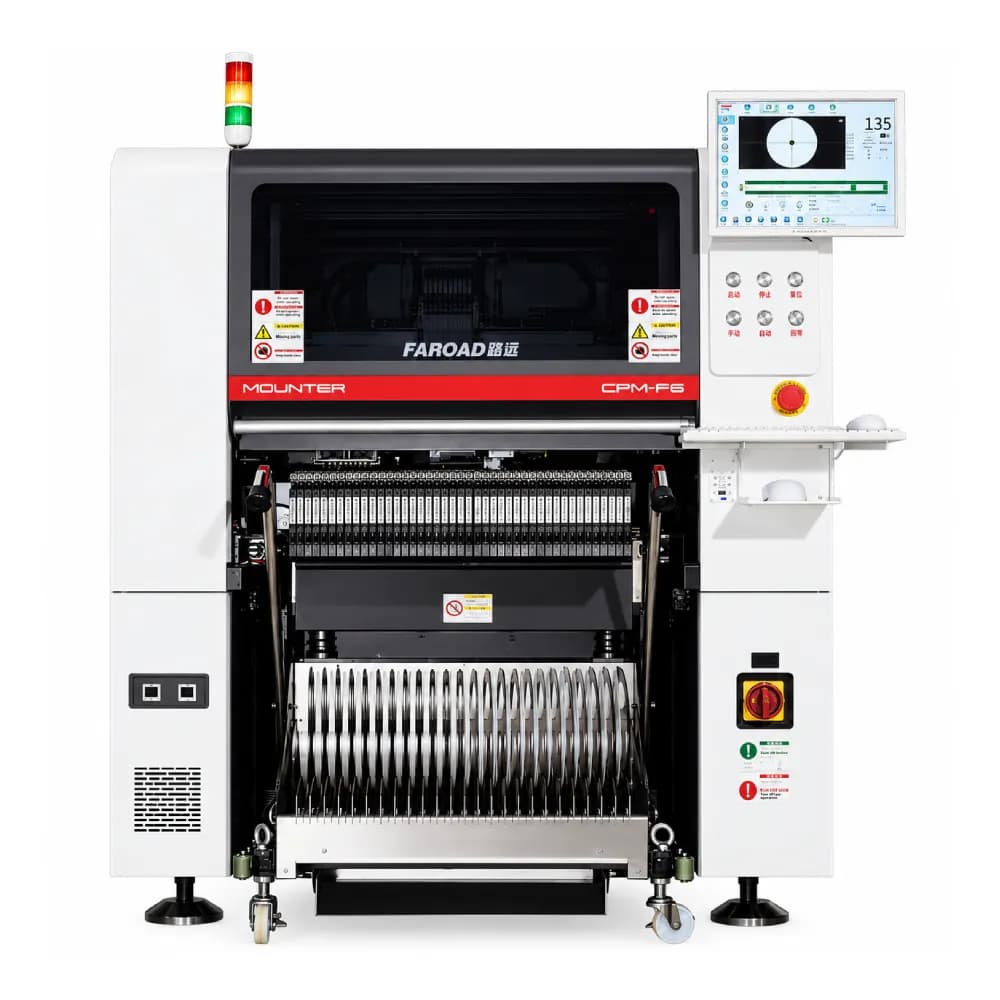
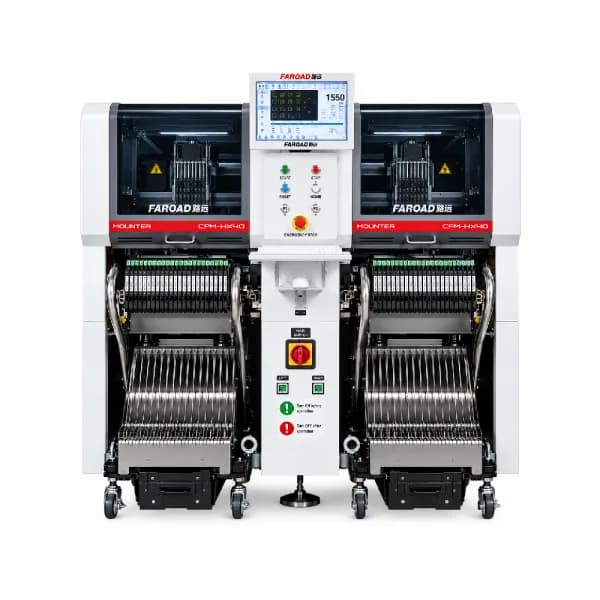
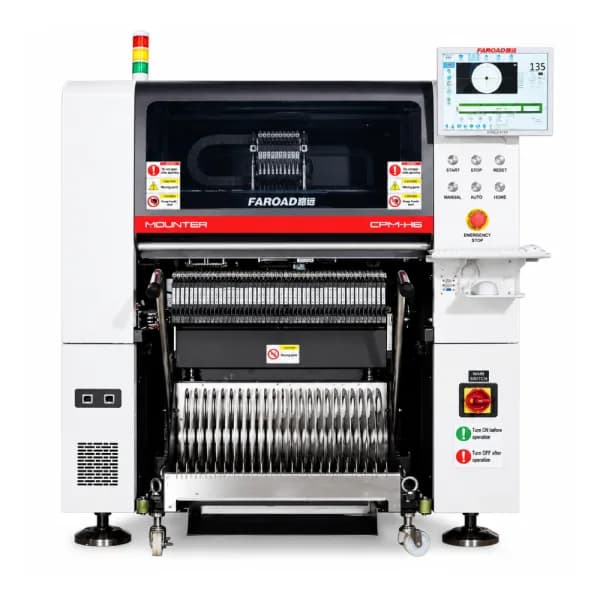
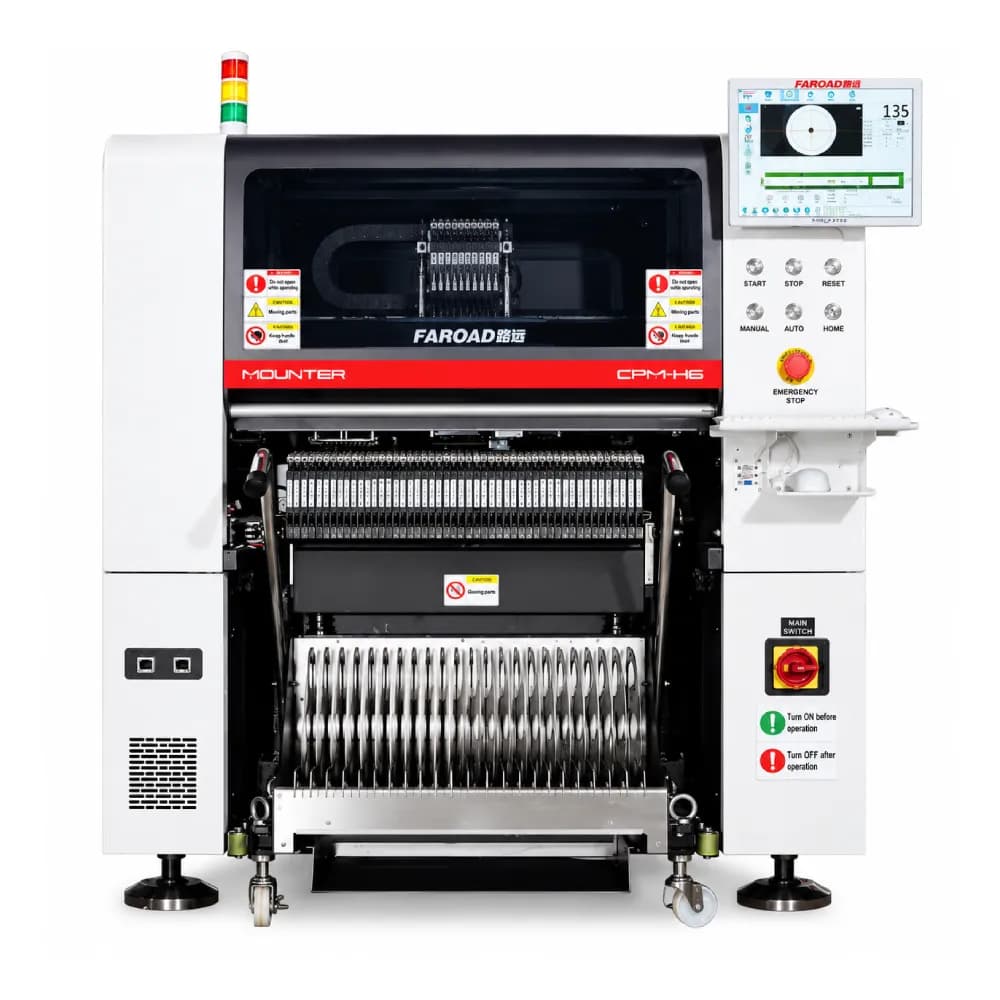
Vacuum monitoring. A machine that checks vacuum at each pick can detect a failed or partial pick and retry before placing. FAROAD's CPM-H6 and CPM-F6 pages both list real-time vacuum monitoring.
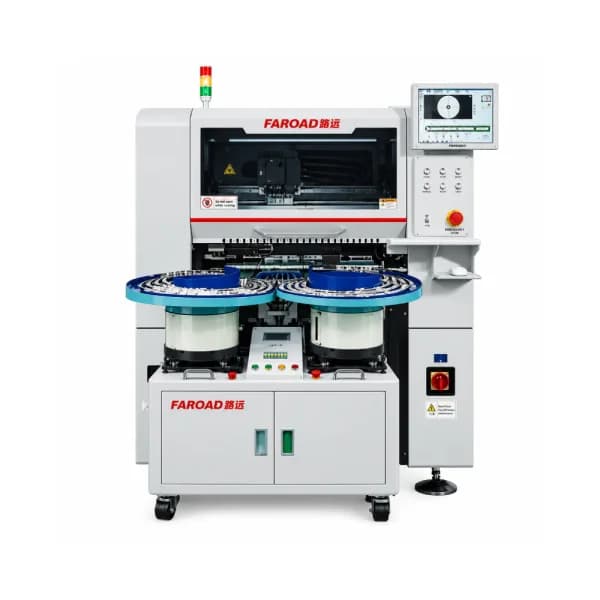
Component vision and pick correction. Cameras measure each part on the nozzle and correct offset and rotation before placement. Flying cameras recognize parts while the head moves, while fixed cameras suit larger and finer-pitch parts. The CPM-F6 also lists fixed edge detection with pickup center position correction.
Thermal compensation. Machines warm up during a shift, and that can shift placement positions slightly. The CPM-F5, CPM-F6 and CPM-HX40 pages list an automatic correction system with thermal compensation.
Board warpage detection. Measuring board height before placement helps the machine place at the right height on bowed boards. Laser-based substrate warping detection is listed as an option on the CPM-H6 and CPM-HX40, and substrate warping detection on the CPM-F6.
Placement force control. Controlling how hard the nozzle presses the part reduces cracked components and parts that bounce off position. Force control management appears among the CPM-F6 options.
Nozzle management. Automatic nozzle exchange reduces manual swaps and the chance of using the wrong nozzle. The CPM-H6 and CPM-HX40 list an optional ATC automatic nozzle exchange station with 40 positions.
Setup verification. Scanning reels and feeders against the program before production catches wrong-part errors. Several FAROAD mounters list QR code and barcode recognition and binding for MES upload, and some list quick model switching via QR code. Ask exactly what is verified and whether it blocks production when there is a mismatch.
What a new machine will not fix
Some defect sources sit outside the mounter.
- Feeder condition. Worn or poorly maintained feeders cause pick errors on any machine. Confirm which feeders are included in the quotation and how they are maintained.
- Component packaging. Parts that move in oversized pockets, damaged tape and moisture-affected components cause problems at every station.
- Library and program data. Incorrect body sizes, polarity definitions or pick positions lead to rejects and misplacements. Good programming tools help, but the data still need checking.
- Paste and printing. Too little paste tack lets parts move after placement. Our guide to pick-and-place machine selection covers how to define the trial around your full component list.
Test placement quality in the trial
A supplier trial should show how the machine handles your problem parts, not just a demonstration board.
- Bring the components and boards that cause most of your defects today.
- Record pick errors and vision rejects per feeder and per part number, not just overall.
- Run long enough for the machine to reach working temperature, and compare first-hour and later results.
- Place onto a warped or thin board if those are part of your mix.
- Inspect placed boards before reflow with your AOI criteria.
- Ask the supplier to explain each reject category and what setting or maintenance step addresses it.
Frequently asked questions
What is the most common placement defect?
It varies by plant, but missing or dropped parts linked to vacuum, nozzles and feeders are frequent. Collect your own data by feeder and part number before buying.
Can AOI replace machine features that prevent defects?
No. AOI finds defects after they happen. Machine features reduce how many occur. Both together give the best yield.
Does a faster machine produce more defects?
Not necessarily, but high speeds put more stress on pick and transfer. Test at your intended speed, not at reduced speed.
Should I replace the machine or repair the current one?
If defects trace back to worn nozzles, feeders or vacuum parts, maintenance may solve them. If the machine lacks features your parts need, replacement or an additional machine may be justified.
Request a placement-quality review
Send FAROAD your defect data, component list and board files. We will recommend a mounter configuration and the options that address your defect types. Request a quote to start.
When you compare mounters, look past the speed headline and ask about these capabilities.