SMT Spare Parts and Maintenance: What to Plan Before You Buy
Build preventive maintenance, spare parts stock and technician skills into the equipment purchase instead of discovering them after the first breakdown.
4 min read
Most SMT equipment evaluations focus on speed, accuracy and price. Maintenance often enters the conversation only after a worn part stops the line and no replacement is available. By then, the easiest time to plan has passed.
Treating maintenance and spares as part of the purchase improves supplier comparisons, budgets and first-year reliability. This guide explains what to request and what to keep on site.
Why maintenance belongs in the buying decision
Every SMT line has scheduled wear parts: nozzles, filters, belts, squeegees, feeder components and sensors. It also has parts that rarely fail but stop production when they do. Availability and replacement time directly affect uptime.
Buying from overseas makes planning more important because shipping adds time between failure and replacement. A lower purchase price can cost more over the equipment’s life if parts arrive slowly or technicians lack service training.
Request a maintenance package with every quotation
Ask for a preventive maintenance schedule with daily, weekly, monthly and annual tasks for each machine, including the time each task takes. Request a configuration-specific spare parts list with part numbers and suggested stock quantities.
Also ask for consumables, special tools or calibration fixtures, maintenance training scope and documentation.
Confirm the ordering process, dispatch arrangements and contacts, then compare packages across suppliers. Vague answers can signal gaps in future support.
Know where wear happens on each machine
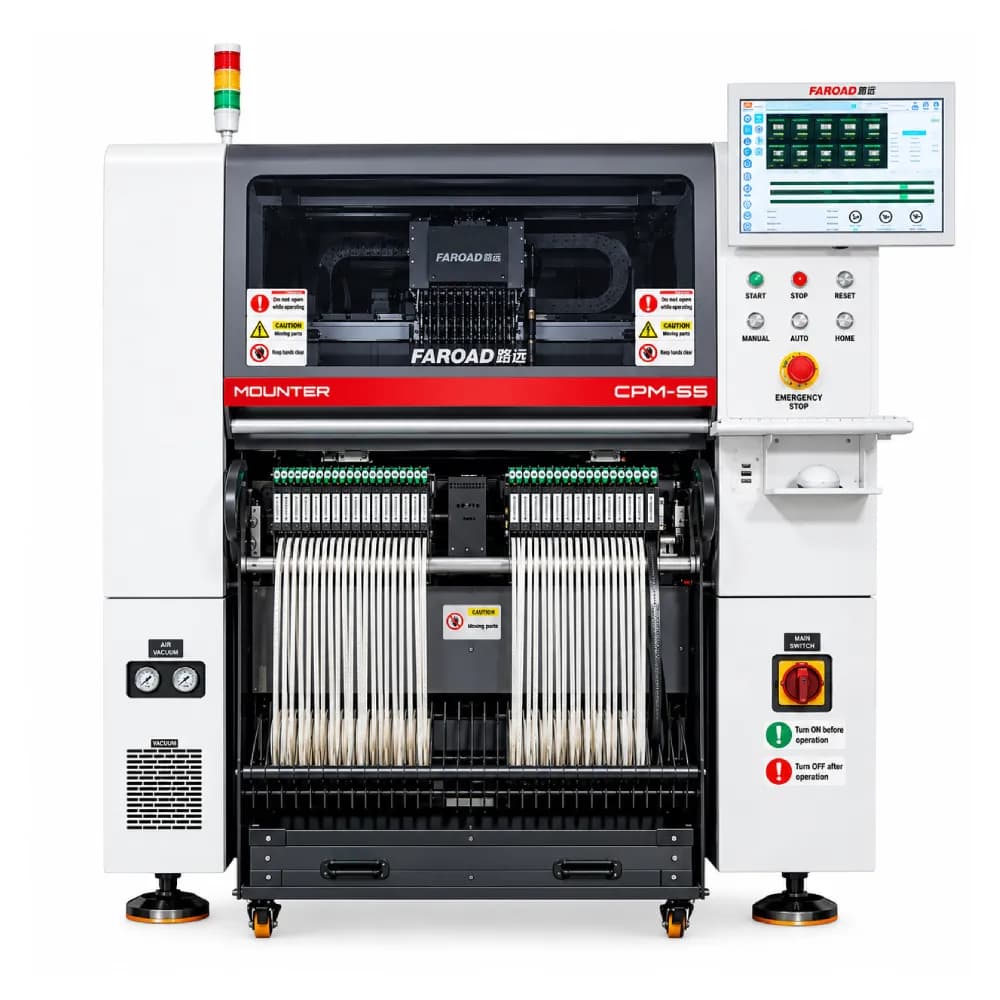
Placement machines: inspect nozzles, feeders, vacuum filters and board-motion components. Nozzle condition affects pick-up and placement, so cleaning intervals and spare nozzles matter.
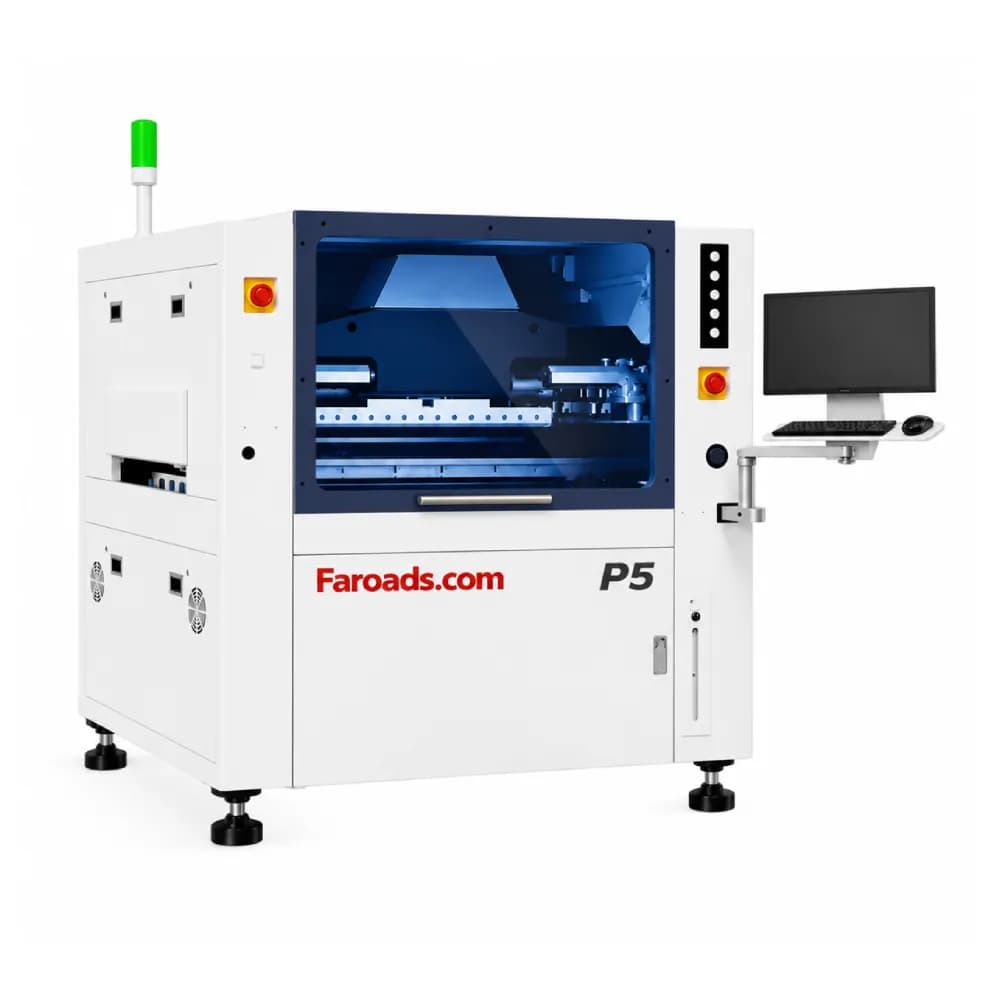
Solder paste printers: plan for squeegees, stencil supports and cleaning parts. Automatic under-stencil cleaning consumes wipe material and solvent that must be stocked.
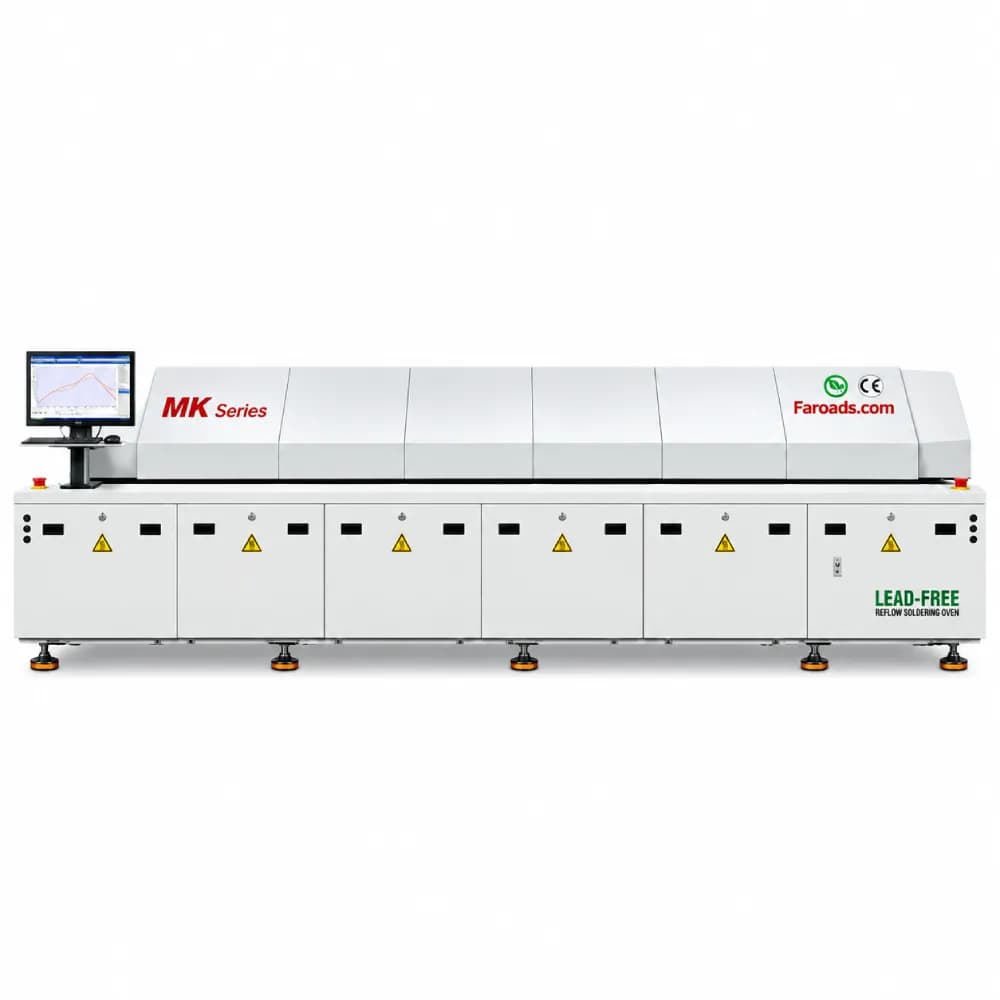
Reflow ovens: remove flux residue and inspect conveyor chains, mesh, fans and heaters. Ask how often flux systems need cleaning and how long the work takes; profile checks also need planning.
Inspection and handling equipment needs periodic checks of cameras, lighting, calibration targets, conveyor belts and sensors. Ask how calibration is verified and what tools are required.
Decide what to stock on site
You do not need a copy of every part. Sort items into three groups and size stock to your operating pattern.
Critical, long-lead parts: stock items that stop the line and take a long time to arrive, even if they fail rarely.
Wear parts: hold enough to cover expected use between orders and deliveries, with a margin. Three-shift operation wears parts faster than one shift.
Consumables: manage continuously used items like production materials, with clear reorder points. Review the supplier’s list against your actual shifts and product mix.
Estimate the cost of a line stop
The figures are illustrative only and are not FAROAD data. Suppose a line generates $1,500 of contribution per production hour and a missing part takes five working days to arrive.
If that stops 40 scheduled hours, lost contribution is $60,000. A $1,200 part is easy to justify on site; a rare part costing $15,000 needs a different risk calculation.
Repeat this exercise for the supplier’s critical list. It turns a long parts list into clear stocking decisions.
Build maintenance skills in your own team
Spare parts help only if someone can fit them. Train staff in routine maintenance, basic diagnostics and calibration checks, not just operation. Keep manuals and service records accessible.
Record preventive and corrective tasks so intervals can be refined. Arrange cover when the trained technician is absent, and agree with the supplier how complex repairs are supported.
Frequently asked questions
Should spare parts be included in the equipment purchase?
Many buyers order an initial spares kit with the equipment. Agree its contents using the supplier’s recommendation and your own risk assessment.
How often should SMT equipment be maintained?
Follow the manufacturer’s schedule for each machine, adjusted for operating hours and production conditions.
Who should do the maintenance?
Trained in-house staff usually handle routine tasks. Agree with the supplier how complex repairs and diagnostics are supported.
Does nitrogen reflow change maintenance needs?
It adds gas supply and monitoring equipment to maintain. Ask which checks apply to the nitrogen configuration you are buying.
Ask for a maintenance plan with your quote
When requesting a FAROAD quotation, ask for the preventive maintenance schedule, recommended spares list and training scope for your configuration. Having these before ordering makes total cost and support clear from day one.
Turn the supplier’s recommended parts list into a risk-based stock plan. Rank each part by line-stopping effect, failure likelihood, shipping lead time and cost. Set minimum and reorder quantities from actual shifts, and confirm each part number matches the delivered configuration.
Request the maintenance schedule and support workflow before delivery. Record machine hours, task, part number, downtime and corrective action for each service event. Review records regularly and update intervals or stock levels as operating conditions change.
Decide who owns maintenance on each shift and who backs them up. Confirm staff can access manuals and remote diagnostics so routine work does not depend on one person.
Ask where critical parts are stocked, typical dispatch times, and whether availability is expected to continue through the ownership period. For wear items, align stock with service intervals; for consumables, confirm shelf life and storage conditions.
Related resources:
feeder and changeover investment
high-end lead-free reflow ovens
For the maintenance scope and spares for your configuration,