Dual-Lane SMT Lines: When Does a Second Lane Pay Off?
A dual-lane line can raise output per square meter and keep producing during changeover, but only if your boards, volumes and every station suit two lanes. Here is how to decide.
4 min read
A dual-lane SMT line carries boards on two parallel conveyors through some or all of its stations. Done well, it raises output without doubling floor space and lets one lane keep running while the other changes over. Done poorly, it adds cost and complexity to a line whose real constraint was somewhere else.
This guide is for buyers deciding whether their next line, or the next machines in an existing line, should be dual-lane. If you are mainly trying to add placement capacity, compare this option with the alternatives in our article on adding a second pick-and-place machine.
What a second lane changes
Dual-lane equipment works in two broad modes. In synchronous mode, both lanes run the same product, and the line behaves like one wider, faster line. In independent mode, each lane runs its own product, often the top and bottom sides of the same assembly or two related boards.
The gain comes from three places:
- Hidden board transfer. While one board is being clamped and its fiducials read, the heads can be placing on the other lane. On short placement programs, transfer time is a large share of each cycle.
- More output per meter of line. Two lanes share one machine frame, one oven tunnel and one set of operators.
- Changeover without a full stop. In independent mode, one lane can be set up for a new product while the other keeps producing.
An illustrative output check
The figures below are illustrative, not measured FAROAD data. Suppose a mounter needs 12 seconds to place a board and 3 seconds to transfer it in and out and read fiducials. On a single lane, a board leaves every 15 seconds. If a dual-lane machine can place on one lane while the other transfers, the cycle approaches the 12-second placement time, roughly 25% more boards per hour.
Now repeat the check with a 60-second placement program. Transfer is only 3 of 63 seconds, so a second lane adds about 5%. The lesson: dual-lane placement pays most on boards with short programs, where transfer is a large share of each cycle. Ask suppliers to time your own boards in both modes.
Board size is the first filter
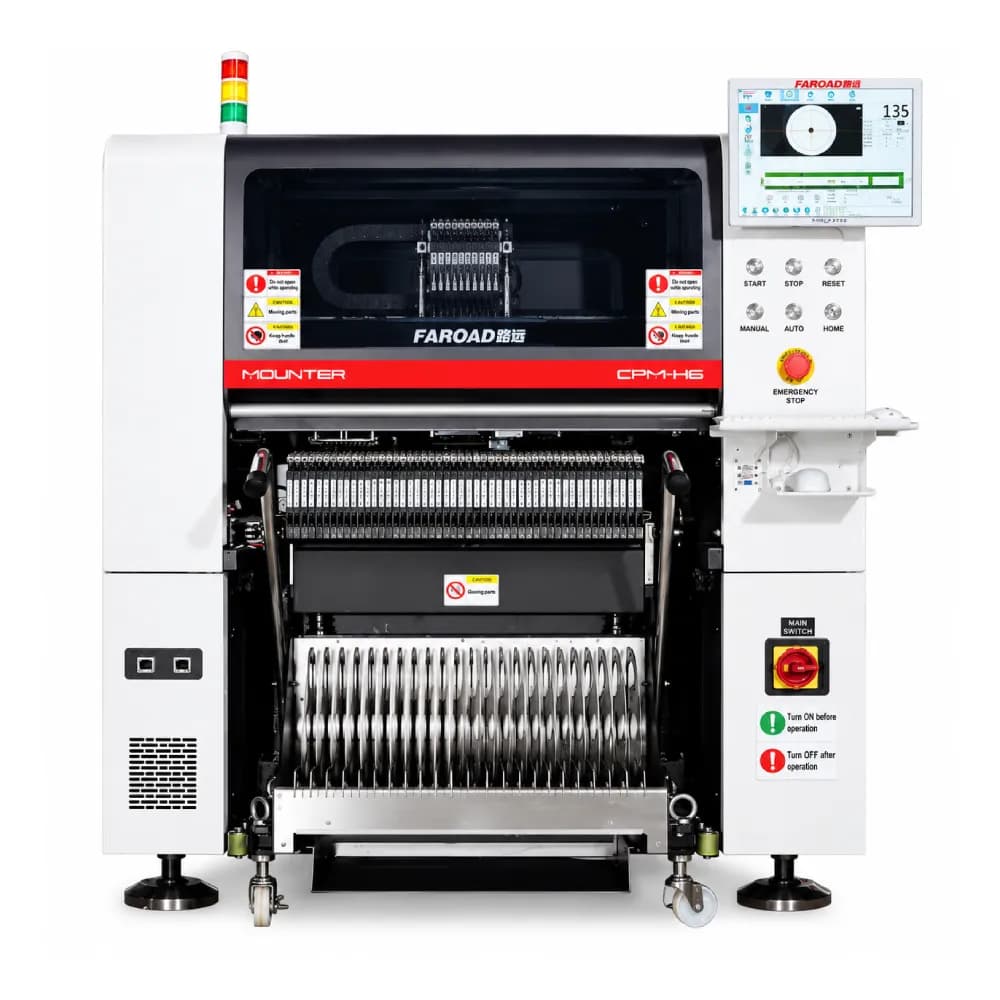
A second lane divides the conveyor width. FAROAD's published figures show the trade-off clearly:
- The CPM-H6 lists a maximum board of 510 × 510 mm on a single track, but 510 × 270 mm per board in dual-track mode.
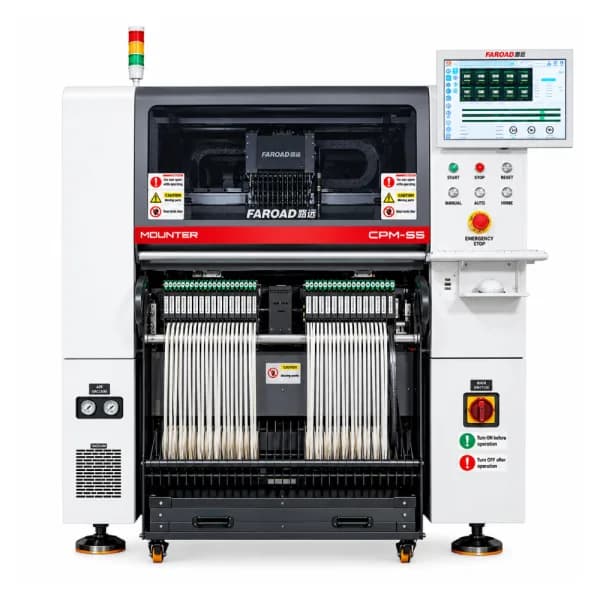
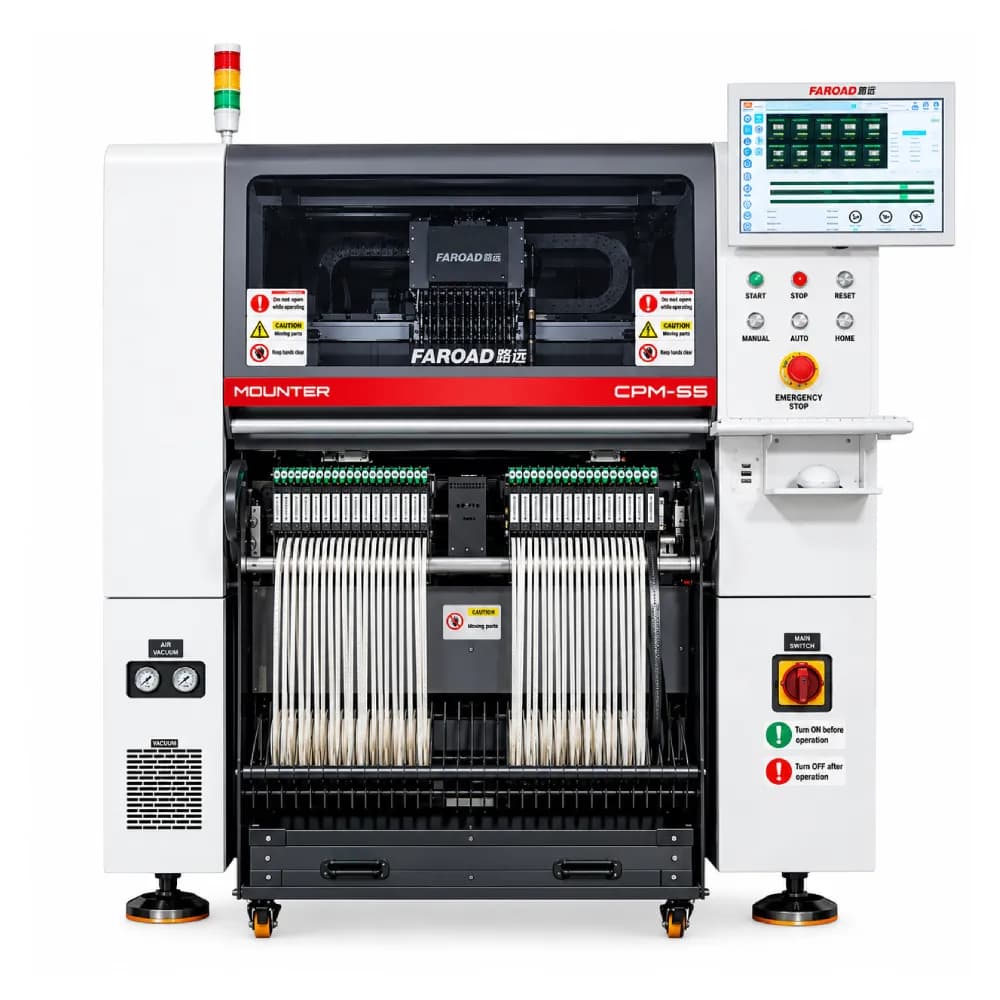
- The CPM-S5 lists 510 × 550 mm single-track and 510 × 300 mm dual-track.
- The dual-track MS reflow ovens, such as the MS-10D list two adjustable lanes of 50–275 mm each, with 300 + 300 mm as an option.
If your widest current or planned board exceeds the dual-lane width, you will need to run it in single-lane mode or on another line. List every product family with its panel width before you decide.
Check every station, not just the mounter
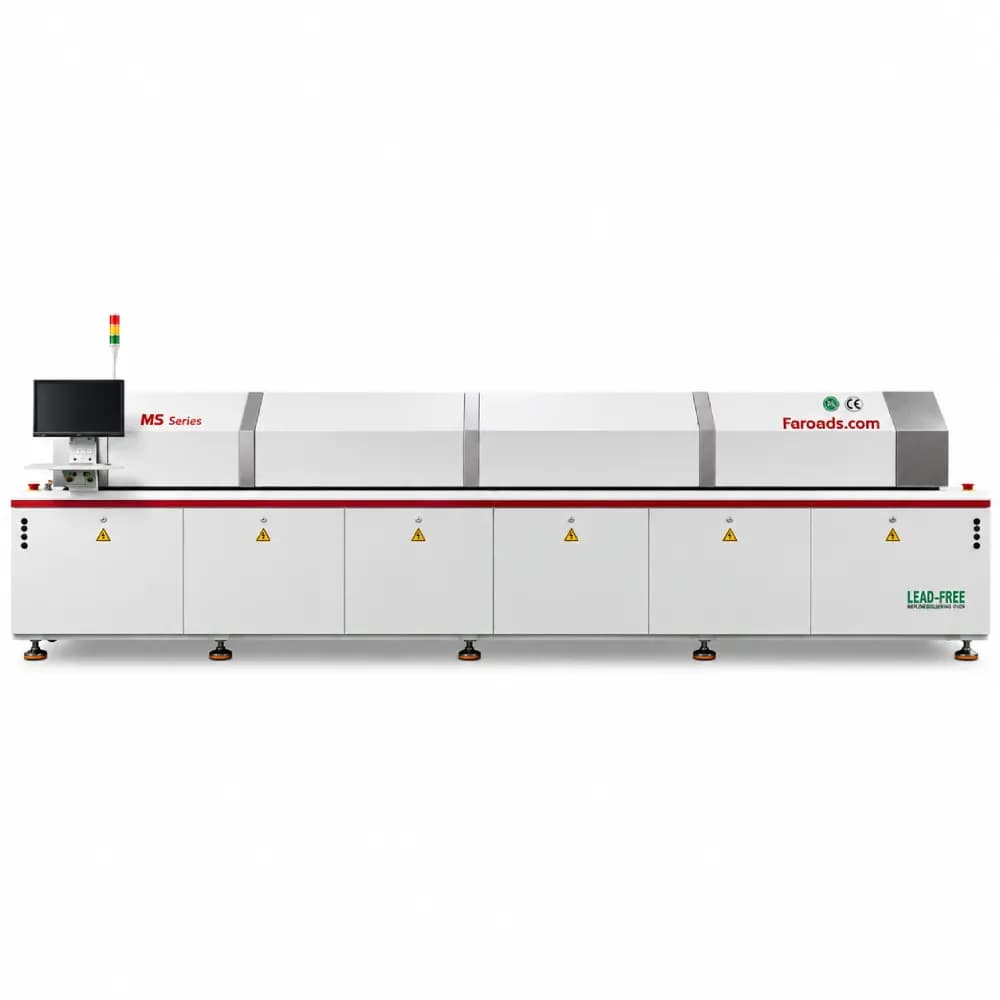
A line only gains from a second lane where every station can serve both lanes at the required pace. Walk the line from start to finish:
- Loading. Decide whether one loader feeds both lanes through a shuttle or each lane has its own.
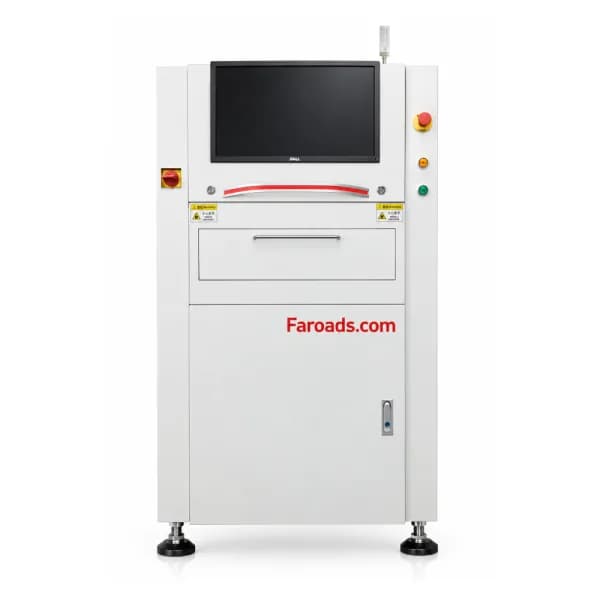
- Printing. Dual-lane printing is often the hardest step. FAROAD's current printer pages do not list a dual-lane configuration, so ask how a proposed line would feed two lanes, for example two printers or a shuttle after one printer, and whether a single printer can keep up with two lanes of placement.
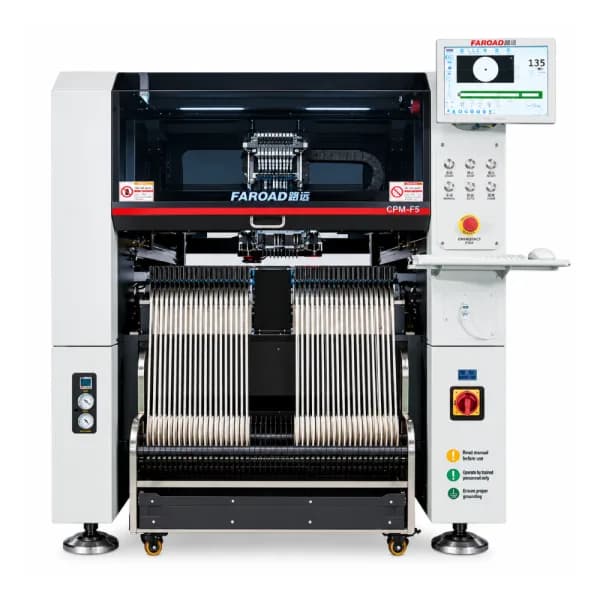
- Placement. FAROAD's dual-track mounters include the CPM-H6 and CPM-S5, which list independent and alternate placement modes, and the CPM-HX40, which lists dual-track, dual-section conveyance with zero board transfer time.
- Reflow. Both lanes pass through the same heated zones, so their products must share a workable temperature profile. Confirm the lane widths and ask whether each lane's conveyor speed can be set separately.
- Inspection. FAROAD lists a dual-track S510D version of its Inpex S510 inline AOI. Make sure AOI inspection time per board fits the faster combined cycle.
- Unloading and data. Plan how finished boards from each lane are collected and how traceability records stay linked to the right lane and product.
When a dual-lane line is the right choice
A dual-lane design usually earns its place when most of these are true:
- Boards are narrow enough for the dual-lane width, now and in the products you expect next.
- Volumes are high, and placement programs are short enough that transfer time matters.
- Floor space is limited, so a second complete line is hard to fit.
- You build double-sided assemblies that can run top and bottom sides on separate lanes with compatible reflow profiles.
- Frequent product changes make it valuable to keep one lane running during setup.
When single-lane is the better answer
Stay with a single lane, or add a second single-lane line, when boards are wide or heavy, when placement programs are long, or when the products you would run side by side need very different reflow profiles. A single-lane line is also simpler to program, balance and maintain. If volume is still uncertain, a single-lane line with room to add a parallel line later can be lower risk than paying for dual-lane capacity you may not fill.
Frequently asked questions
Does a dual-lane line double output? Rarely. The gain depends on how much of each cycle is board transfer and whether every station keeps up. Short programs gain the most.
Can I run two different products at once? Often, in independent mode, but both must survive the same oven temperatures. Confirm profile compatibility with a trial.
Can a dual-track oven run one wide board? Check the specific model. Ask the supplier how lanes are reconfigured and what the maximum single-board width is.
Is a dual-lane line harder to operate? It adds programming and balancing work. Plan training for line balancing and changeover in both modes.
Request a dual-lane line assessment
Send FAROAD your board widths, placement counts, product mix and target output. We will compare single-lane and dual-lane configurations for your boards and show where each station sits against the target. Explore our high-speed SMT line solutions or request a quote.