High-Mix, Low-Volume SMT: How to Specify the Whole Line
A station-by-station guide to specifying an SMT line for many products in small batches: printing, placement, programming, inspection and reflow choices that keep changeovers short.
6 min read
A line that runs the same board all week is judged by how fast it places parts. A line that runs fifteen different boards in a week is judged by something else: how little time it spends not producing. In high-mix, low-volume work, the lost minutes at every product switch often decide profitability more than any machine's headline speed.
This guide walks through each station of a high-mix line and the specification choices that matter most. Feeder carts and their payback are covered in our separate article on changeover investment; here the focus is the whole line.
What changes when the mix is high
Three things grow when the number of products rises. Setup work grows, because every job needs materials, tools and programs ready. Engineering work grows, because each new board needs a placement program, an inspection program and a reflow profile. And risk grows, because every changeover is a chance to load the wrong reel or the wrong revision.
A useful specification therefore asks of every station: what has to be adjusted by hand at changeover, what has to be programmed for a new board, and how is the setup verified? Equipment that removes manual adjustment, shortens programming and checks the setup automatically is worth more in this environment than equipment that is simply fast.
Write the brief around product families
Before talking to suppliers, group your boards into families that share board size, thickness, paste, and a similar component set. Then describe the line in terms of those families: how many active part numbers, typical batch sizes, changeovers per shift, and the range from smallest to largest board.
This brief is the single most useful document you can send. It lets a supplier size feeder capacity so common parts stay loaded, choose a component range that covers your outliers, and judge whether one oven profile can serve a whole family. FAROAD's high-mix, low-volume SMT solution starts from exactly this kind of information: board sizes, components and throughput targets.
Printing: remove the manual adjustments
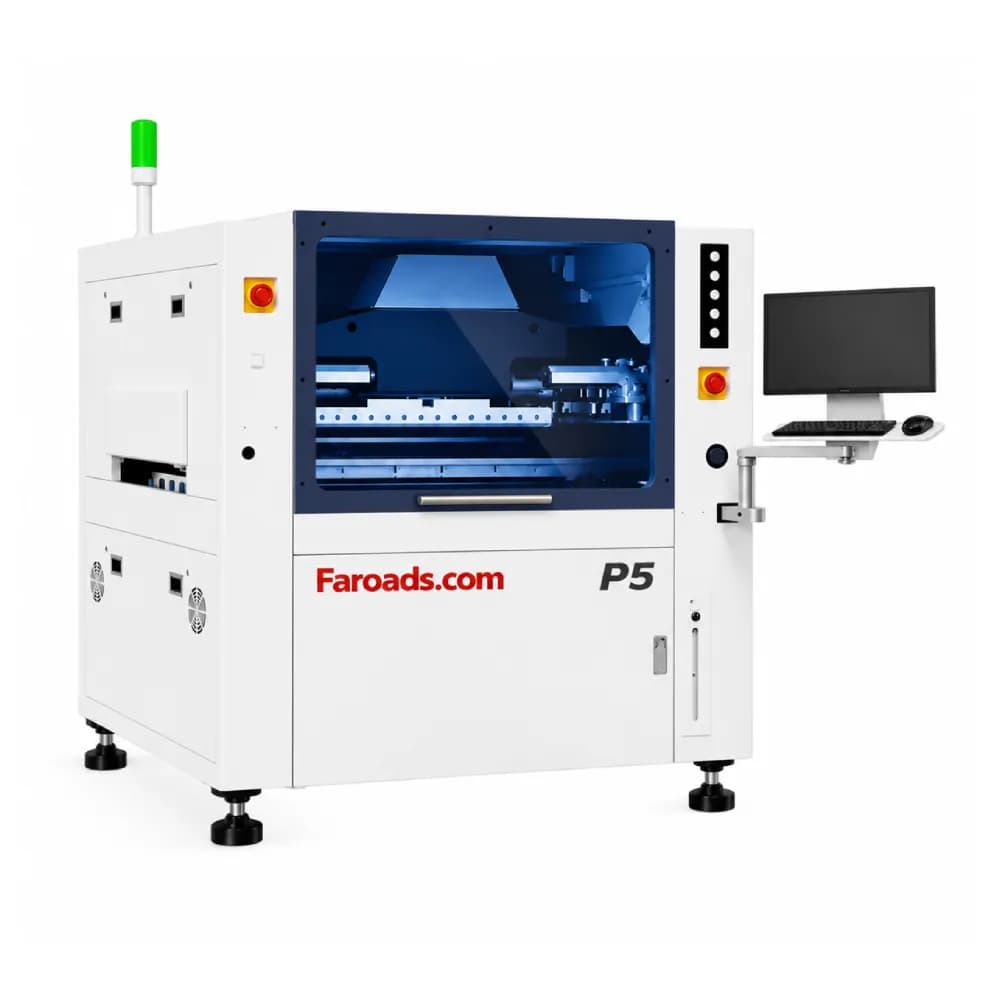
At the printer, changeover means a new stencil, new board support and a new program. The fewer of those steps an operator performs by eye, the more repeatable the first print will be.
When comparing printers, list each changeover action and ask whether the machine handles it. FAROAD's P5 solder paste printer, for example, lists automatic stencil positioning once the stencil is in the frame, programmed track-width adjustment, and automatic platform height calibration according to board thickness. Board support still needs planning: decide whether support pins will be set per job or whether a flexible support approach covers your family. Ask the supplier to demonstrate a full stencil-and-board change, timed from the last print to the first accepted print.
Placement: feeder capacity and component range before speed
For a high-mix line, the mounter question is less "how fast?" and more "how many different parts can stay set up, and can it place all of them?"
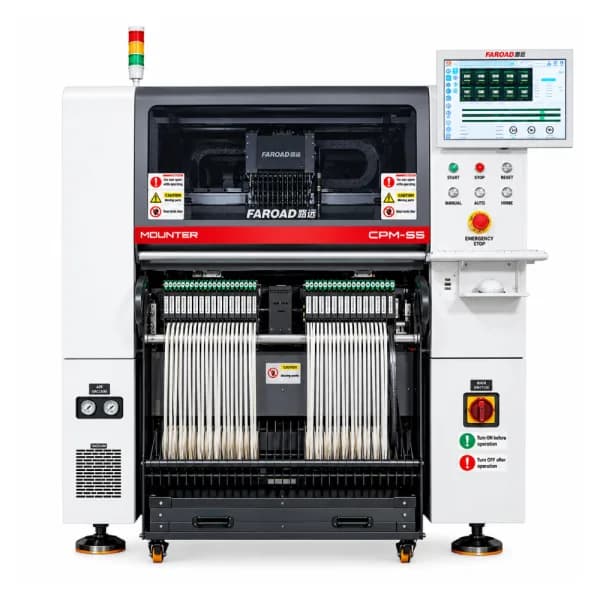
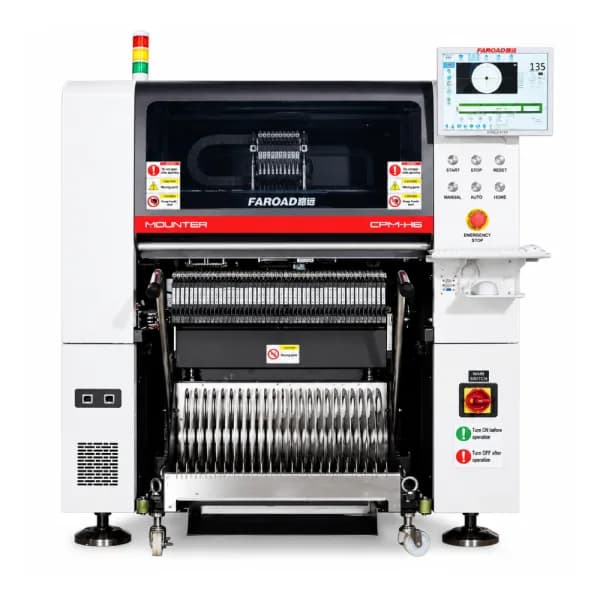
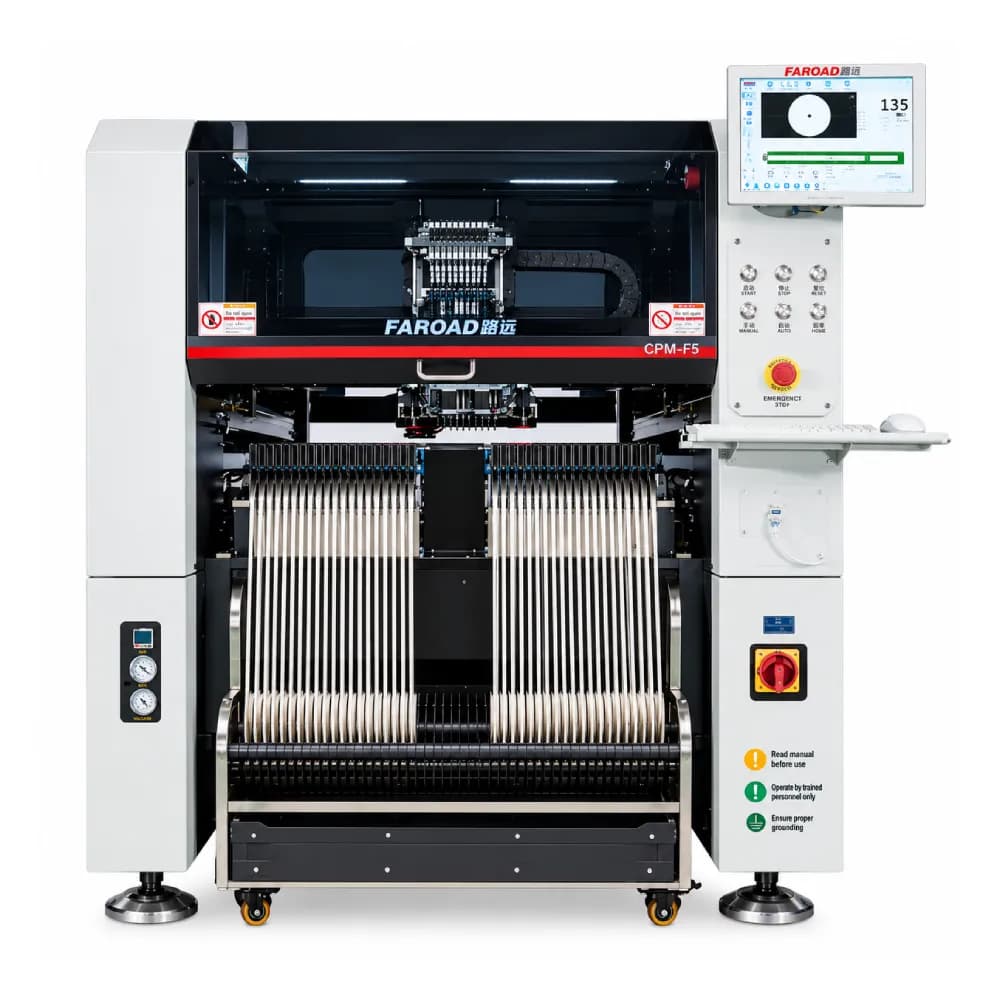
Feeder capacity determines how many common components can remain loaded across jobs. If shared resistors and capacitors stay in place, each changeover only swaps the parts unique to the next board. FAROAD's modular precision machines illustrate the options buyers should look for: the CPM-F5 and CPM-F6 pages list 50 single-side slots in 8 mm terms with an optional double-sided arrangement of 100 slots, tape widths reaching 88 mm when the multifunctional head is fitted, plus stick (tube) feeding and a tray cabinet as an option.
Component range matters just as much. One odd connector or tall capacitor that the machine cannot place sends the board to hand assembly. Check the largest, tallest and most awkward parts in every family against the multifunctional head's published range, then confirm with a trial.
Programming and data: the hidden workload
In high-mix work, someone has to create and maintain dozens of programs. That workload belongs in the specification.
Ask how a new placement program is built. Importing coordinates from CAD or spreadsheet files, editing non-standard component shapes, and sharing a component library between machines all shorten the job. The CPM-F6 page lists one-click coordinate import from text or Excel files, free editing of non-standard components and LAN management with component database synchronization. Optional quick model switching by QR code reduces the chance of running the wrong program after a changeover.
Also ask about offline programming. If programs can be prepared while the line is running another job, the line does not wait for engineering. FAROAD's complete-line page lists VConnector offline programming among its digital line functions.
Inspection that can keep up with new programs
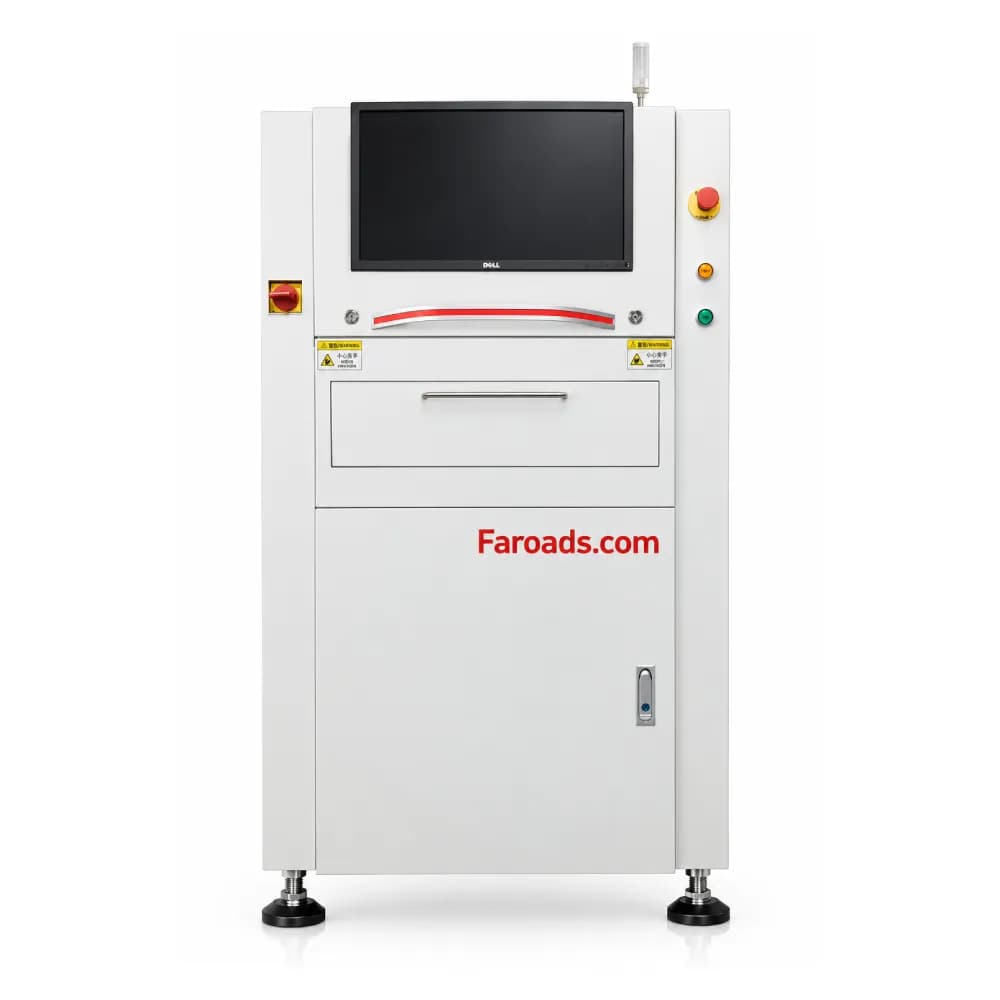
Inspection equipment in a high-mix line has two jobs: catching defects and not becoming the bottleneck for new products. Programming time per new board is the practical test.
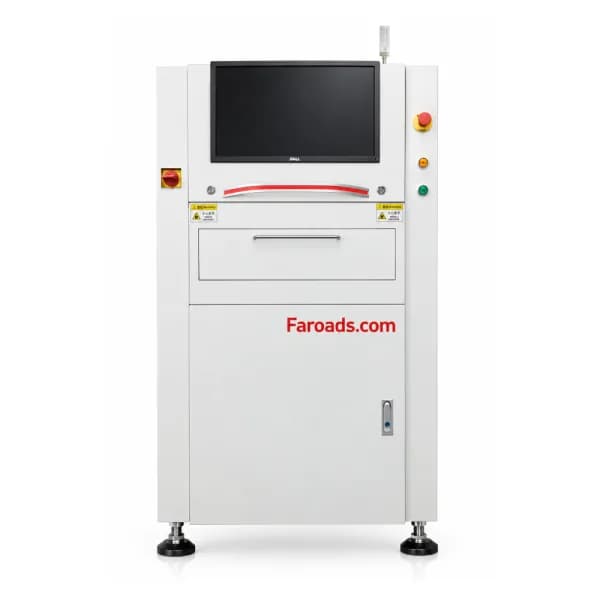
For solder paste inspection, Gerber-based programming lets a new job be prepared from design data. FAROAD's 3D SPI page lists Gerber import and a programming interface designed for engineers of any level. For AOI, automatic program selection matters: the FAROAD Inpex S510 page describes reading a board barcode to call the right program and set the track width automatically. Ask each supplier how long a typical new program takes to create and tune for one of your boards, and who on your team will do it.
Reflow: fewer profiles, not more zones
Reflow is often the slowest station to change. A new temperature setting can take a long time to stabilize, so a line that changes oven profiles at every job loses time that never appears in a placement speed calculation.
The aim is to build profiles that cover a family. Work with your paste supplier and the oven supplier to find one profile that solders the heaviest and lightest boards in a family within specification. Then the conveyor width and program can change while the temperature settings stay. Oven sizing itself is covered in our reflow oven buying guide; for high-mix use, add one more question: how many different profiles will you run each week?
Judge the line on changeover performance
When you compare proposals, ask each supplier to state the expected time for a typical changeover between two of your boards, and what that time includes: material swap, stencil, programs, oven, first-article check. Then ask which steps can be prepared while the previous job is still running.
A line that changes over in a short, predictable time can run small batches profitably. A faster line that needs long, unpredictable changeovers may produce less in a real week.
Frequently asked questions
Is a high-speed mounter wrong for high-mix work? Not necessarily, but its speed only helps while it is placing parts. If most lost time is in setup and programming, flexibility and feeder capacity usually matter more.
How many feeder slots do we need? Enough to hold your common parts permanently plus the largest set of unique parts in any single job. Your BOM data will show the number.
Should high-mix lines include SPI and AOI? Frequent new products raise the risk of first-run defects, so inspection is usually valuable. The deciding factor is how quickly new inspection programs can be created.
Can one line handle both prototypes and production runs? Often, if changeovers are short and programming is quick. Prototype work places the heaviest demand on programming and first-article checks.
Request a high-mix line configuration
Send FAROAD your product families, part counts, batch sizes and changeover frequency, and we will propose a line configured around them. Request a quote with your board list and current changeover times to start the discussion.