SMT Equipment for Automotive Electronics: A Buyer's Specification Guide
How to turn automotive customer requirements into SMT equipment requirements: traceability, placement evidence, reflow records, inspection coverage and an acceptance trial written into the RFQ.
5 min read
Building boards for vehicles changes what a customer expects from your SMT line. Control units, sensors, lighting modules and infotainment boards must work for years in heat, cold and vibration, and a field failure can lead to a recall. Automotive customers therefore ask for more than good boards. They ask for evidence: which machine built each board, with which materials, under which settings, and how you know the result was right.
This guide shows how to translate those expectations into equipment requirements you can put in a request for quotation. It does not replace your customer's quality requirements; it helps make sure the line you buy can support them.
What automotive customers ask of your line
Requirements vary by customer and product, but the themes are consistent. Automotive suppliers usually work under a formal quality management system, often IATF 16949, and new products go through a structured approval before series production. Customers expect process control, traceability to the individual board, defined inspection coverage and documented changes.
Most of that sits in your procedures and people. The equipment's role is to make the required data available reliably and to hold the process steady enough to prove it.
Turn customer requirements into equipment requirements
Start with your customer requirements and your own quality plan, then ask of each requirement: does a machine need to record, control or prove something here? List the answers station by station. A short example:
- Traceability. Each station must read the board's serial code and record results against it.
- Process control. Printing, placement and reflow settings must be recorded per job, and changes must be logged.
- Inspection evidence. Inspection results and images must be stored per board for an agreed period.
- Material control. Component reels must be verified against the program at setup.
This list becomes the core of your RFQ. It is far more useful to a supplier than a request for "automotive-grade equipment," a phrase with no fixed meaning.
Traceability: decide the data before the hardware
Traceability is easier to build in than to add later. Decide what you need to record, where it will be stored and how long it must be kept, then specify how each machine will connect.
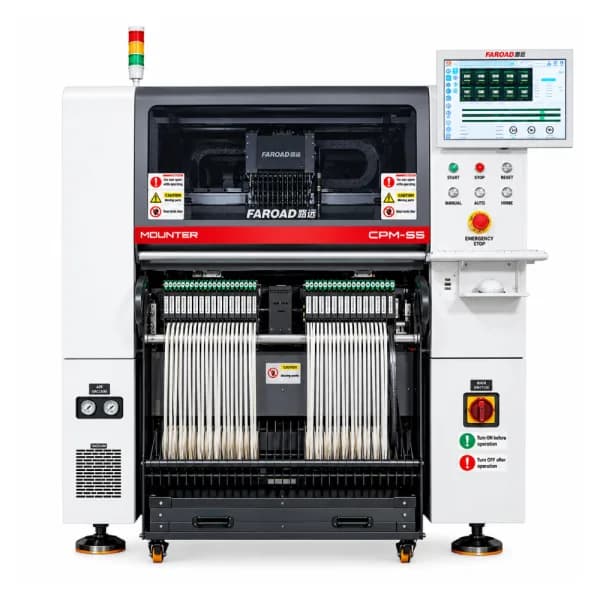
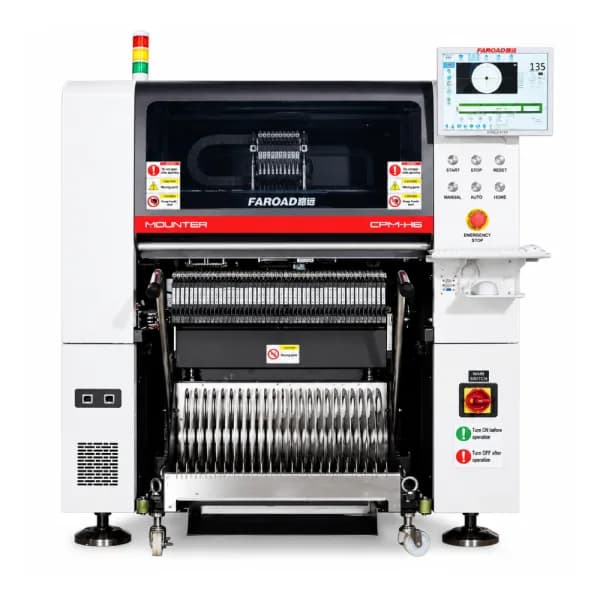
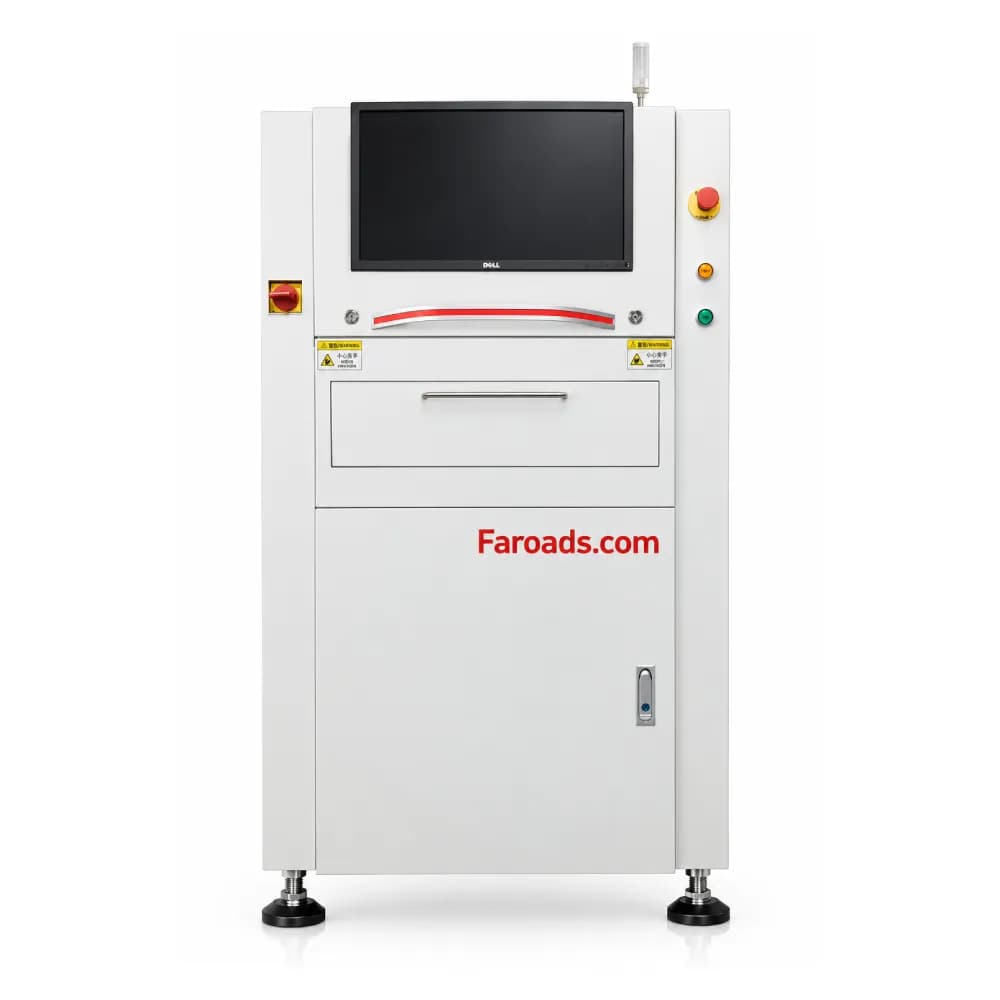
FAROAD equipment pages describe the connection points buyers should look for. Placement machines such as the CPM-H6 list MES data collection over TCP/IP and QR code or barcode recognition with binding upload to MES. The MS-8 reflow oven lists MES collection and upload over TCP/IP with QR code or barcode recognition, and an automatic power monitoring and recording system. The Inpex AOI pages list barcode recognition, SPC data and full-board image output for later traceability. Ask each supplier for the exact data fields and formats, and test them during acceptance.
Placement evidence: capability, not catalog accuracy
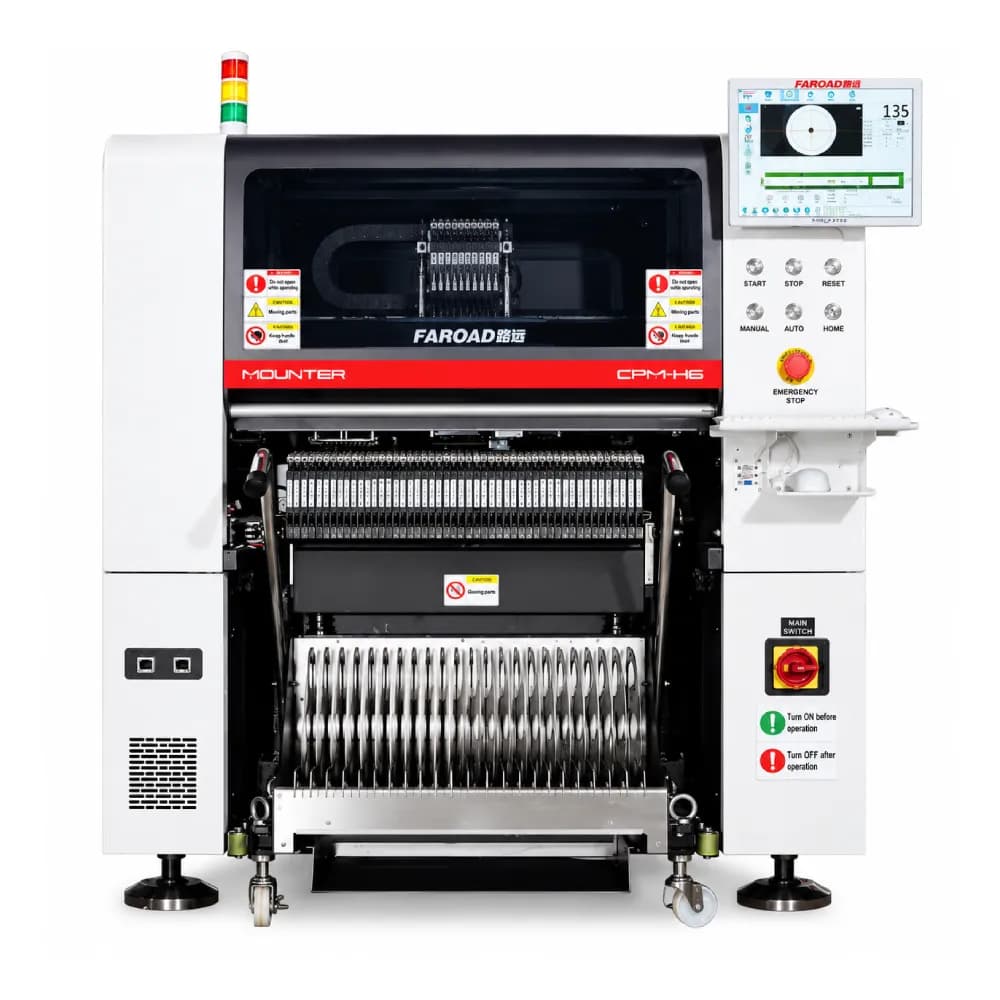
A published accuracy figure tells you what a machine can achieve under defined conditions. An automotive customer will want to know what it achieves on your boards. Ask suppliers to run a capability study with your components and boards, and to state the method and results in the acceptance plan.
Check component range for every part on the BOM, including large connectors and tall capacitors, and ask how the machine detects pick and placement errors. On the CPM-H6, the published feature list includes vacuum monitoring in real time, and laser-based board warp detection is offered as an option. Material verification at setup is equally important: decide how reels will be checked against the program before production starts.
Reflow: profile records and atmosphere decisions
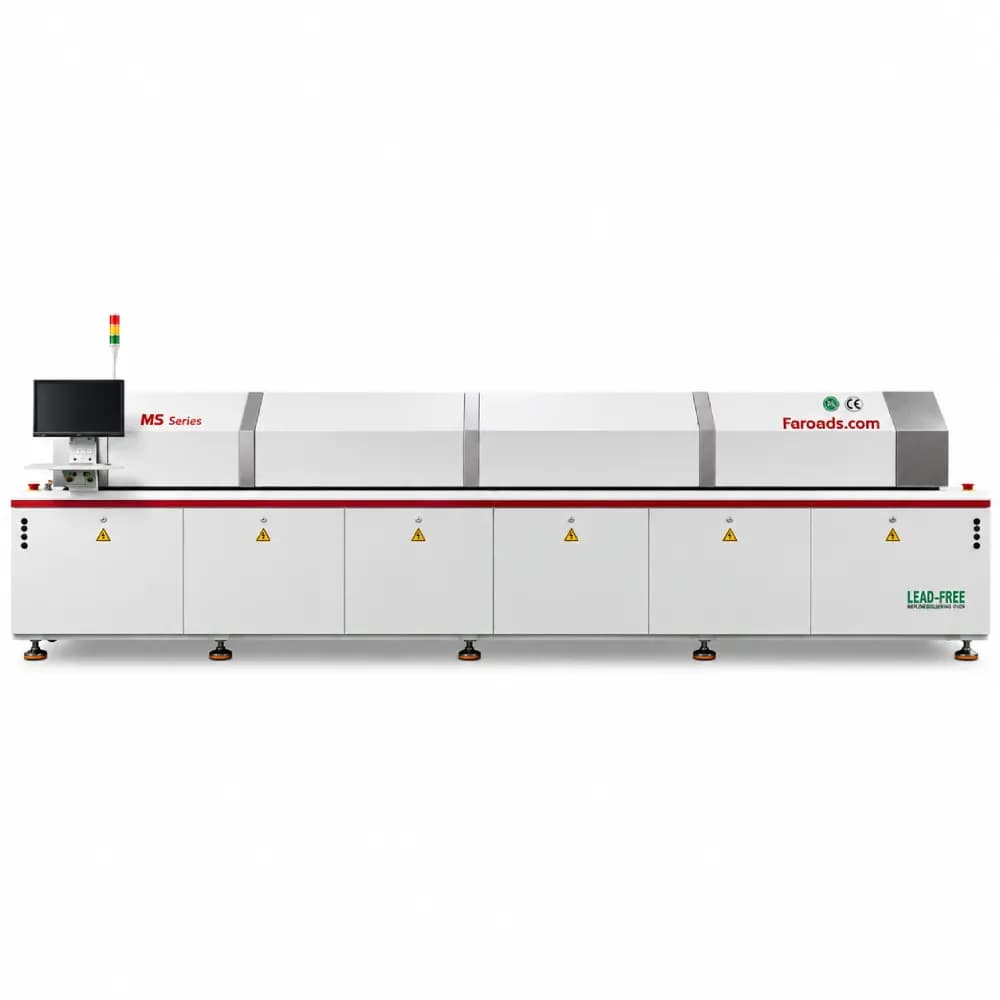
Reflow is a special process: you cannot inspect quality into a solder joint afterwards. The line must show that each board saw an approved profile.
Specify profiling on your boards during acceptance, and decide how profiles will be stored, approved and checked over time. If your process or customer requires nitrogen, include it in the specification from the start; the MS-8N version adds an oxygen analyzer, a nitrogen flow meter and an external water cooler. Our article on nitrogen reflow investment explains how to judge whether nitrogen is needed and what it costs to run.
Inspection coverage you can defend in an audit
Define which defects each inspection step is responsible for catching, and make sure the coverage is documented. Most automotive lines inspect solder paste after printing and the assembled board after reflow, with every board inspected rather than sampled.
Ask suppliers to demonstrate inspection on your boards, including known defects, and to explain how false calls are reviewed and recorded. The evidence from inspection is only useful if decisions on flagged boards are also traceable.
Plan for change control
Automotive customers usually expect to be told about significant process changes, and some changes need their approval. That affects equipment decisions after installation too: replacing a machine, changing software versions or moving a line may trigger a new approval.
Ask suppliers how software updates are released and documented, whether settings can be backed up and restored exactly, and how a replacement unit would be matched to the original. Clear answers reduce the risk that routine maintenance becomes a customer notification.
Write the acceptance trial into the RFQ
For automotive work, acceptance is where the evidence begins. State in the RFQ that acceptance will include traceability data checks, a placement capability study, reflow profiling and inspection demonstrations on your boards, with pass criteria agreed before shipment. For the structure of factory and site acceptance tests, use our SMT line integration and acceptance checklist.
Frequently asked questions
Is there such a thing as automotive-grade SMT equipment? Not as a formal standard. What matters is whether the equipment supports your quality system: data, control, capability and inspection evidence.
Does the equipment supplier need IATF 16949 certification? That standard applies to automotive production suppliers, typically you. Check your customer's requirements for any expectations of equipment suppliers.
Do we need 3D inspection for automotive boards? It depends on components and customer requirements. Decide which defects must be detected, then choose the inspection method that proves it.
Can an existing line be upgraded for automotive work? Sometimes, if machines can provide the required data and capability. A gap analysis against your requirement list will show what is missing.
Request an automotive line proposal
Send FAROAD your products, customer requirements and traceability needs, and we will propose a configuration and acceptance plan to match. Request a quote with your requirement list to start.