Reflow Soldering Defects: Which Oven Features Actually Prevent Them?
Not every soldering defect is the oven's fault. Here is how to separate print, placement and thermal causes, and which reflow oven features matter when you buy.
5 min read
When a line starts producing tombstoned chips, grainy joints or voids under power packages, the reflow oven is the easiest machine to blame. Sometimes that is right. Often it is not: a large share of what looks like a soldering problem starts at the stencil, the paste or the placement head, and a new oven will not fix it.
This guide is for buyers deciding whether an oven upgrade will solve a defect problem. It sorts common defects by where they usually start, lists the oven features that genuinely reduce the thermal ones, and explains how to prove the improvement before you sign a purchase order.
First, find where the defect really starts
Before you request oven quotations, group your defect data into three families.
Print-driven defects. Bridges between fine-pitch leads, insufficient solder and random solder balls are most often linked to paste volume, aperture design, stencil cleaning or paste handling. If your inspection data show the same pads failing regardless of oven settings, look at the printer and stencil first. Our guide to SPI and AOI equipment explains how to catch these before reflow.
Placement-driven defects. Shifted, skewed or missing parts that are already wrong before the board enters the oven are placement or handling issues. A quick check is to stop a board between the mounter and the oven and inspect it.
Thermal defects. Cold or grainy joints, non-wetting, tombstoning caused by uneven heating, excessive voiding, board warpage, discolored laminate and damaged components point toward the profile and the oven's ability to deliver it consistently.
Only the third family is a strong case for new reflow equipment. If most of your losses sit in the first two, an oven purchase will spend capital without moving yield.
Defects an oven can genuinely influence
Within the thermal family, each defect links to a specific oven capability.
Cold joints and poor wetting. The coolest joint on the board never spent enough time above the solder's melting range. Causes include too little heated length for the conveyor speed, weak heat transfer to heavy components, or a profile that cannot reach peak without overheating smaller parts.
Tombstoning from uneven heating. When one end of a small chip reaches liquidus before the other, surface tension can stand the part on end. Pad design and paste volume contribute, but uneven heat across the board makes it worse. Even airflow and a soak stage that lets the board equalize both help.
Voids under bottom-terminated parts and BGAs. Gas from flux and paste needs time and the right temperature path to escape. Profile shape matters, and so do paste chemistry and pad design. Convection ovens can reduce voiding through profile control; very low void targets may need process changes beyond the oven itself.
Warpage and head-in-pillow. Boards and large packages that heat or cool unevenly can bow during reflow, separating balls from paste at the critical moment. Uniform top and bottom heating and a controlled cooling rate reduce the risk.
Overheated components and laminate damage. If the profile needs a high peak to bring heavy parts up to temperature, light parts may exceed their rating. Better heat transfer and more zones let you lower the peak while still soldering the heavy joints.
Oven features that reduce thermal defects
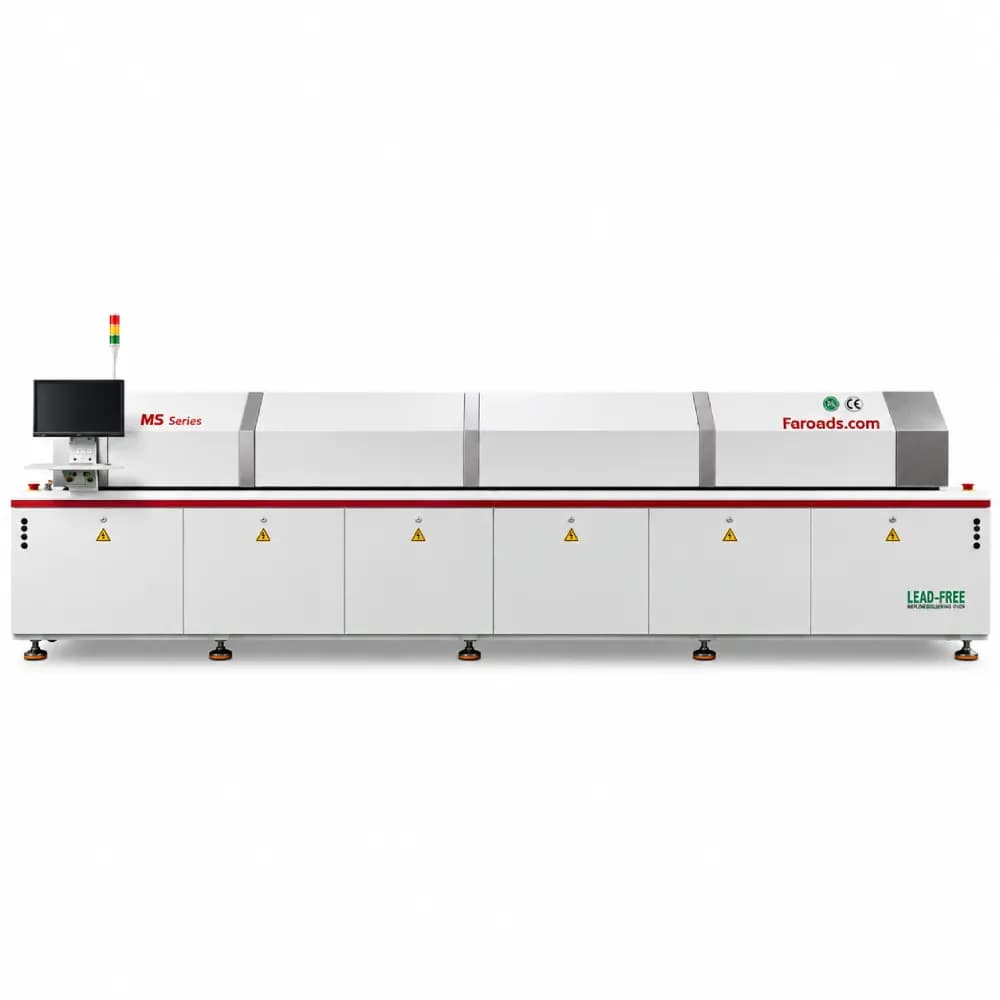
When defects are genuinely thermal, compare ovens on these points rather than on brochure headline numbers.
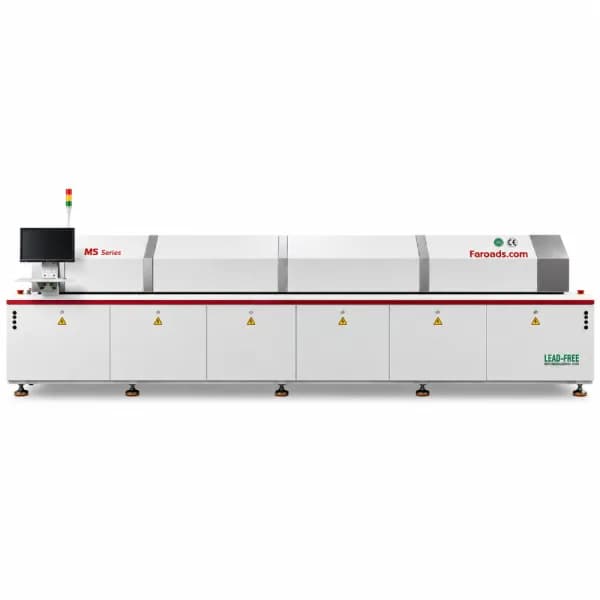
Temperature uniformity across the board. Ask the supplier how evenly heat reaches every part of a loaded board and how that was tested. FAROAD's MS series pages state a PCB temperature distribution of ±1°C and describe a temperature difference within 1.0C across five test lines. Ask any supplier, including us, to show how a figure like that was measured and to repeat the check on your heaviest board.
Control precision and stable airflow. Closed-loop control of each zone keeps setpoints steady as boards load the oven. The MS series lists PID full closed-loop control with SSR drive and ±1°C control precision. Stable fan speed and well-designed air outlet plates matter as much as heater power, because convection only works when the air reaches the board evenly.
Enough heated length and zones. Length decides how fast you can run while still giving each board its full profile. Zone count decides how finely you can shape preheat, soak and peak. Our article on reflow oven zones explains how to size both.
Controlled cooling. Cooling rate affects joint grain structure and how much stress builds in large packages and boards. Ask how many cooling zones the oven has and whether cooling can be adjusted. The MS-10, for example, lists three internally circulating cold-air cooling zones.
Flux management. Flux vapor that condenses inside the oven can drip back onto boards and changes heat transfer as it builds up. Both FAROAD oven families list a flux or rosin recovery system. Ask how often it needs cleaning at your production volume.
Atmosphere. Nitrogen can improve wetting on difficult finishes and fine features, but it is not a universal cure. Our nitrogen reflow investment guide shows how to test whether it pays for your boards.
Data and alarms. Stored recipes, temperature alarms and board-drop or jam alarms help keep the process the same from shift to shift. Recipe discipline prevents many defects that later get blamed on the hardware.
Prove the improvement before you buy
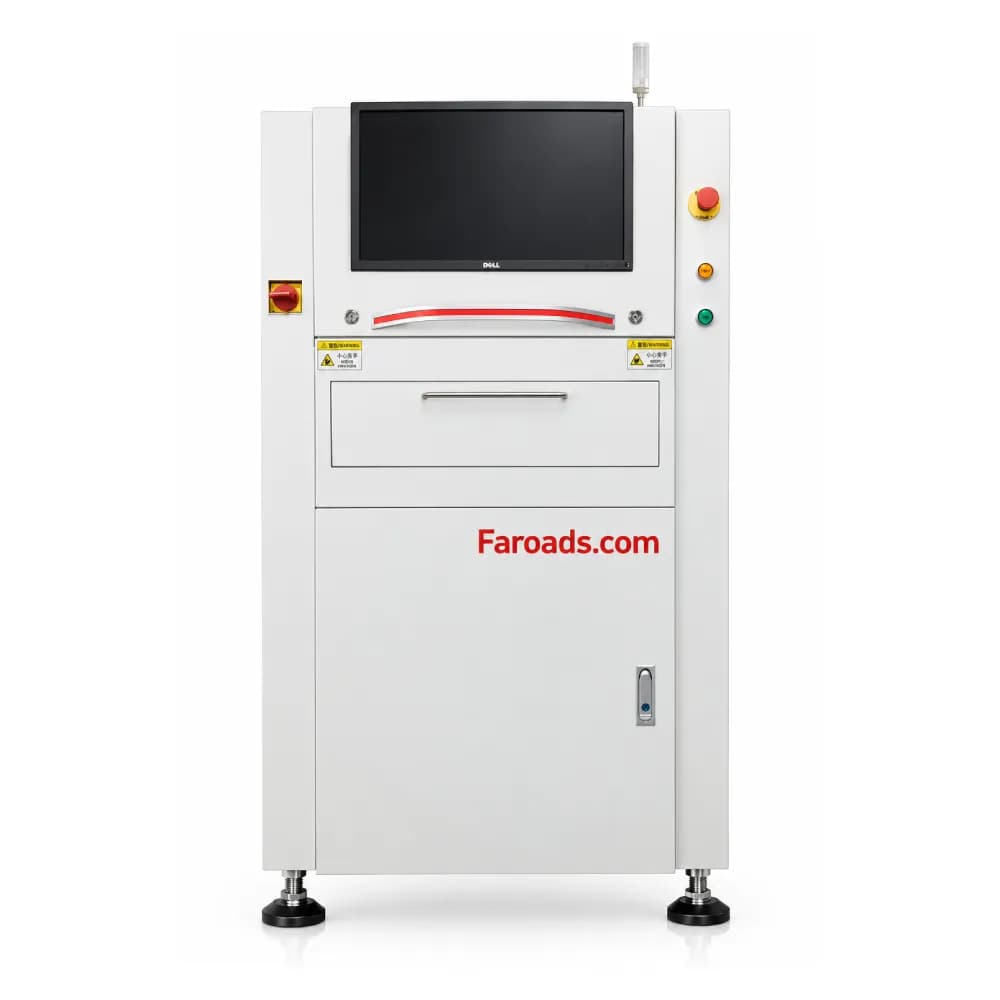
A defect-driven oven purchase should come with evidence. Build the trial around your worst product.
- Send boards that show the defect today, plus the paste datasheet and your current profile.
- Ask for a thermocouple profile with probes on the heaviest component, the smallest chip and the board center and edges.
- Compare the peak spread, liquidus time and cooling slope against your current oven's profile on the same board.
- Inspect trial boards with the same AOI or X-ray criteria you use in production, not only by eye.
If the trial does not reduce the defect, the cause probably sits upstream, and the money is better spent on printing, inspection or process work.
Where FAROAD ovens fit
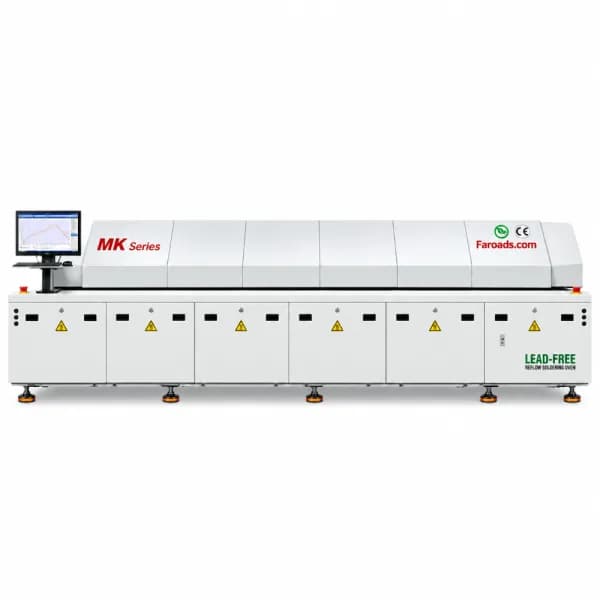
FAROAD's MS high-end lead-free reflow series runs from 8 to 14 heating zones with single- and dual-track versions and nitrogen models, and lists the uniformity and control figures quoted above. The MK energy-saving series offers 8, 10 and 12 zones with PID closed-loop control and an upgraded flux recovery system. Both are lead-free hot-air convection ovens. Confirm all specifications in your quotation.
Frequently asked questions
Will a new reflow oven fix tombstoning?
Only if uneven heating is a major cause. Check pad symmetry, paste volume on each pad and placement offset first. If those are balanced and tombstones persist, profile shape and heat uniformity are worth testing.
Can an oven eliminate voids?
A convection oven can reduce voiding through profile control, but it rarely removes it completely. Paste chemistry, pad and via design and stencil apertures all play a large part.
What profile data should I ask a supplier for?
A measured profile on your own board, showing peak temperature, time above liquidus, ramp rates and cooling rate for both the hottest and coolest locations.
Should I add inspection or replace the oven first?
If you do not yet know where defects start, add inspection first. Good data make the oven decision much easier.
Get an oven assessment for your defect data
Send FAROAD your defect pictures, inspection data, board files, paste datasheet and current profile. We will tell you whether the issue looks thermal and which oven configuration fits. Request a quote to start.