Vapor Phase vs Convection Reflow: Which Fits Your Production?
Vapor phase soldering heats evenly and cannot overshoot, while convection ovens offer inline speed and profile control. Here is how to decide which belongs on your floor.
5 min read
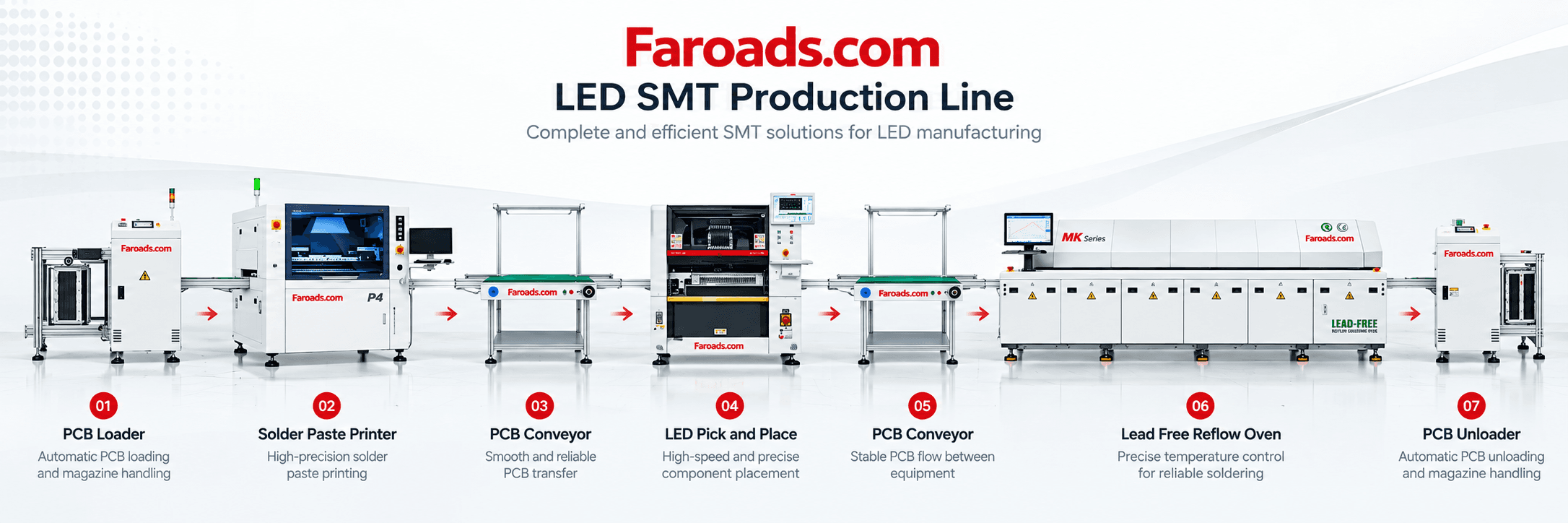
Most SMT lines solder with forced-convection reflow ovens. A smaller group of manufacturers, many of them building heavy, high-value or high-reliability boards, use vapor phase soldering instead. Both processes produce good joints. They differ in how heat reaches the board, how fast boards move, how much control you have over the profile and what it costs to run.
This guide compares the two from a buyer's point of view, so you can decide which belongs in your plant, or whether you need both.
How each process heats the board
Convection reflow blows heated air, or nitrogen, onto the board from above and below as it travels through a series of zones. Each zone has its own setpoint, so the profile is built step by step along the tunnel. Heat transfer depends on airflow, component mass, color and shadowing from tall parts.
Vapor phase soldering heats an inert perfluorinated fluid until it boils, creating a layer of dense vapor. When the cooler board enters the vapor, the vapor condenses on every exposed surface and releases its heat. The board cannot get hotter than the fluid's boiling point, which is chosen to suit the solder alloy. Fluids used for lead-free work commonly boil at around 230 degrees C.
That single difference drives most of the trade-offs that follow.
Where vapor phase has the edge
Uniform heating regardless of mass. Because heat arrives by condensation, a large connector and a tiny chip resistor approach the same temperature. Boards with heavy copper, large ground planes or a wide spread of component sizes are easier to solder evenly.
A built-in temperature ceiling. The boiling point limits peak temperature, so overshoot is physically prevented. That protects temperature-sensitive components and laminates, which is valuable within the narrow lead-free process window.
An oxygen-free soldering environment. The vapor displaces air during soldering, giving good wetting without a nitrogen supply.
Very large or unusual boards. Large panels that are hard to heat evenly with air can be easier to process in vapor.
These strengths explain why vapor phase systems are often found in aerospace, defense, medical and power electronics work, and in prototype shops facing frequent new board designs.
Where convection reflow has the edge
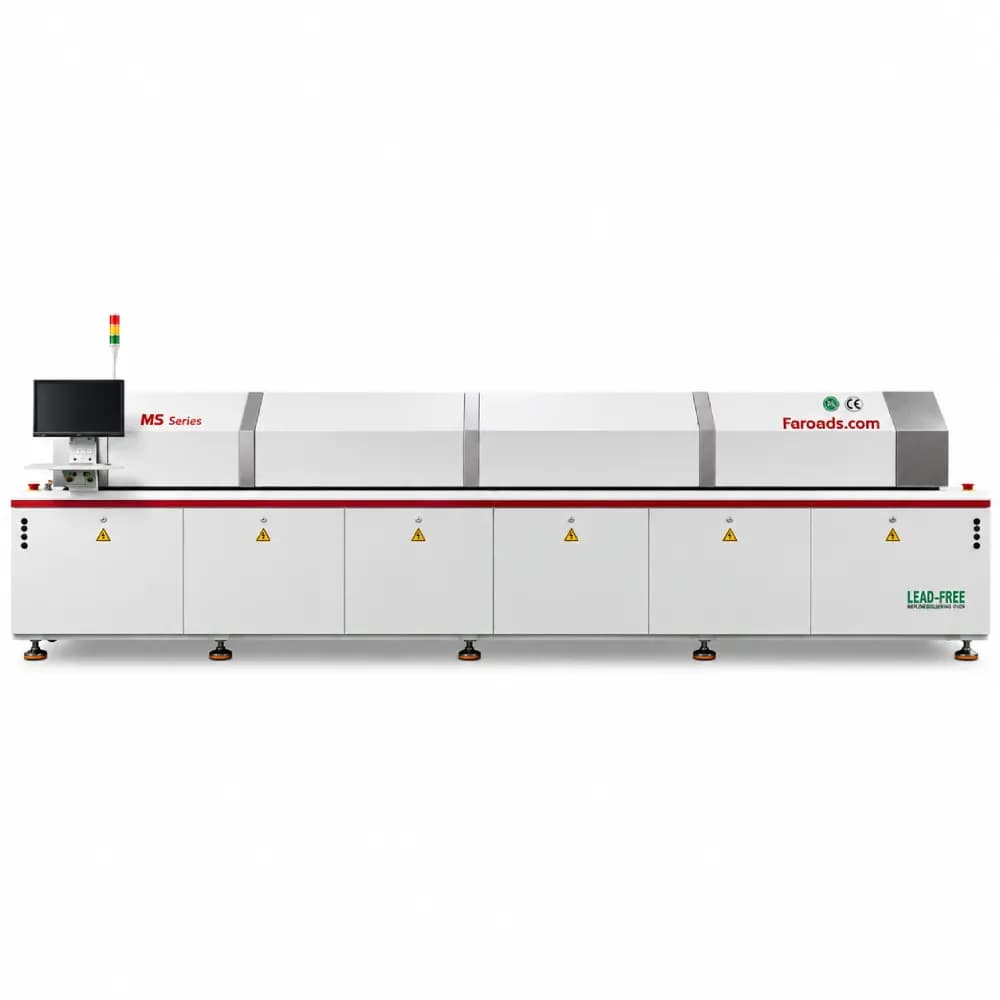
Inline throughput. Convection ovens are built to run continuously in a line, with boards entering from the mounter and leaving to inspection without operator handling. Many vapor phase systems are batch machines, and inline vapor phase systems are a significant investment. If your line needs a steady flow of boards, convection usually wins. Our comparison of inline and batch reflow covers the throughput side in detail.
Profile control. Separate zones let process engineers shape the ramp, soak, peak and cooling stages independently. Vapor phase heating can be steep unless the system offers ways to control the heating rate, and profile options vary widely between models.
Voiding control options. Vapor phase is not automatically low-void. At least one published comparison found higher voiding with vapor phase than with convection for some no-clean pastes when no vacuum stage was used. If low voiding matters, ask any vapor phase supplier about vacuum options and test with your paste.
Consumables and familiarity. Convection ovens need electricity, exhaust and optionally nitrogen. Vapor phase systems also consume heat-transfer fluid, which must be topped up and recovered. Convection ovens are also more widely understood by technicians, profile engineers and service providers.
A practical way to decide
Answer four questions about your production.
1. How many boards per shift, and in what flow? Continuous production through a printer, mounters and AOI points strongly to an inline convection oven. Small lots of complex boards built in bursts fit vapor phase more naturally.
2. How hard are your boards to heat? Light, standard boards with typical passives and ICs are well served by convection. Very heavy boards, thick copper, metal-core boards or extreme mass differences favor vapor phase or a long convection oven with many zones. Our guide to SMT equipment for power electronics discusses thermal mass in more depth.
3. What are your reliability and documentation requirements? Vapor phase's temperature ceiling simplifies one part of process control. Convection's zone data and recipes simplify another. Both can be validated; decide which your quality team prefers to defend in an audit.
4. How much product variety do you run? Vapor phase can reduce profile development for each new board because the peak is fixed. Convection ovens make up for it with stored recipes and, on longer ovens, enough zones to find one profile that suits several products.
When both make sense
Some plants run a convection line for their main products and keep a batch vapor phase unit for heavy, low-volume or prototype boards. That keeps the line moving while giving difficult boards a gentler process. If you choose this route, budget for two sets of procedures, training and maintenance.
How to compare quotations fairly
- Run the same heavy board and the same paste through both processes.
- Measure peak temperature spread, time above liquidus and cooling rate with thermocouples.
- Inspect voiding and wetting with the same X-ray and AOI criteria.
- Compare cycle time per board at your real volume, including loading and unloading.
- Add utilities, consumables and maintenance labor to the comparison, not just the purchase price.
Where FAROAD fits
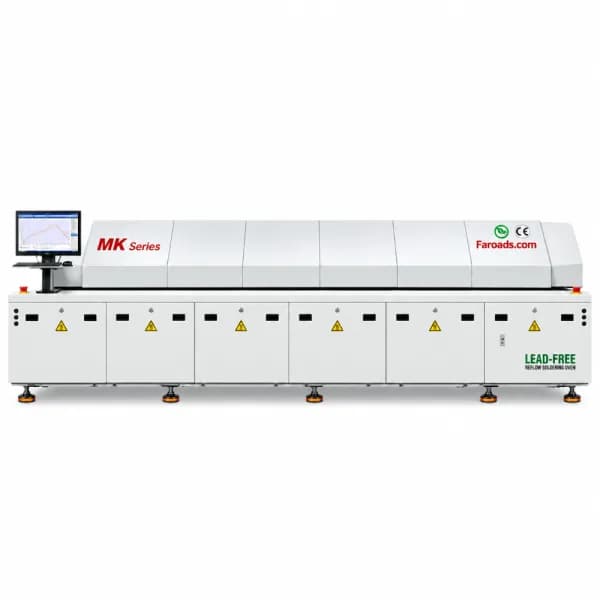
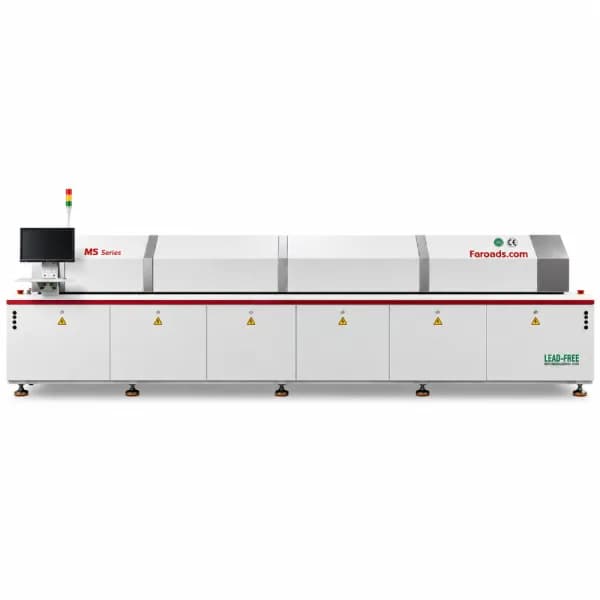
FAROAD supplies inline convection reflow ovens, not vapor phase systems. The reflow oven range includes the MS high-end lead-free series from 8 to 14 zones with dual-track and nitrogen versions, the MK energy-saving series and LED-specific MK-MAX mesh-belt models. If your production is continuous and your boards suit convection, we can propose a configuration and profile your boards. If your trial data show that your boards truly need vapor phase, that is worth knowing before you buy any oven.
Frequently asked questions
Is vapor phase better than convection reflow?
Neither is better overall. Vapor phase excels on heavy, mixed-mass and heat-sensitive boards in lower volumes. Convection excels in continuous production with flexible profile control.
Does vapor phase need nitrogen?
No. The vapor itself provides an oxygen-free environment during soldering.
Can a convection oven handle heavy boards?
Often, yes, with enough zones, heated length and a well-developed profile. Trial your heaviest board before deciding.
Is vapor phase slower?
Batch vapor phase systems are usually slower than an inline convection oven. Inline vapor phase systems exist, at a higher investment.
Discuss your reflow process with FAROAD
Send us your board files, heaviest components, paste datasheet and target volume. We will recommend a convection oven configuration and explain where it fits your boards. Request a quote to start.