Stencil Printing vs Jet Printing: Which Solder Paste Process Fits Your Line?
When stencil printing should stay the default solder paste process, when jet or stencil-free printing is worth considering, and how to trial the choice without treating a dispenser as a jet printer.
5 min read
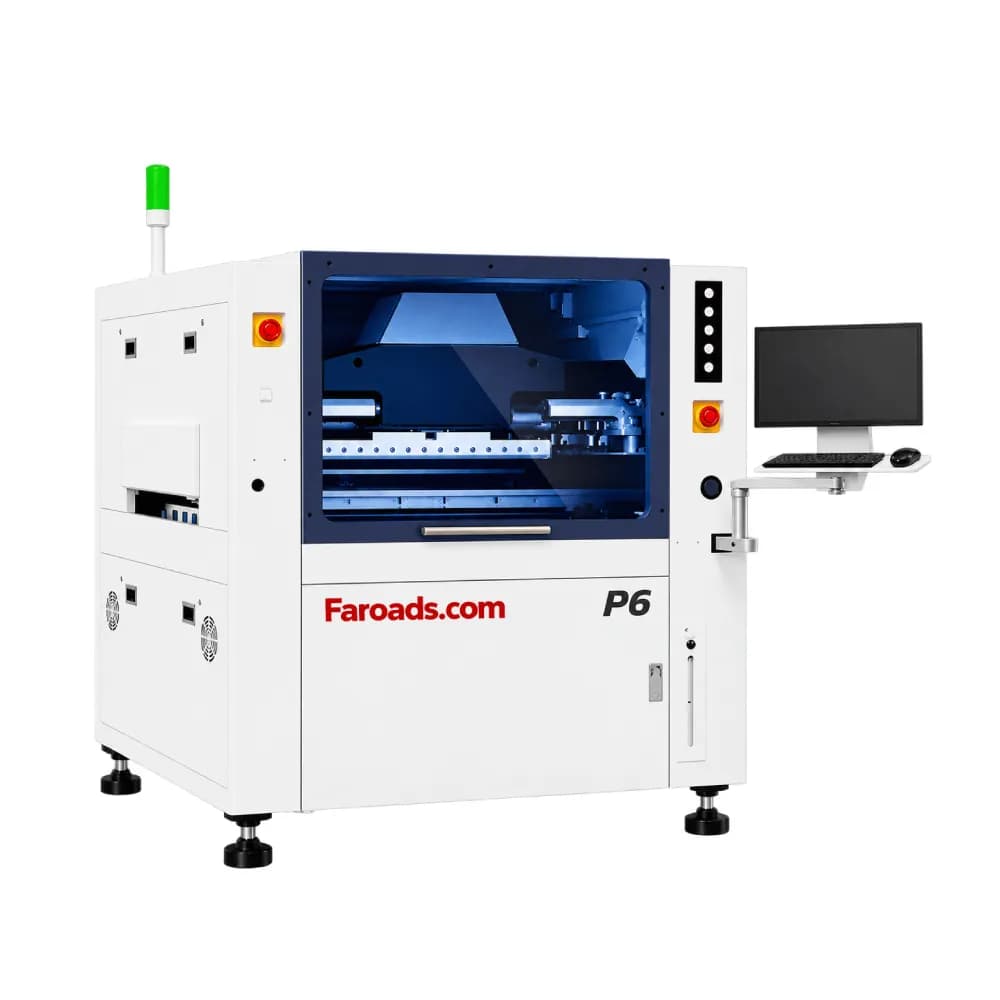
Most SMT lines deposit solder paste with an automatic stencil printer. A smaller group of manufacturers look at jet printing solder paste, sometimes called stencil-free printing, when a stencil cannot form the deposits they need or when stencil inventory has become a bottleneck. Both processes can produce a good print. They differ in how paste is applied, how changeovers work, how fast a board can be printed, and what you have to qualify.
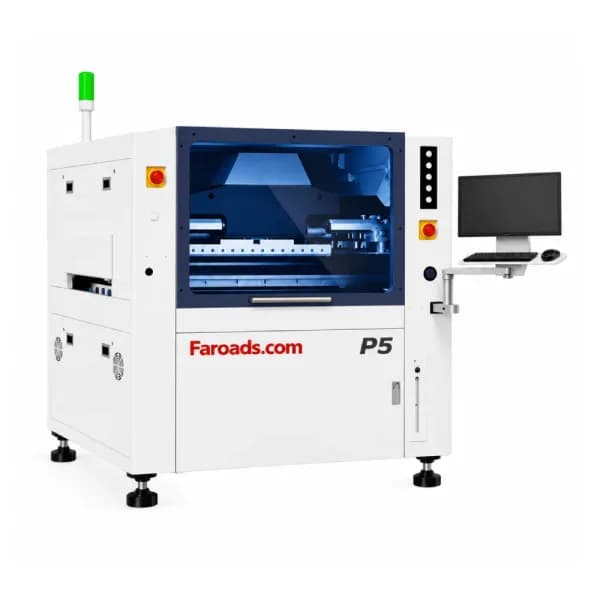
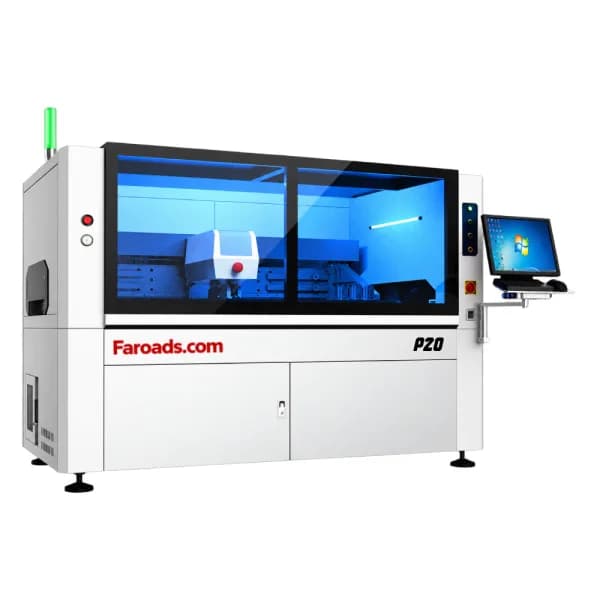
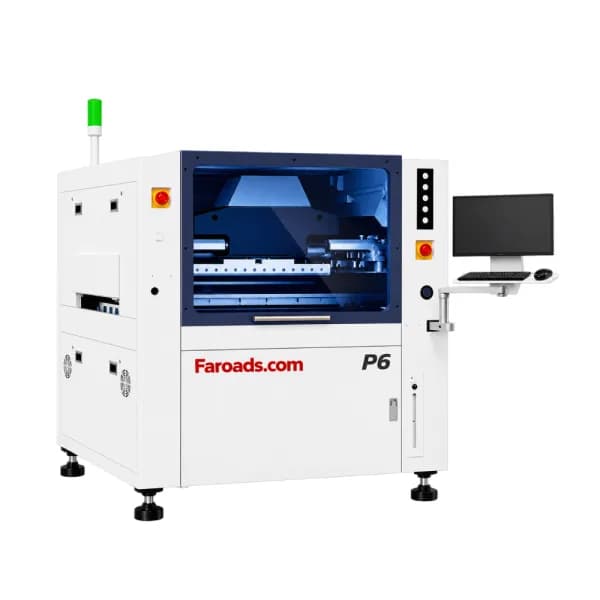
FAROAD sells automatic stencil printers — the P6, the P5, and the P20 for long LED boards. FAROAD does not currently list a jet printer or a stencil-free paste printer. Dispensing equipment is still Coming soon on the equipment catalog, and it is not a substitute for a jet paste printer. This guide compares the two processes as a purchasing decision, so you can judge which process belongs on your line. It does not retell printer feature selection or become a stencil-design tutorial; those topics are covered in solder paste printer selection and in solder paste printing defects.
Two ways to deposit solder paste
Stencil printing pushes paste through apertures in a metal foil with a squeegee, then separates the board from the stencil. The deposit shape is largely set by the aperture, the stencil thickness, the print and separation settings, and how well the board is supported. It is a mature, high-throughput process, and most paste, stencil and inspection practice is built around it.
Jet printing solder paste, or stencil-free deposition, places discrete dots or patterns from a print head without a stencil. Volume can be added where a single stencil thickness would be a compromise, and there is no foil to stock, clean or change between jobs. The trade-off is that the process depends on the head, the paste's behavior in a small orifice, and a motion path that has to be written and qualified for each layout. Cycle time is usually set by how many dots the board needs, not by a single pass of a squeegee.
When stencil printing is the right default
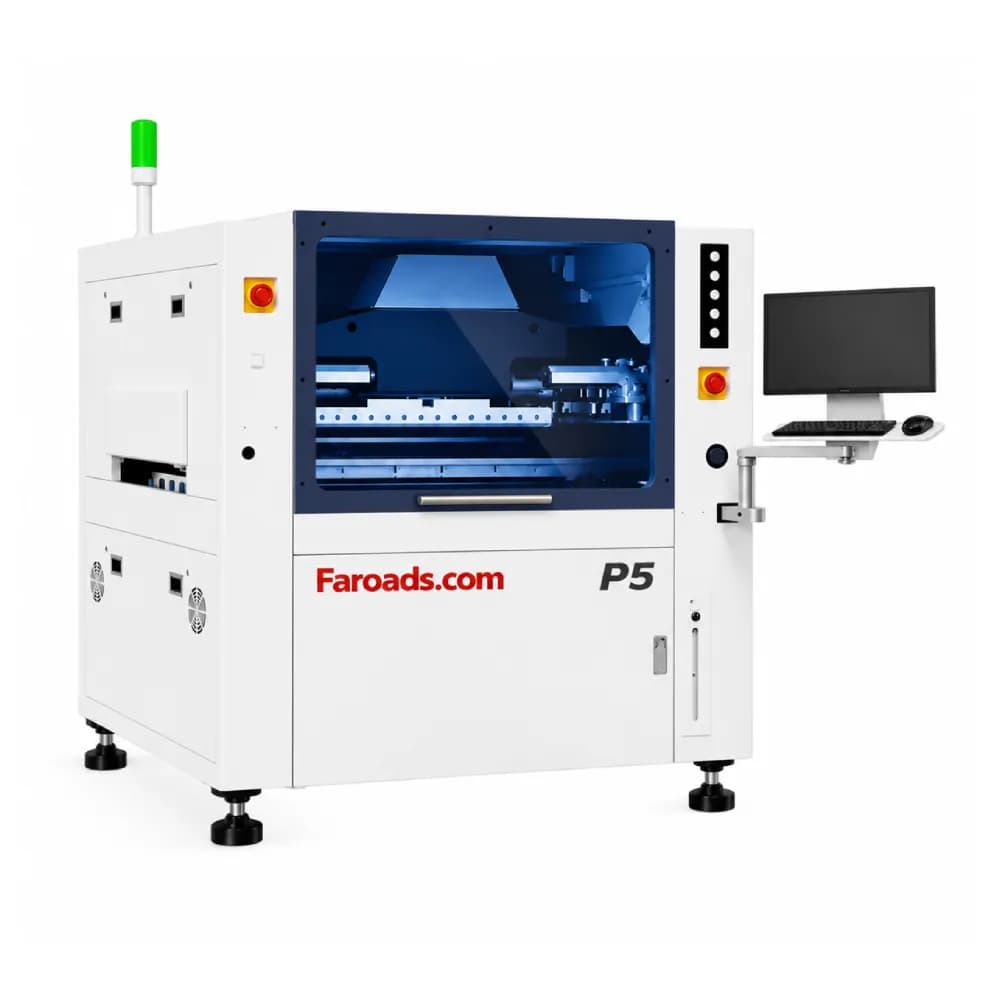
For standard SMT work — repeating panels, established pad designs, and a line that must keep up with placement — a stencil printer is still the usual first choice. The process is widely understood, spare stencils and cleaning methods are easy to buy, and a well-set printer can complete a board in a short, fairly consistent cycle.
FAROAD's published core cycle figures, re-checked on 18 November 2026, are 7 s on the P5, 10 s on the P6 and 15 s on the P20. Those are brochure cycle figures. Confirm what is included — board transfer, cleaning and any inspection — before you treat them as shift throughput. They are not a claim that stencil printing is "faster than jet" on your product; a jet system's time depends on the deposit count and the qualified paste, which FAROAD does not list.
If your defects today are insufficient paste, bridging or smearing, start with the printer, the stencil and the support, not with a process change. The printing-defects article maps those problems to machine features. Change the deposition method only when the stencil process itself is the constraint.
When jet or stencil-free printing is worth considering
Consider jet printing solder paste as a general industry option, not as a FAROAD product, when one of these conditions is real:
- You need different deposit volumes on the same board that a single stencil thickness cannot form well, even with step stencils.
- Stencil inventory, storage and changeover are consuming more time than the print stroke itself, especially on a high-mix line with many short jobs.
- Aperture or board conditions that a stencil handles poorly — unusual pad geometries, printing around already-placed parts, or other cases where a foil cannot sit flat — show up in your mix.
- You are prepared to qualify a paste that is approved for jetting, and to treat a paste change as a requalification, not a drop-in swap.
None of those conditions automatically makes jetting cheaper or better. They are reasons to run a trial, not reasons to abandon a working stencil process.
Changeover, stencil logistics and inspection
Stencil logistics are part of the cost of the default process: foil purchase, storage, inspection, cleaning and the time to change a stencil and re-verify the first boards. Automatic printers reduce some of that labor; they do not eliminate the stencil as an item you must manage. Jetting removes the foil, but it moves the work into program creation, head maintenance and paste qualification.
Inspection does not go away in either case. A 3D SPI is still the right way to measure volume, height and shape, whether the paste arrived through a stencil or from a jet head. Use the 3D SPI selection guide when you specify that machine. Closed-loop feedback to a stencil printer is a capability to verify on a stencil line; do not assume a jet process will close the same loop in the same way.
How to run a fair process trial
Trial both processes, if you are seriously considering jet, on your own boards and your own quality gates — not only on a supplier demonstration panel. Pick at least one high-volume design that a stencil already prints well, and one design that is actually causing stencil trouble. Measure deposit volume and shape, first-pass yield, changeover time, paste consumption and the operator skill the process really needs.
Because FAROAD does not list a jet printer, a jet trial will be with another supplier. Keep the comparison honest: do not judge a stencil printer by a brochure cycle and a jet system by a best-case coupon. If the stencil process meets the deposit and changeover targets, it is usually the simpler buy. If it does not, you will have evidence, not a preference, for looking at stencil-free deposition.
Frequently asked questions
Does FAROAD sell a jet printer? No. FAROAD lists automatic stencil printers, including the P5, P6 and the long-board P20. A Coming soon dispenser is not a FAROAD jet paste printer.
Is jet printing always better for high-mix work? No. It can reduce stencil changeover, but only if program creation, paste qualification and the print time for your deposit count still meet the line cycle. Trial it on your job mix.
Do I still need SPI if I switch to jetting? Yes. Changing how paste is applied does not remove the need to measure the deposit. Specify SPI against the pads and volumes you actually print.
Can I compare FAROAD printer cycle times directly with a jet system? Not as a headline. The P5, P6 and P20 figures cited above are published core cycle times. Confirm what they include, and compare them with a jet cycle measured on the same boards.
Request a solder paste printing recommendation
Send FAROAD your panel sizes, pad designs, job mix and any deposit that a stencil currently struggles to form. We will recommend a stencil printer configuration and a print trial, and we will be clear about what we do and do not sell. Request a quote to start that review.