Aluminum PCB Assembly: SMT Equipment Checks for Metal-Core Boards
How aluminum and other metal-core boards change printing, placement, reflow, inspection and handling, with FAROAD listed limits to check before you buy equipment for LED, power or lighting products.
5 min read
Aluminum-backed boards, often called metal-core or insulated metal substrate boards, carry a thin dielectric and copper layer on an aluminum base. They spread heat away from LEDs, power transistors and regulators, which is why they appear in lighting, automotive lamps, power supplies and motor drives. That same heat-spreading behaviour changes how the board acts on an SMT line. This guide covers the equipment checks that follow from the substrate. For long lighting panels, see our long-board LED line guide; for oven class on lighting products, see the LED reflow oven guide.
Why a metal core behaves differently
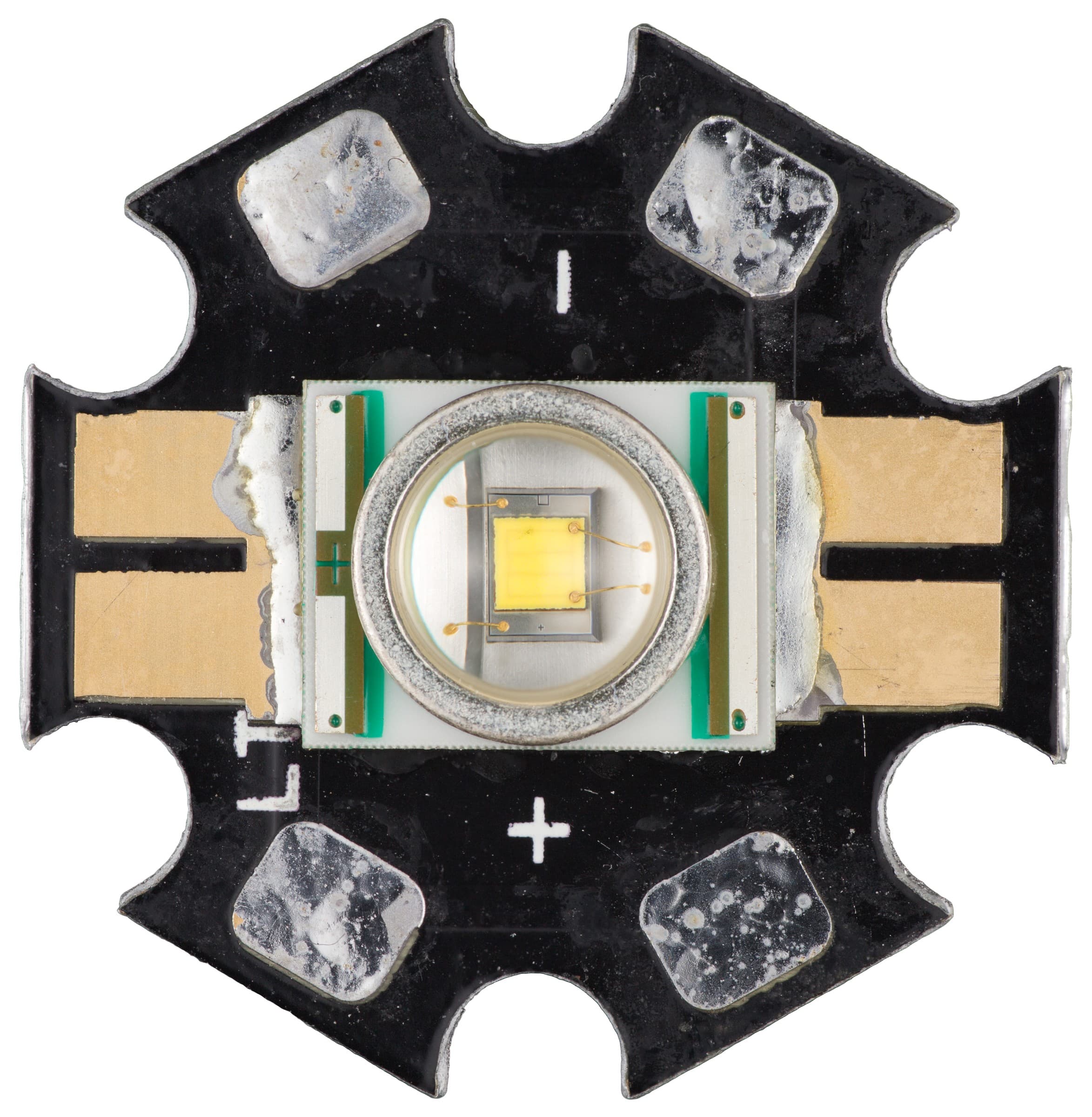
A high-power LED mounted on a star-shaped metal-core board. Photo: Lucasbosch. Source on Wikimedia Commons, CC BY-SA 4.0. Converted from PNG to JPEG on a white background and resized from 3235 × 3308 px to 2347 × 2400 px for publication; not cropped. This file is shared under the same license.
Four properties matter on the line:
- Thermal mass and conductivity. Heat put into a pad flows into the aluminum. The whole board must reach reflow temperature, which takes more energy and time than a similar FR-4 board.
- Weight. An aluminum panel is heavier than a glass-epoxy panel of the same size, which affects transport, clamping and magazine handling.
- Rigidity. Metal-core boards are stiff, which helps printing, but single-sided builds can still bow after heating.
- Usually single-sided. Components normally sit on one side, so underside support is simple.
Printing: flat, stiff and heavy
Stiffness makes metal-core boards easy to support under the stencil. Vacuum support, listed on the FAROAD P4, P5 and P6 as a free-splicing vacuum cavity with support blocks and pins, works well on a flat metal back.
Check weight and thickness. On the P5 page, two different rows give 4 kg and 5 kg as the weight ceiling, so confirm which applies; the P20 page gives 4 kg. Thickness ranges are 0.4–6 mm on the P5 and P20 and 0.6–6 mm on the P6. Large thermal pads under LEDs and power parts usually need segmented apertures to control voiding; agree the stencil design with your process engineer before the trial.
Placement: LEDs, drivers and power parts
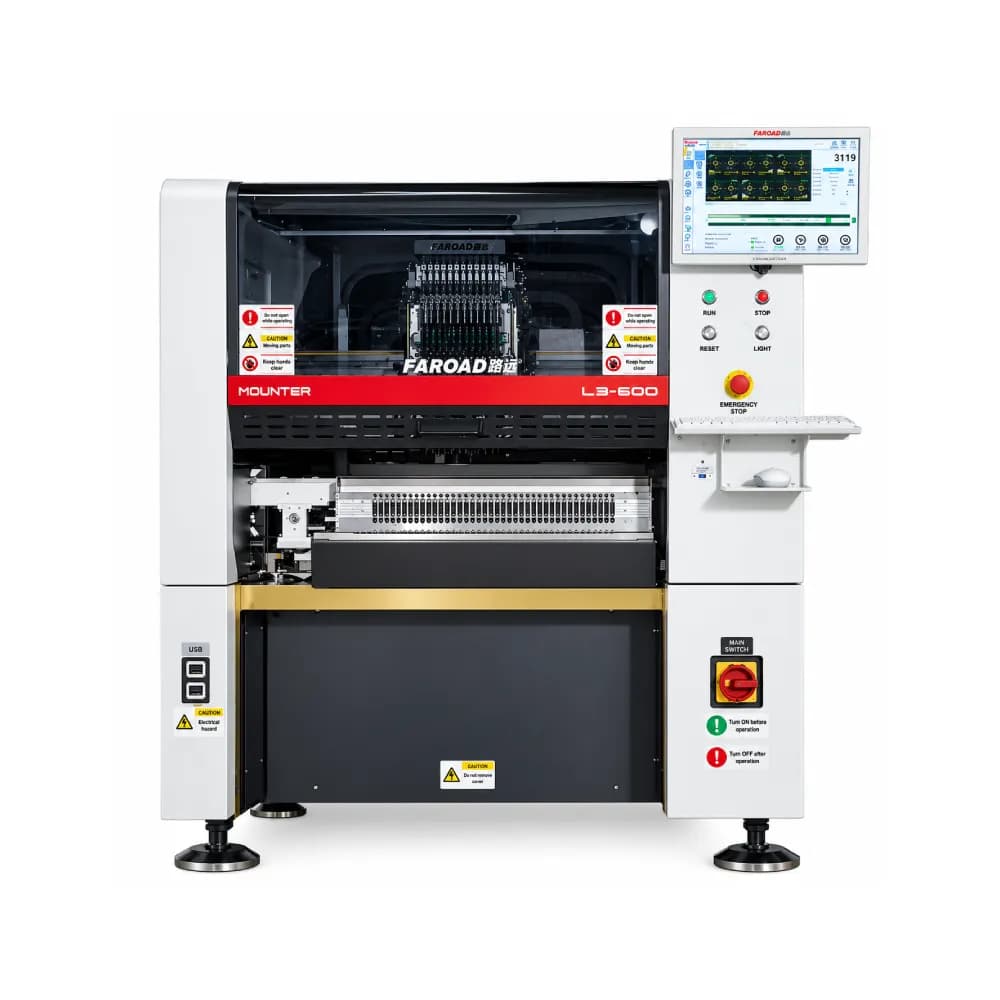
Placement on metal-core boards is often split between many identical LEDs and a smaller set of driver or power parts. FAROAD's CPM-L3-600 lamp-bead machine lists 70,000 CPH optimum (IPC-9850), ±0.08 mm accuracy, components from imperial 0402 to 12 × 12 mm and boards up to 600 × 400 mm. The CPM-L3F driver-on-board machine lists components up to 20 × 20 mm and 24 mm thick, with boards up to 1,200 × 400 mm in two segments. Both list board thickness of 0.4–9.5 mm and pneumatic lifting with upper and lower clamps.
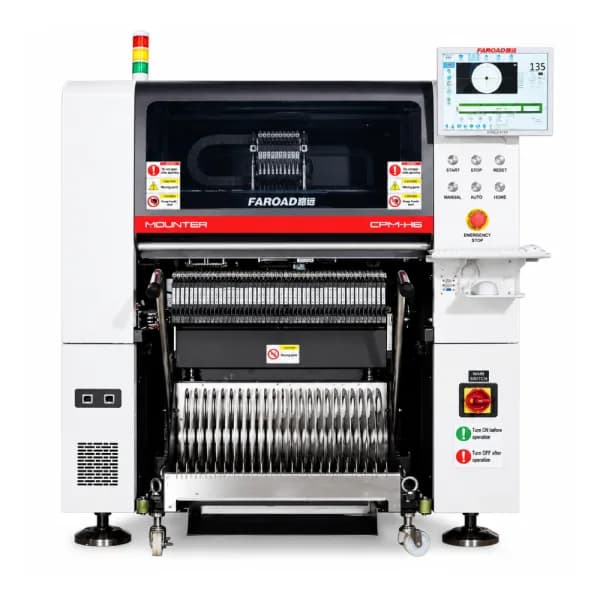
If the driver section includes fine-pitch ICs, check them against a general CPM mounter's range. Heavy boards also need a firm lift and clamp, so confirm the clamp holds the board without marking the metal edge.
Reflow: thermal mass decides the oven
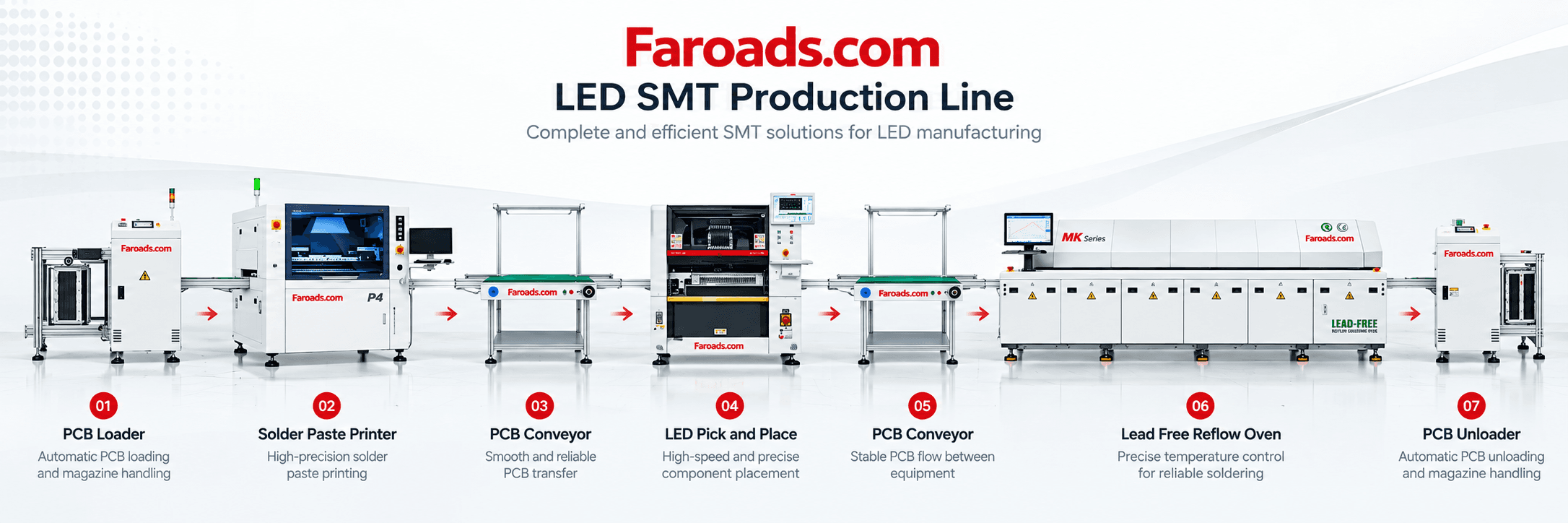
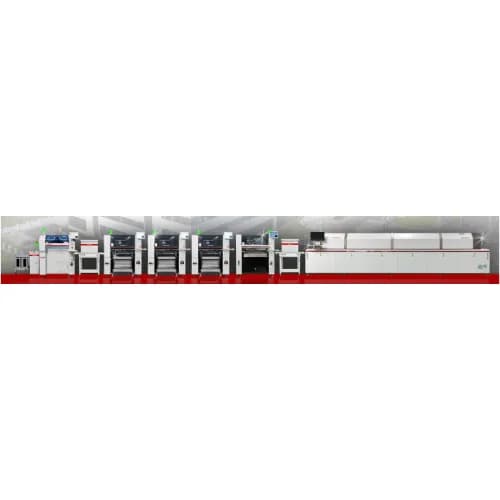
Metal-core boards are where heated length and zone count earn their place. The board needs time in each zone to come up to temperature evenly. As an illustrative calculation, an MS-10 has a listed heated length of 3,890 mm; at a belt speed of 800 mm per minute a board spends about 4.9 minutes in the heated section. If the profile on your aluminum board needs more time, the choice is a slower belt, which cuts output, or a longer oven such as the MS-12 (4,640 mm) or MS-14 (5,836 mm). Our reflow oven zones guide explains that trade-off.
Width and conveyor type follow the board. MS single-track ovens list widths of 50–490 mm on rails; the MK-8MAX LED oven lists a 700 mm mesh belt. Profile with thermocouples bonded to the aluminum near the hottest and coolest parts, and check exit temperature, because a metal board also cools slowly.
Inspection and handling
Bright LED bodies and reflective metal edges can challenge optical inspection programs; build them from your real boards. Board weight tops out at 5 kg on the S510 AOI and 7 kg on the M400, with thickness 0.3–5 mm on both. Magazine loaders and unloaders must also cope with heavier stacks; the L400 loader lists boards up to 400 × 330 mm, so large metal panels may need a different handling approach.
Run the trial on the real substrate
An FR-4 sample will not tell you how the line behaves with aluminum. Ask for a trial that uses the production metal-core board and stencil, measures paste on the thermal pads, places the full LED and driver mix, runs a loaded thermocouple profile at the target belt speed, and checks voiding where your customer cares about it.
Questions for the equipment quotation
Before comparing prices, ask each supplier to confirm, for the exact models quoted:
- Maximum panel weight and thickness at the printer, mounter, oven conveyor and AOI.
- How the board is clamped and supported without scratching the metal back or edge.
- The oven length and belt speed they propose for your aluminum board, and the profile evidence behind it.
- Exit temperature at the next station when running at that speed.
- How magazine loading is handled for heavier panels.
Frequently asked questions
Can a standard SMT line build aluminum PCBs? Usually yes, if each station accepts the board's weight and thickness and the oven can deliver the required profile at your belt speed. Do aluminum boards need a longer reflow oven? Often they need more time at temperature than FR-4. That can come from a longer oven or a slower belt; the profile on the real board decides. Are metal-core boards only for LEDs? No. They are also used for power conversion, motor drives and automotive lighting, anywhere a component needs a short thermal path. Which FAROAD placement machine suits aluminum LED boards? The CPM-L3-600 targets lamp-bead placement, the CPM-L3F covers driver parts on LED boards, and general CPM mounters cover fine-pitch ICs. The mix on your board decides.
Send us your metal-core board
Share the board stack-up, size, weight and component list. We will check each FAROAD station against the substrate and propose a loaded-board trial. Review the CPM-L3-600 specifications or request a quote.