SMT Equipment for BGA and QFN: What to Require Before You Buy
How to specify SMT equipment for BGA and QFN assemblies: paste inspection, placement range and feeding, reflow conditions, and the inspection limits of 2D AOI when joints are hidden.
6 min read
This article is about specifying the equipment stack for bottom-termination packages such as BGA and QFN: solder paste volume you can measure, a placement machine that can see and feed the package, a reflow process you can prove, and an honest inspection plan for joints you cannot see from above. It does not retell how to read placement accuracy, how to choose a 3D SPI machine, or the difference between 2D and 3D AOI. Accuracy is covered in pick-and-place accuracy. SPI selection is in how to choose a 3D SPI machine, and the optical-technology choice is in 2D vs 3D AOI.
Hidden joints change the equipment brief
A BGA or QFN does not give you a conventional side fillet you can judge by eye after reflow. Most of the solder sits under the package. That changes what you should buy, and it changes what you should not claim. The brief has to start with the actual packages: body size, pitch, ball or pad count, whether the part arrives on a tray, and the defect that already costs you the most—opens, shorts, insufficient solder, voiding or skew.
FAROAD does not list a machine called a "BGA placement machine." What it lists is a component range, a camera type, optional tray feeding, a 3D SPI model, convection reflow ovens, and 2D AOI. Those published ranges are the right starting point. They are not a substitute for a trial of the packages you will run.
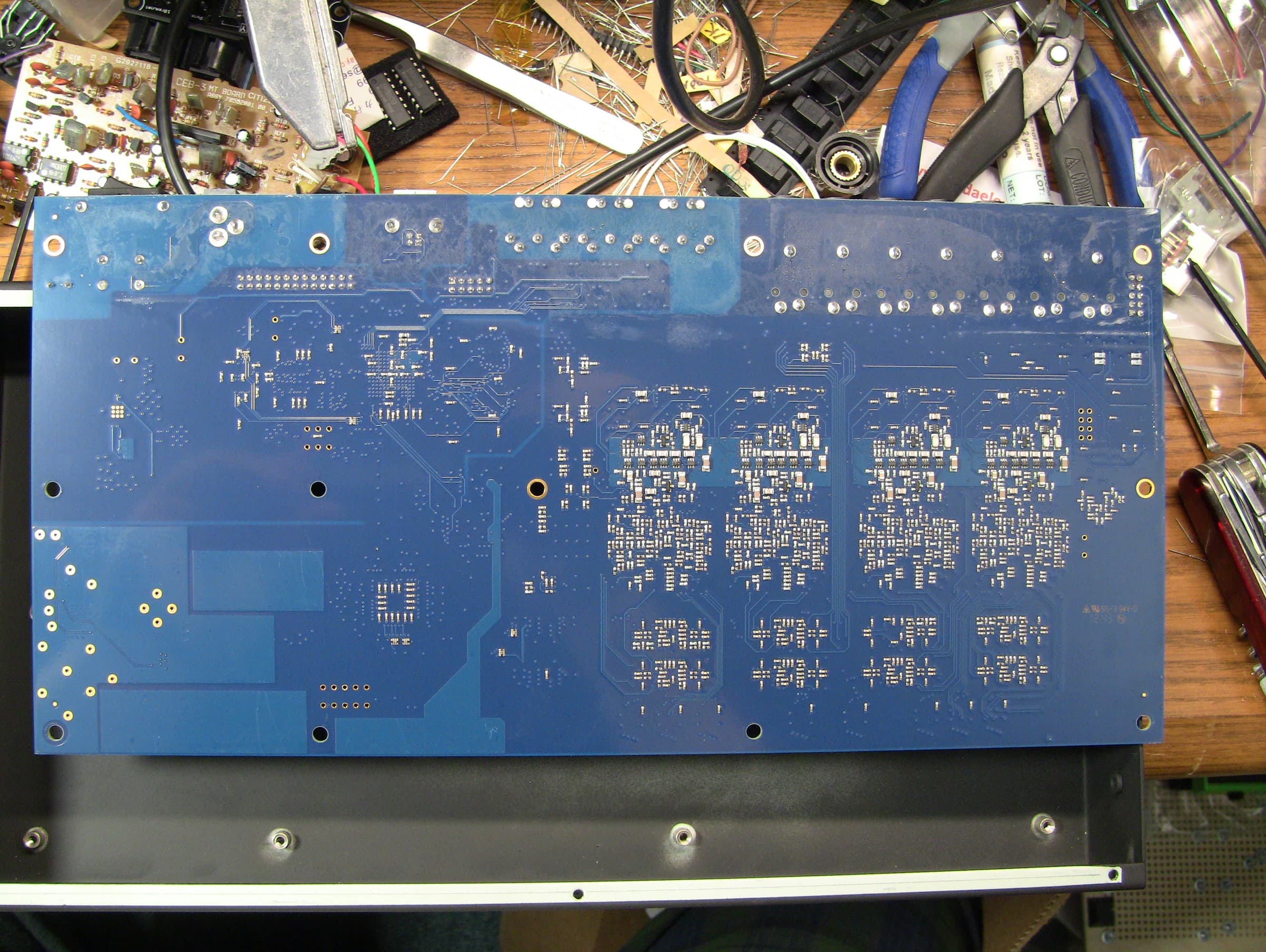
Photograph: Pete Brown. Original source on Flickr. Licensed under CC BY 2.0. Resized from 3264 × 2456 px to 2400 × 1805 px and recompressed as JPEG for publication; not cropped.
Printing and SPI come first
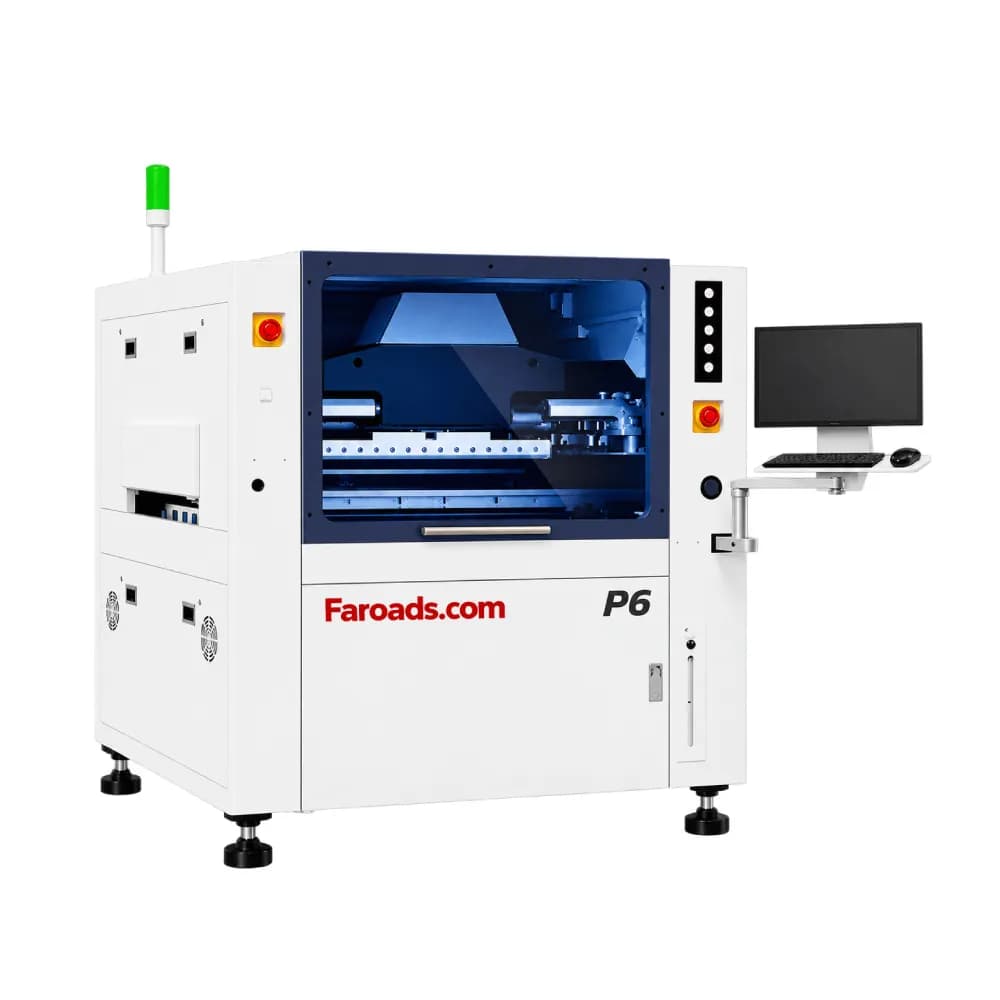
Most hidden-joint failures start as a paste problem. If the printed volume, area or height is wrong, the placement machine cannot repair it later. A 3D SPI that measures volume, area and height is the equipment that makes that risk visible before the board is populated. FAROAD lists the Inpex 510 as a 3D SPI with those measured items. Its published board-handling window tops out at 450 × 500 mm.
Specify the SPI against the smallest pad and the tightest spacing in the BGA or QFN footprint, and against the printer that will make the deposit. Pair the printer and the SPI in the same brief, so the deposit you inspect is the deposit the printer will actually make. Do not treat a 2D AOI after reflow as a substitute for paste inspection on these packages.
Placement: size, vision and how the part is fed
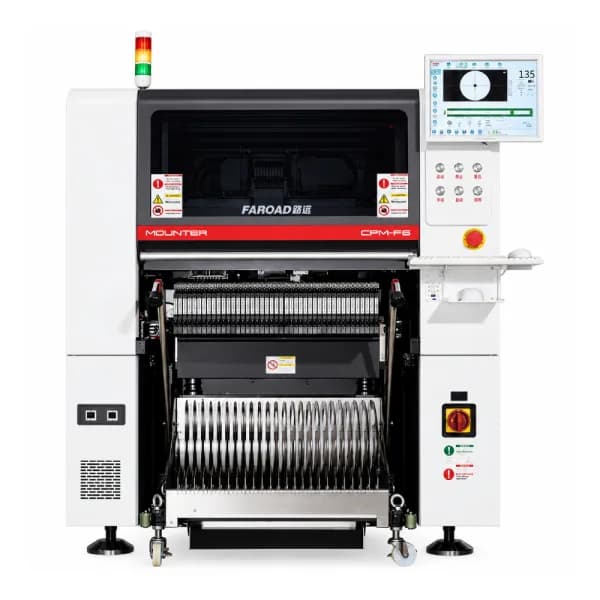
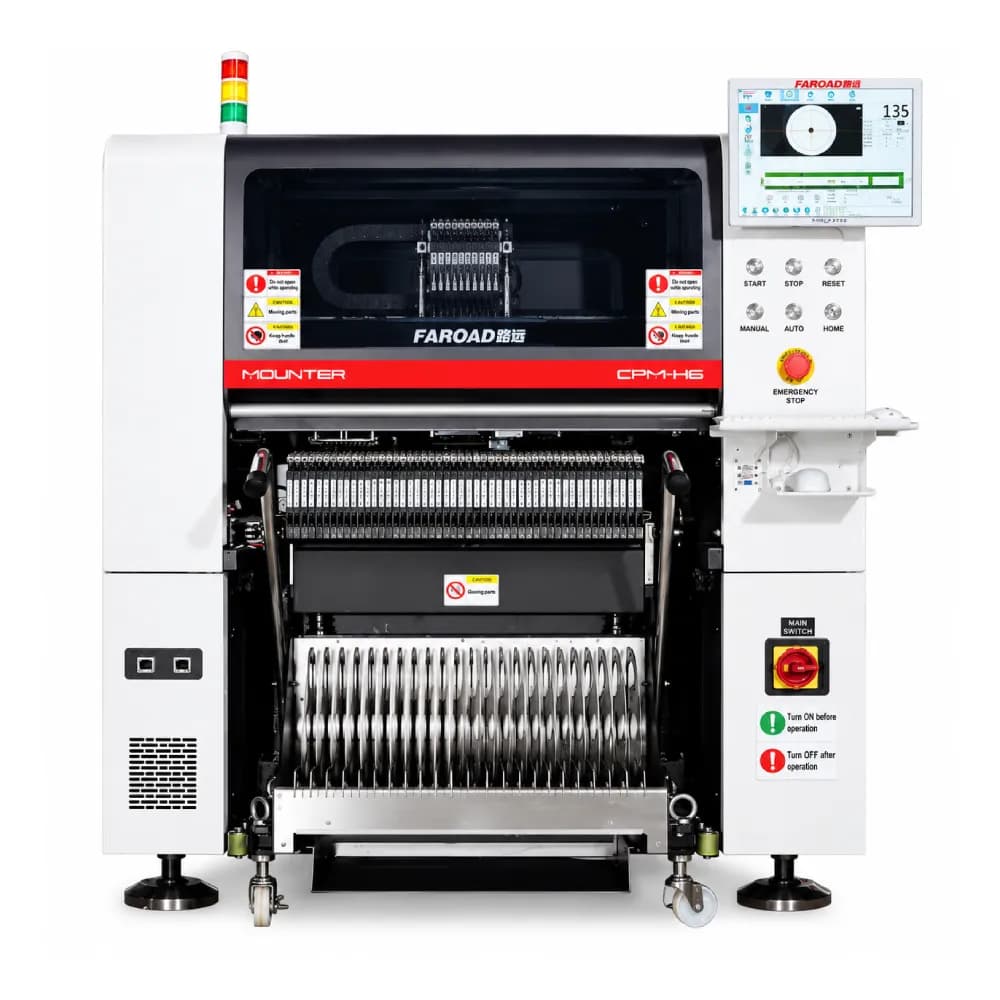
The package has to sit inside the machine's listed component range, and the camera that will inspect it has to be the one in the quotation. On the CPM-F6, the listed multifunctional fixed-camera window starts at imperial 0201 and reaches a 55 × 55 × 25 mm body. The CPM-H6 publishes the same 55 mm-class multifunctional maximum. The CPM-S5 and CPM-F5 list a multifunctional maximum of 40 × 40 × 25 mm. The CPM-HX40 lists a fixed-camera maximum of only 6 × 6 × 3 mm, so it is the wrong class for typical BGA and QFN bodies.
Tray feeding matters because many BGAs do not arrive on tape. The F5, F6, H6, S5 and HX40 all list a tray feeder or tray cabinet as an option. If the package is tray-fed, put that option in the original order rather than adding it after the machine arrives. Then require a placement trial on the actual tray, the actual nozzle and the actual body size. A range that includes 55 mm in the table still has to pick, inspect and place your specific package without damage or skew.
Reflow: prove the profile and the atmosphere
Bottom-termination packages are sensitive to how the solder melts and how it cools. The oven has to hold a profile you can repeat on a board that already carries the thermal mass of the package and the rest of the assembly. What to require of a profile is covered in reflow oven profiles. If nitrogen is part of the process window, treat it as a specified option rather than an assumed default. FAROAD lists nitrogen on the MS-series N models, with an oxygen analyzer, nitrogen flow meter and external water cooler. Do not infer nitrogen from a lead-free label or from a BGA on the bill of materials.
Voiding and hidden opens are process results. An oven quotation should be accepted on a profiled board that includes the actual BGA or QFN, not on an empty-conveyor temperature plot.
Inspection: what 2D AOI can and cannot do
FAROAD's listed AOI range is 2D. A 2D station can inspect visible features: missing or skewed packages, polarity marks where they exist, and some edge-solder conditions. It cannot measure the hidden joints under a BGA or under the centre of a QFN. FAROAD does not list a 3D AOI product, and X-ray inspection is still marked Coming soon on the equipment catalogue. If hidden-joint inspection is required, plan that method with a supplier that lists it, and do not write it into a FAROAD AOI as if it were included.
That limit is a reason to invest earlier in SPI and in a placement trial, not a reason to skip inspection. Be explicit in the quotation about what the 2D AOI will be used to catch, and what it will not.
Confirm the stack on the actual packages
Ask for a process trial that includes the printer, SPI, placement and reflow of your finest-pitch BGA or QFN and of the largest body in the mix. Define the pass criteria first: paste volume inside the window you set, placement without skew or damage, a repeatable profile, and a clear statement of which defects the 2D AOI will inspect. If tray feeding or nitrogen is required, the trial should use that configuration.
Frequently asked questions
Can a FAROAD pick-and-place machine place BGAs? FAROAD does not list a dedicated BGA machine. Multifunctional heads on the F6 and H6 list a maximum of 55 × 55 × 25 mm, and the S5 and F5 list 40 × 40 × 25 mm. The HX40 lists a 6 × 6 × 3 mm maximum and is not the right class for typical BGA bodies. Confirm the actual package, tray feeding and a placement trial.
Does FAROAD offer X-ray or 3D AOI for hidden joints? No. Listed FAROAD AOI is 2D, and X-ray is Coming soon on the catalogue. If you must inspect hidden solder, you will need that method from a supplier that lists it.
Is 3D SPI required for BGA and QFN work? It is the listed FAROAD method for measuring paste volume, area and height before placement. For hidden-joint packages, that measurement is usually the cheapest defect to catch. A 2D AOI after reflow is not a substitute.
Do I need nitrogen to assemble BGAs? Only if your process window requires it. Nitrogen is listed on FAROAD MS-series N models, not as a default on every oven. Specify the atmosphere you need and prove it on a profiled board.
Request a BGA and QFN equipment review
Send FAROAD the package drawings, pitch, body size, tray or tape packaging, panel size and the inspection standard you must meet. We will propose a printer, SPI, placement and reflow configuration inside the listed ranges, and we will be clear about the inspection methods we do not list. Request a quote to start that review.