Automatic vs Semi-Automatic SMT Line: How to Choose Your First Production Line
A station-by-station way to decide how automated your first SMT production line should be, which steps can start manual and where manual work costs more than it saves.
5 min read
When a company plans its first SMT production line, one of the earliest questions is how much automation to buy. A fully connected line with automatic loading, printing, inspection and unloading looks efficient on paper. A line with some manual steps looks cheaper. Neither description tells you which one suits your products, team and volumes.
A more useful approach is to look at each station on its own and ask a simple question: what happens to cost, quality and output if a person does this job instead of a machine? This guide walks through that review.
What "automatic" means station by station
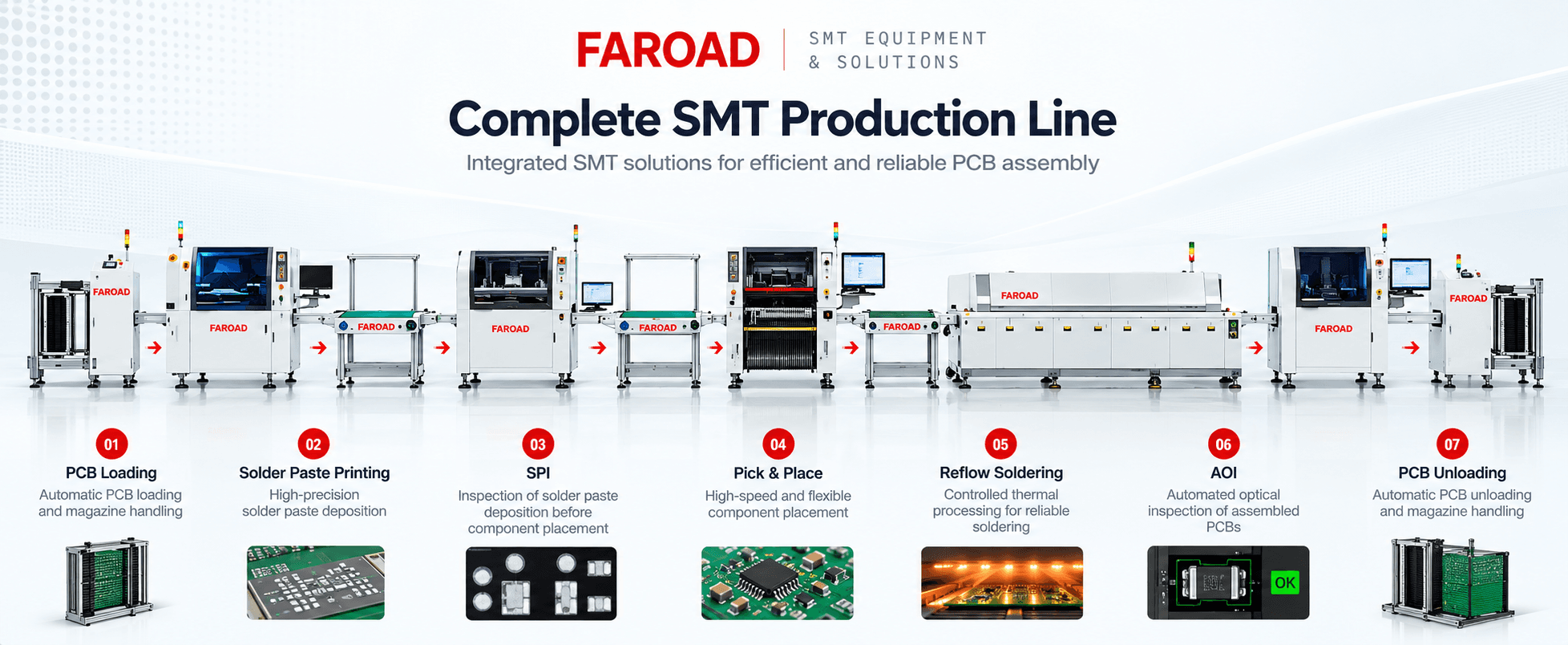
A typical production line follows this sequence: board loading, solder paste printing, solder paste inspection (SPI), component placement, reflow soldering, automated optical inspection (AOI) and board unloading. Boards move between the stations on conveyors.
"Fully automatic" usually means every step runs without an operator handling individual boards. "Semi-automatic" covers a wide range, from manual board feeding at the start of the line to a manual stencil printer or visual inspection in place of AOI. Because the term is so loose, always ask a supplier to list exactly which steps involve an operator.
Placement and reflow are automatic in almost any production line. The real decisions sit at the other stations.
Stations that usually stay automatic from day one
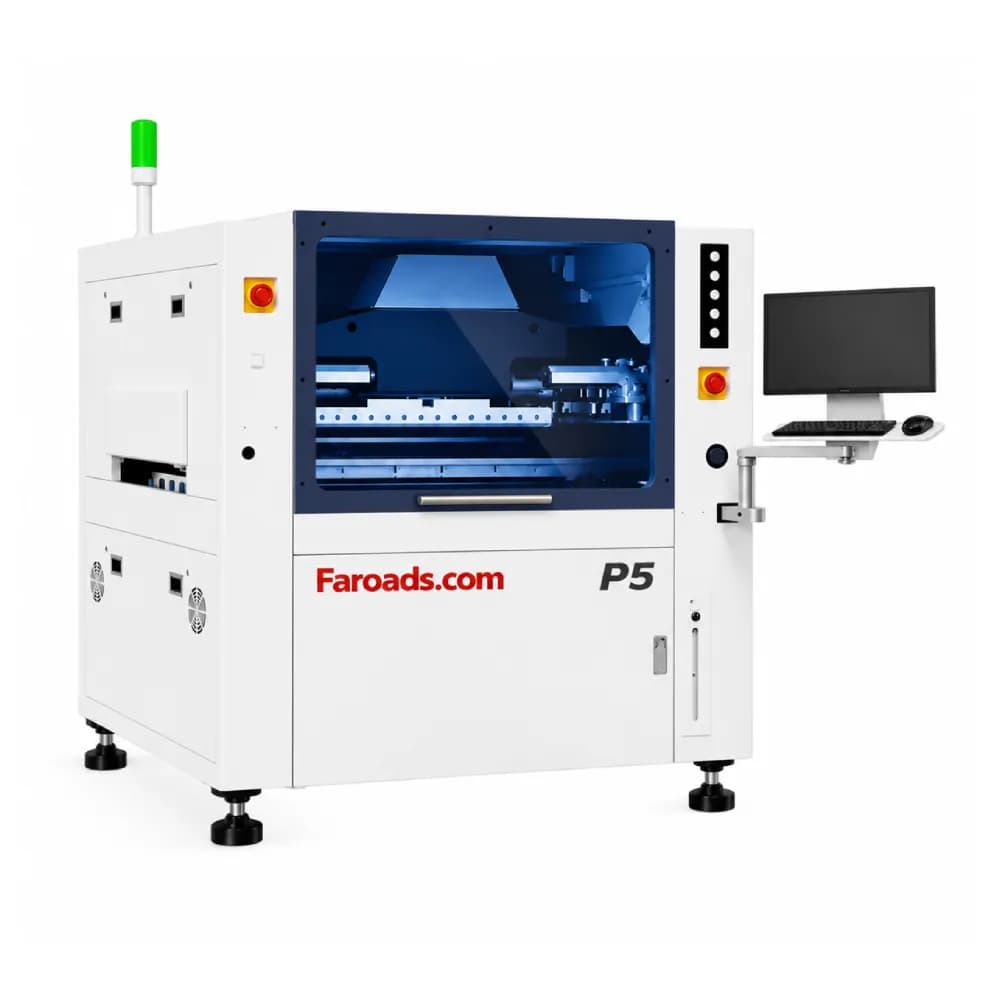
Solder paste printing. Many soldering defects begin at the printer, so it is a poor place to save money. An automatic printer aligns the board and stencil with vision, controls squeegee pressure and cleans the stencil on a schedule. Manual or semi-automatic printers depend on operator skill and attention, which tends to vary by shift. FAROAD's P4, P5 and P6 are listed as fully automatic visual printers; the P5 page, for example, lists automatic stencil positioning, automatic track width adjustment, software-controlled squeegee pressure and a closed-loop compensation platform.
Board transfer between process stations. Handling wet-printed or freshly placed boards by hand risks smearing paste and shifting parts. Conveyors between printer, placement and oven are close to essential once volumes justify a line.
Stations that can start manual
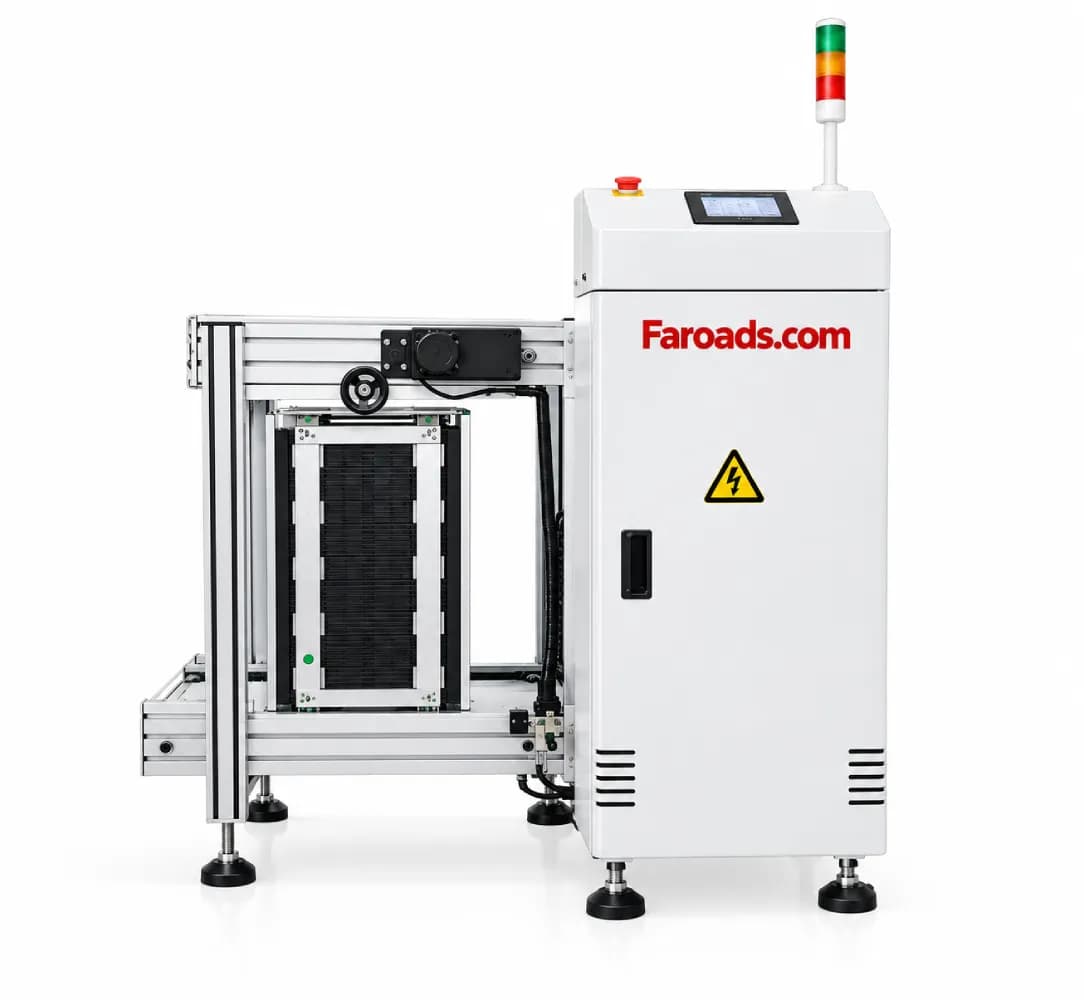
Board loading and unloading. At modest volumes, an operator can feed bare boards into the printer and collect finished boards from the end of the line. This works if someone is always available, but it ties a person to the line ends. Magazine loaders and unloaders remove that tie. FAROAD's PCB loader page lists a loading time of approximately 6 seconds and a magazine changeover time of approximately 25 seconds, with single-phase 100 to 230 VAC supply. See the full range of PCB handling equipment for loaders, unloaders and a compact stacker.
Solder paste inspection. Some first lines defer SPI and rely on downstream inspection. The trade-off is that print defects are found after components are placed and soldered, when they are more expensive to fix.
Optical inspection. Visual inspection by trained staff can work for small runs and simple boards. As boards become denser and volumes rise, consistency and speed become difficult to maintain without AOI.
Hidden costs of manual steps
Manual work rarely costs only the operator's time. Watch for these less obvious effects:
- Line stops. When the person feeding boards takes a break or helps elsewhere, the whole line waits.
- Variation. Results that depend on individual skill change between shifts and people.
- Traceability gaps. Manual steps make it harder to record what happened to each board.
- Hiring pressure. In many North American markets, finding and keeping production staff is a real constraint. A line that needs fewer people per shift is easier to run consistently.
A short illustrative example: if one operator spends most of each shift feeding and collecting boards, that role is repeated on every shift the line runs. Compare that recurring cost with the one-time cost of a loader and unloader, using your own labor rates.
Matching automation to your labor and product mix
Three factors usually decide the right level:
- Volume and shifts. A line running one shift at modest volume can tolerate more manual steps than a two- or three-shift operation.
- Product mix. Frequent changeovers favor automatic width adjustment and program recall, which reduce setup errors.
- Quality obligations. Customers who expect inspection data and process records push inspection and traceability toward automation.
If you are still unsure whether you need production-class equipment at all, start with our guide on when to move from a desktop to a production placement machine.
How FAROAD line configurations map to this choice
FAROAD's complete SMT line page shows a standard configuration of loader, printer, SPI, pick-and-place, reflow, AOI and unloader, and describes configuring the line around PCB size, component types, volume, required CPH, product variety, inspection requirements, factory space and existing equipment. That makes it straightforward to request two versions: a full configuration and a reduced one with specific stations deferred.
Design the first line so automation can be added
If you start with manual steps, plan the layout so automatic stations can be added later without moving the whole line. Leave floor space at each end for a loader and unloader, and space between printer and placement for SPI. Confirm that the conveyor height and interface standard are consistent across the line. Then price both versions side by side using the structure in our SMT line budget guide.
Frequently asked questions
Is a semi-automatic line a good choice for a startup? It can be, if volumes are low and staff are available. Keep printing automatic and plan space for adding loading and inspection later.
Which station should be automated first when upgrading? That depends on where your losses come from. Line-end handling often frees the most operator time; SPI and AOI usually improve quality the most.
Can manual inspection replace AOI? For simple, low-volume boards, it sometimes can. For dense boards and higher volumes, AOI provides more consistent coverage and records.
Does more automation always mean fewer operators? Not always. It usually means operators supervise several stations instead of handling each board, which changes the skills required.
Request a line configuration
Send FAROAD your board details, expected volumes, shift pattern and the stations you are considering running manually, and request a quotation for both a full and a reduced configuration so you can compare them directly.