How to Choose a Turnkey SMT Line Supplier
What a turnkey SMT line proposal should cover, how single-source and multi-vendor projects differ, and the questions that reveal whether a supplier can deliver a working line.
4 min read

Buying a complete SMT line from one supplier promises a simpler project: one proposal, one contract and one team responsible for making the line work. In practice, "turnkey" means very different things to different suppliers. For one it means a designed, installed and proven line. For another it means a container of machines and a contact address.
This guide explains what a turnkey proposal should include and how to judge whether a supplier can deliver it. It focuses on supplier capability and project scope. Import logistics and acceptance testing are covered in separate guides linked below.
What turnkey should cover
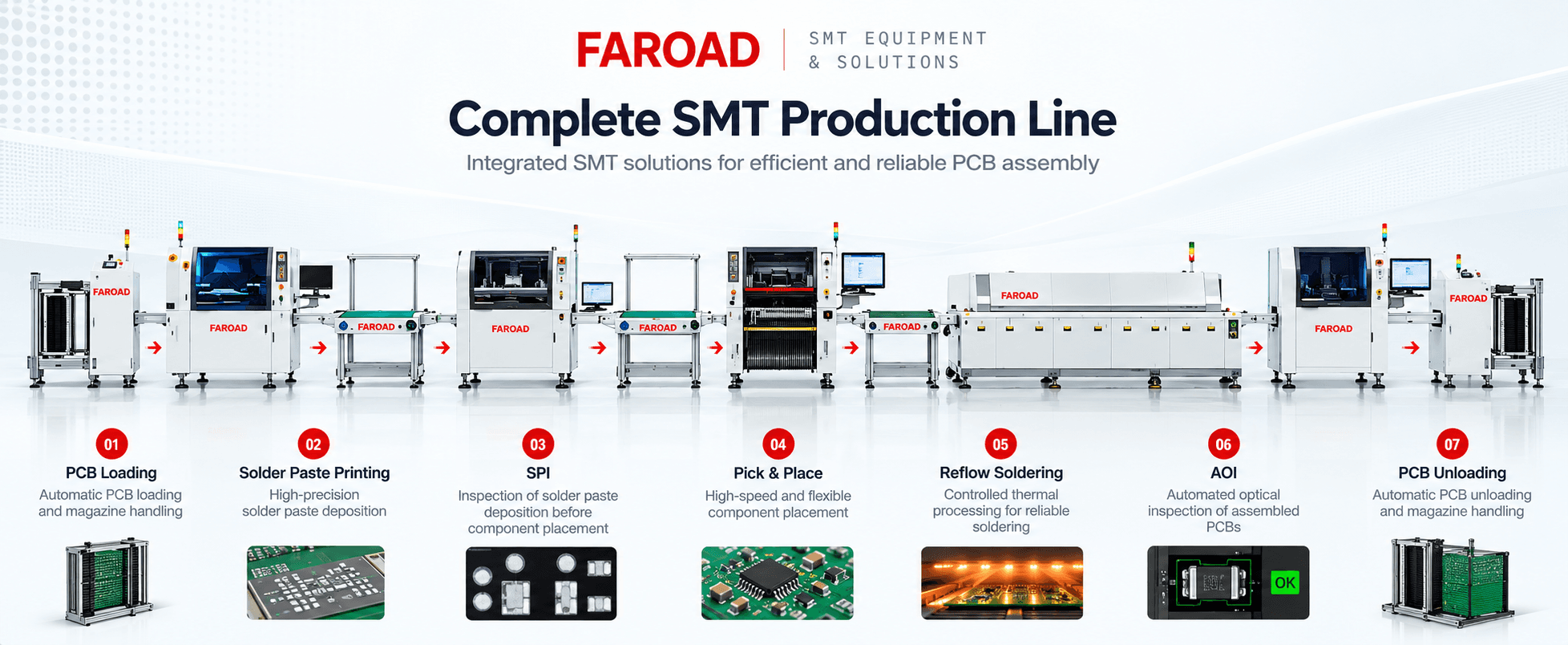
A complete turnkey scope usually includes six elements:
- Requirements review. Boards, components, volumes, shifts, quality obligations and factory conditions.
- Line design. Equipment selection, station sequence and balance for your product mix.
- Layout. Machine positions, board flow, operator access and utility points in your building.
- Installation and commissioning. Setting up, connecting and starting the line.
- Process start-up. First programs, printing and reflow profiles, and initial production support.
- Training and handover. Operation, programming and maintenance, with documentation.
If any element is missing from a proposal, find out who is expected to provide it. Usually the answer is you.
Single-source line or mixed vendors
Buyers sometimes assemble a line from several brands, choosing a favorite printer, mounter and oven separately. That can work, but it moves integration responsibility to you. When boards fail to transfer or data does not connect, each vendor can reasonably point to the interface.
A single-source supplier carries that responsibility inside its own scope. The benefit is greatest when the supplier manufactures the main process equipment itself, because it controls the interfaces, software and spare parts. A trading company or reseller may offer the same list of machines but depend on others for engineering and support.
Neither model is automatically right. The key is knowing which one you are buying and what that means for accountability.
Check engineering depth before the quote
A capable supplier asks detailed questions before quoting. Expect requests for PCB size and thickness, BOM or component data, production volume, target output, shifts, factory space, existing equipment and inspection requirements. If a supplier quotes a full line after one email, the configuration is probably generic.
You can test depth in a single technical meeting. Ask the supplier to explain which station will set the line's pace for your boards and why, how the line would change if volume doubled, and what they would do differently for your highest-mix product. Clear, specific answers are a good sign.
Also review company information with care. FAROAD's About page, for example, lists its founding in 2006, Shenzhen headquarters, two R&D centers, two production bases including a manufacturing park in Suzhou Industrial Park, and ISO9001 and ISO14001 certification. Ask any supplier for evidence behind the claims that matter to your project, and verify certificates directly.
Read the proposal for scope gaps
A good turnkey proposal lists each machine with model, options and quantities, and states clearly what is included around the equipment. Look for:
- Feeders, nozzles, magazines and other accessories by quantity.
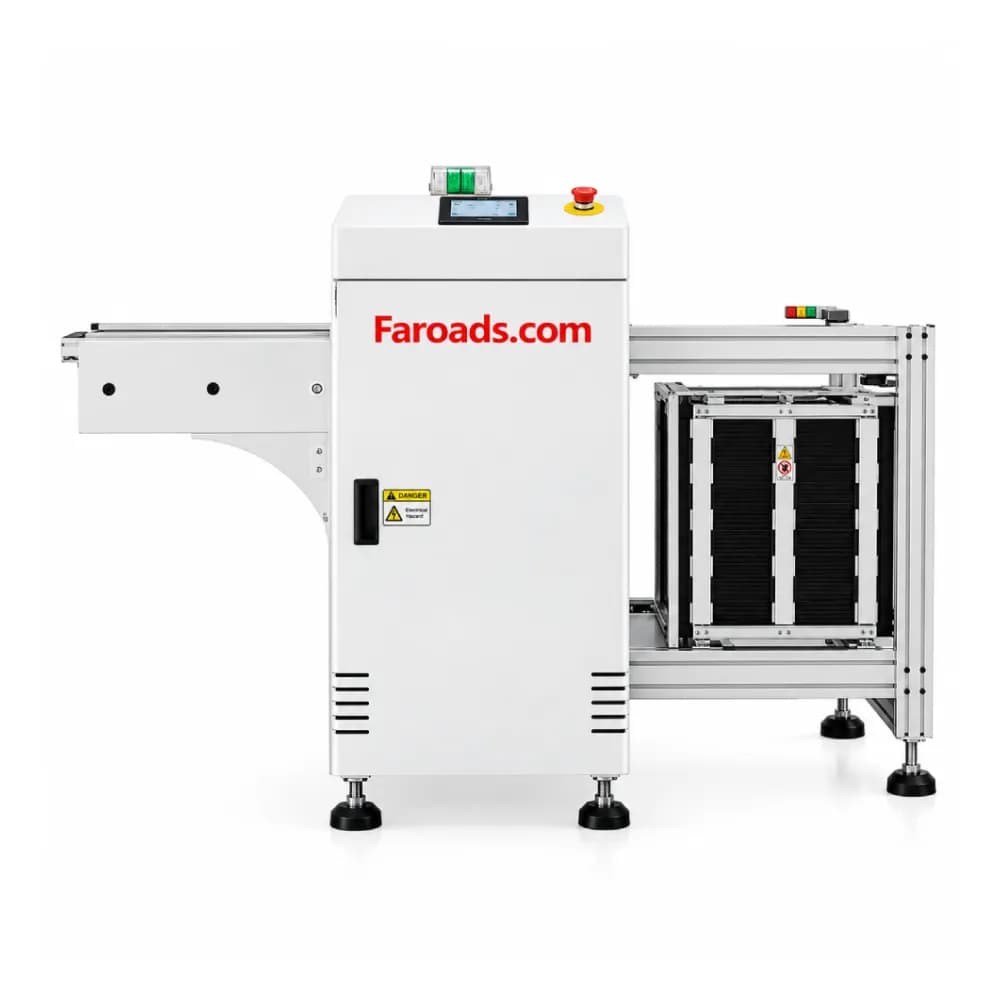
- Conveyors or transfer units between stations.
- Software, offline programming and any data or MES connection.
- Installation, commissioning and process start-up activities.
- Training content, location and number of participants.
- Recommended spare parts and consumables.
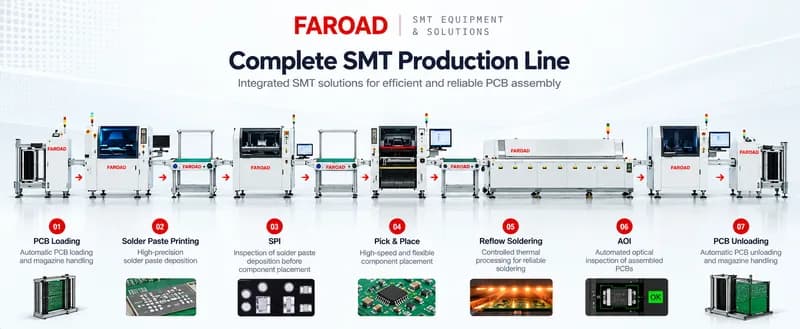
FAROAD's complete SMT line page describes a planning sequence from requirements and equipment selection through line configuration, factory layout and installation and commissioning, with commissioning support provided according to the project scope. Whatever supplier you choose, ask for that scope in writing.
Installation, training and handover
For buyers in the United States, Canada and Mexico, ask practical questions early. Who will be on site, for how long, and in what language will training be delivered? Which work must your team complete before engineers arrive, such as power, compressed air, exhaust and floor preparation?
Agree what "handover" means. A line that powers up is not the same as a line producing your boards to an agreed standard. Define the acceptance runs and criteria in the contract; our SMT line integration and acceptance checklist explains how to structure them. If the supplier is overseas, our checklist for buying SMT equipment from a Chinese manufacturer covers shipping, power matching and import preparation.
Spare parts and long-term support
A line is used for many years. Ask how spare parts are supplied, which parts the supplier recommends keeping on site, how remote support works and how software updates are handled. Request these answers in writing as part of the proposal rather than relying on verbal assurances.
Questions to ask before you sign
- Which equipment in the line do you manufacture, and which do you source?
- Who is responsible if boards do not transfer correctly between stations?
- What information do you need from us to finalize the configuration?
- What does installation and commissioning include, and what must we prepare?
- What training is provided, and for which roles?
- How are acceptance criteria defined and tested?
- Which spare parts do you recommend, and how are they supplied?
Frequently asked questions
Is a turnkey line more expensive than buying machines separately? The equipment may cost about the same, but turnkey scope includes engineering, integration and commissioning that you would otherwise manage yourself. Compare complete scopes, not machine prices.
Can a turnkey supplier include our existing machines? Some can. Ask how existing equipment would be integrated and who is responsible for its interfaces.
How do we verify a supplier's capability? Ask detailed technical questions, request references for similar projects and review documentation for the specific machines proposed.
Should we visit the supplier's factory? If possible, yes. A visit, or a detailed video demonstration with your boards, helps confirm what you are buying.
Start with a line planning conversation
Send FAROAD your boards, BOM, target output, shifts and factory layout, and request a quotation for a complete line. Ask for the proposal to list equipment, accessories, installation, commissioning and training separately so you can see exactly what turnkey includes.