Upgrade Your SMT Line or Buy a New One?
How to decide between replacing a bottleneck machine, rebuilding an existing SMT line or adding a new one, and how to request proposals you can compare.
5 min read
When an existing SMT line can no longer keep up, there are usually two camps in the room. One wants to replace the slowest machine and move on. The other argues that the line has reached the end of its useful life and a new one would solve several problems at once. Both can be right, depending on what is really limiting production.
This guide helps you decide which path fits your factory and how to ask suppliers for proposals that can be compared fairly.
Upgrade, rebuild or replace: three different projects
It helps to name the options precisely, because "upgrade" covers a lot of ground.
- Targeted upgrade. Replace or add one machine, such as a faster placement machine, a larger-format printer or an inline inspection station, and keep the rest of the line.
- Line rebuild. Keep a few good machines but redesign the sequence, conveyors and layout around them.
- New line. Install a complete new line, and either retire the old one or keep it for other work.
Each option has different costs, risks and downtime. Treat them as separate scenarios rather than a single yes-or-no decision.
Find the constraint before choosing a path
The right answer depends on what is limiting the line today. Is it placement capacity, printing quality, oven length, inspection coverage, changeover time or board size? Our guide to SMT line capacity planning explains how to identify the limiting operation using your actual product mix.
Once you know the constraint, ask a second question: if that constraint were removed, what would limit the line next? If the answer is "nothing significant for the products we expect," a targeted upgrade is attractive. If two or three other stations would quickly become the new limit, you are likely looking at a rebuild or a new line.
When upgrading the existing line makes sense
A targeted upgrade is often the better investment when:
- One station clearly limits output, and the others have spare capacity.
- The remaining equipment is reliable, supported and able to handle your current and expected boards.
- Board sizes and component ranges are stable, so the line envelope still fits the product roadmap.
- Downtime must be kept short, because customers cannot wait for a full line installation.
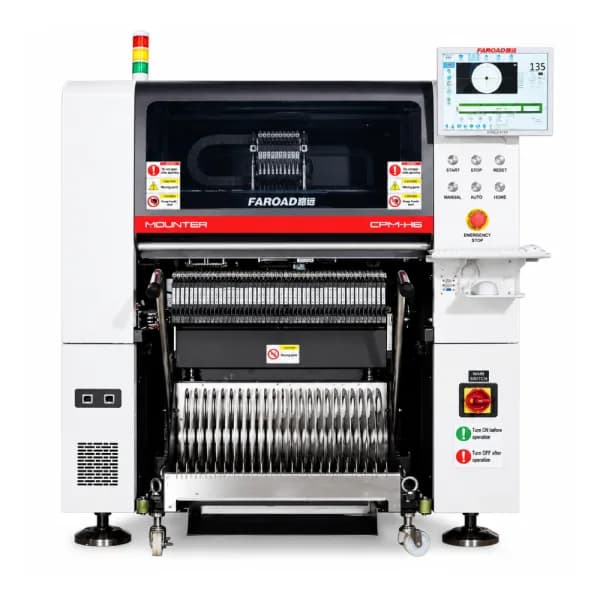
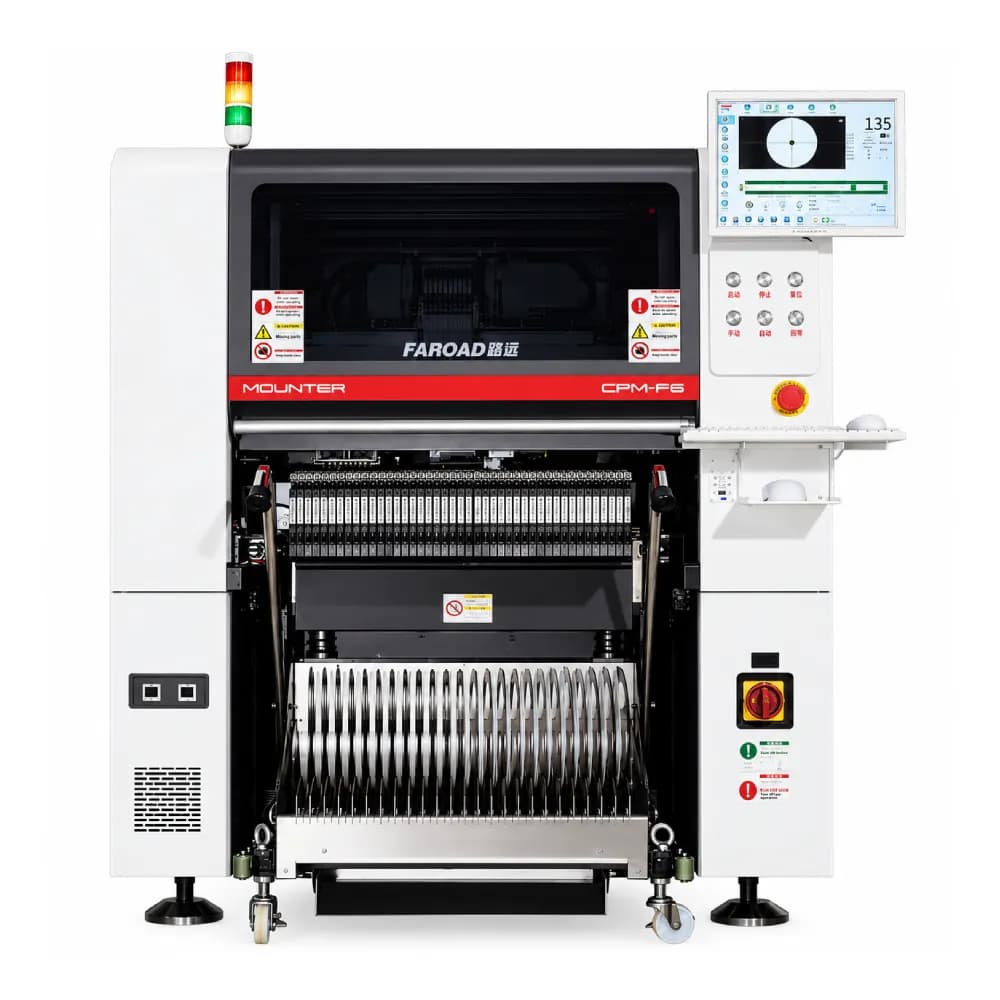
A common example is a placement bottleneck. Adding or replacing a mounter with a modular platform can lift output without touching the printer or oven. FAROAD's CPM-F6, for example, is a dual-arm modular machine listing 42,000 CPH optimal productivity, with high-speed and multifunctional head options and MES system integration. Whether that fits depends on your feeder plan, board size and what the rest of the line can absorb.
When a new line is the cleaner answer
A new line usually wins when:
- Several stations are near their limits at the same time.
- Products have outgrown the board envelope, for example wider or longer panels than the conveyors, printer or oven can handle.
- Older machines lack data connectivity that customers or your quality system now expect.
- Spare parts and software support for older equipment are becoming difficult.
- You need capacity and cannot afford downtime, so building next to the existing line is safer than modifying it.
The last point is often overlooked. A new line can be installed and qualified while the old one keeps shipping. A major rebuild of the only line in the building may stop production for longer than planned.
Running both: keep the old line, add a new one
For many factories, the most practical answer is not either-or. Keeping the existing line for stable, older products while a new line takes on new or demanding work can spread risk and capacity. It also gives your team time to learn the new equipment before every product depends on it.
If you go this way, plan which products move first and how the two lines share programmers, inspection resources and spare parts. If you are tempted to fill the gap with second-hand machines instead, our article on new vs used SMT equipment covers that separate decision.
Questions that expose hidden upgrade costs
Upgrades can look cheaper than they are. Before approving one, check:
- Interfaces. Will the new machine communicate with existing equipment for board handoff? Confirm the interface standard and conveyor height at each connection.
- Board flow direction and width. Does the new machine match the line's direction and adjustment range?
- Software and data. Can programs, offline programming and inspection data work across old and new machines?
- Floor space. Is there room to insert the new machine without moving others?
- Downtime. How long will the line be stopped for removal, installation and requalification?
For a structured way to define and test each connection, use our integration and acceptance checklist.
How to request comparable proposals
Ask suppliers to quote both an upgrade and a new-line option against the same requirements. Provide the same information for both:
- Current equipment list with models, ages and known issues.
- The products and volumes the line must support over the next few years.
- The constraint you have identified and the evidence behind it.
- Available floor space and any limits on downtime.
Then compare not just price, but output gained, downtime, remaining risk and how much life is left in the equipment you keep.
Frequently asked questions
Does an upgrade always cost less than a new line? Not always. Once integration, downtime and future replacements of older machines are included, a new line can be the lower-risk option.
Can new equipment work with machines from other manufacturers? Often, if interfaces, conveyor heights and board flow are compatible. Confirm this in writing for each connection.
How do we know whether the bottleneck is the machine or the process? Measure actual cycle times, stoppages and changeovers on the line. A machine that looks slow may be waiting for material or programs.
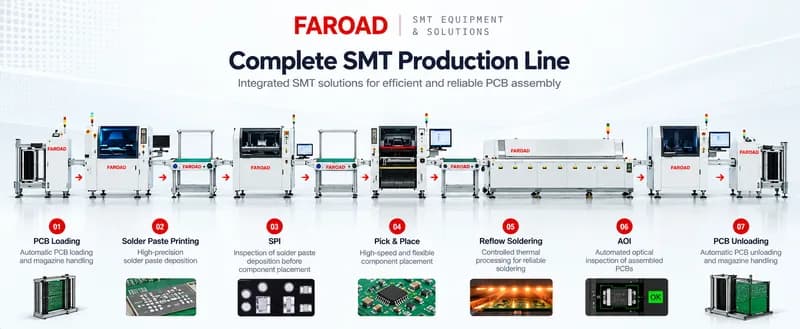
Does FAROAD quote upgrades as well as complete lines? Yes. FAROAD's complete-line page states that existing equipment can be considered when developing an upgrade or expansion project.
Ask for an upgrade and a new-line proposal
Send FAROAD your current equipment list, products, target output and floor plan, and request a quotation for both a targeted upgrade and a new-line configuration. Comparing the two side by side is the clearest way to see which investment will hold up as your products change.