When Does It Make Sense to Bring SMT Assembly In-House?
A practical make-or-buy framework for OEMs weighing their EMS partner against an in-house SMT production line: volume, mix, control, skills and full cost.
5 min read
Most electronics companies in the United States, Canada and Mexico start by sending their boards to a contract manufacturer. That is usually the right first move. An EMS partner already owns the machines, the process knowledge and the purchasing power. At some point, though, the conversation changes. Lead times stretch, engineering changes queue behind other customers, and the assembly invoice becomes one of the largest lines in the cost of goods.
This guide offers a practical way to decide whether your own SMT production line is justified, and what you are really taking on if the answer is yes.
The real question behind the decision
Bringing assembly in-house is not a machine purchase. It is a decision to own a manufacturing process: equipment, people, materials, quality records and uptime. The equipment is the visible part, but the commitment is operational.
So the useful question is not "can we afford a line?" It is "would owning this process improve delivery, quality or margin enough to justify the work of running it?" Frame it that way and the analysis becomes much clearer.
Signals that in-house assembly deserves a closer look
No single number makes the decision. Look for several of these conditions appearing together:
- Steady, forecastable demand. Boards that ship every week give a line consistent work. Occasional builds leave expensive equipment idle.
- Frequent engineering changes. If design revisions wait in an external queue, owning the line can shorten the loop between engineering and the first good board.
- Lead time is costing you sales. When customers buy from competitors because your build slot is weeks away, speed has a measurable value.
- Quality ownership matters. Regulated, safety-related or high-reliability products sometimes justify direct control of process settings and inspection records.
- Protecting design information. Some companies prefer to keep new products and firmware inside their own building.
- Assembly is a large share of product cost. The bigger that share, the more room there is for an internal line to pay its way.
Reasons to stay with your EMS partner
An honest review also lists the reasons not to move. Keep outsourcing, at least for now, if volumes are small or unpredictable, if your product mix changes faster than you could staff for, or if the company has no appetite for managing production staff and maintenance.
Also consider what you would lose. A good contract manufacturer brings component purchasing leverage, test capability and experience across many products. If you bring assembly in-house, you take on component kitting, moisture-sensitive part handling and stencil management as well. Many companies choose a hybrid: they build high-runner or sensitive products internally and keep the long tail with their EMS partner.
Compare the two options on the same terms
A fair comparison puts both options on the same annual basis. For the outsourced side, include assembly charges, freight between sites, expediting fees, the cost of late engineering changes and any inventory you hold because of long lead times.
For the in-house side, include the line itself, installation and facility work, operators and process engineers, consumables, maintenance, utilities, scrap during ramp-up and floor space. Our guide to building a realistic SMT line budget explains how to structure that side so nothing is missing.
Then add the factors that do not appear on an invoice: shorter prototype cycles, faster response to customer orders and tighter quality control. Assign them a value your finance team accepts, even if it is conservative. If the decision only works when those benefits are valued generously, treat that as a warning sign.
What an in-house production line actually involves
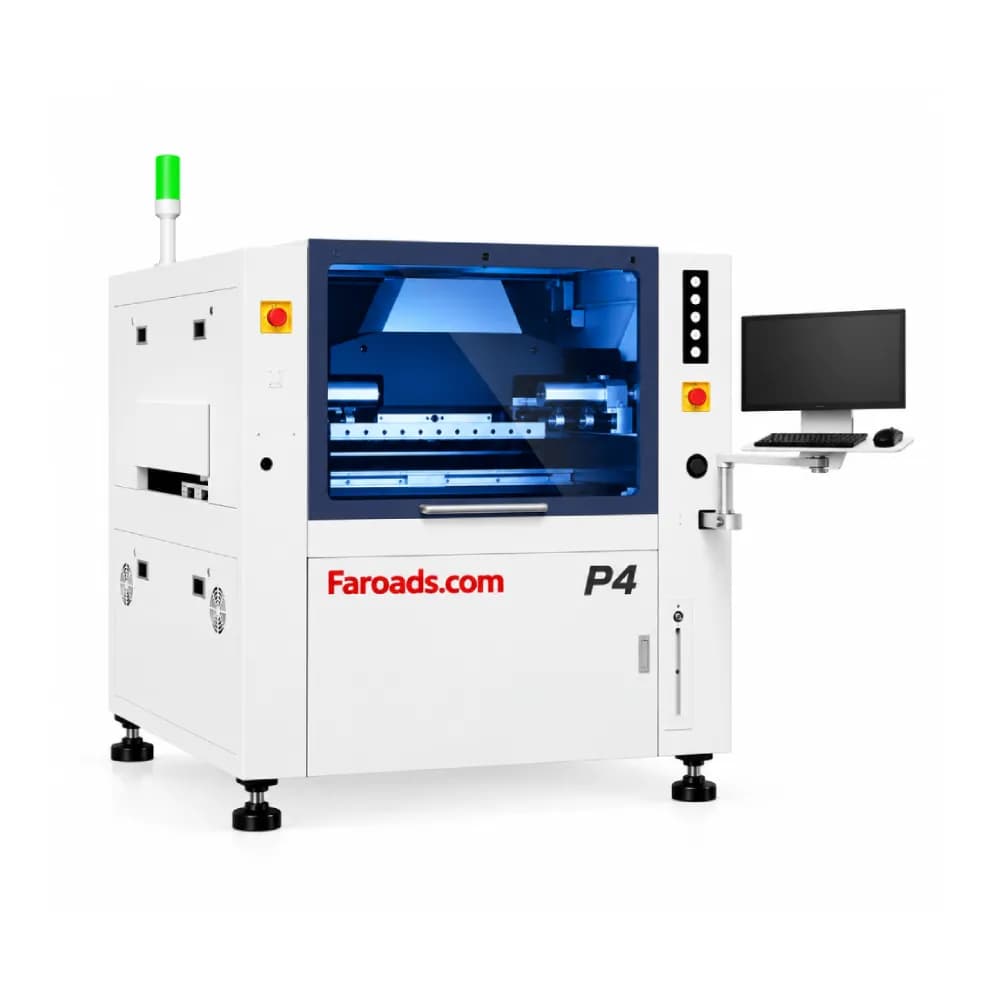
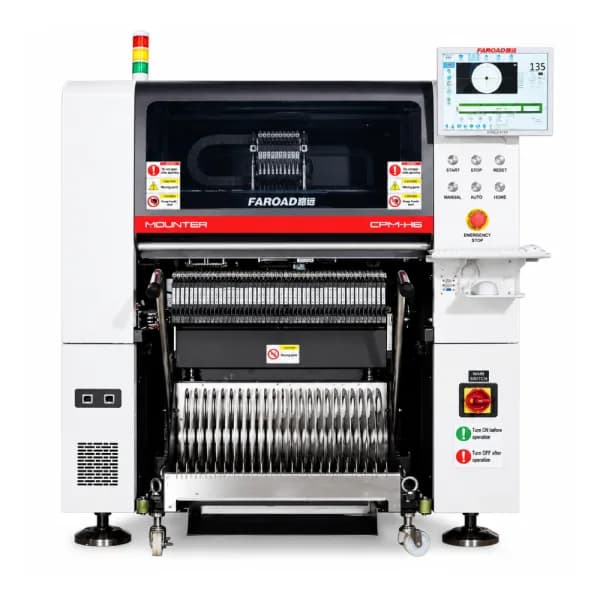
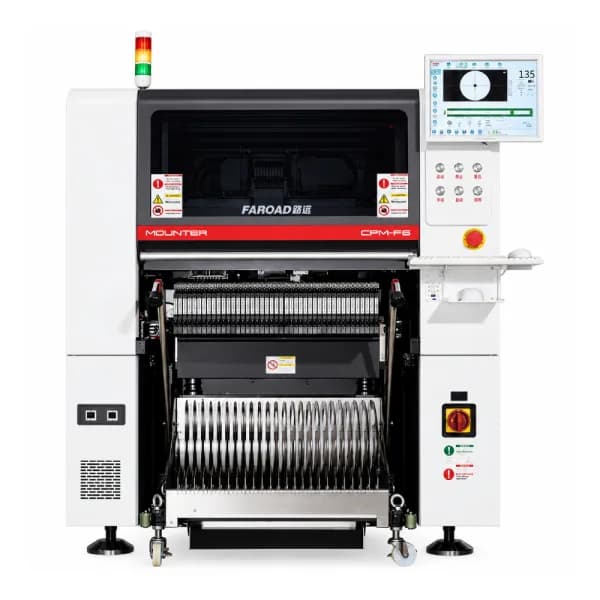
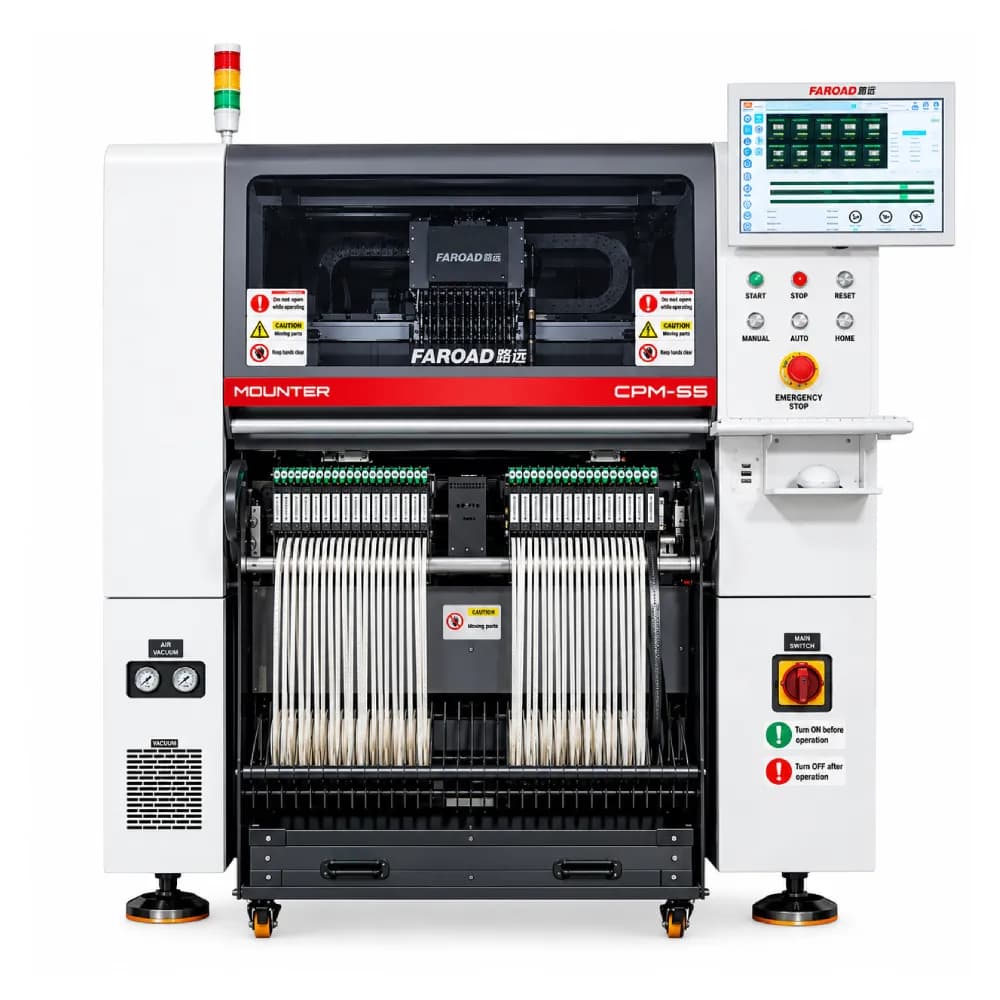
A production SMT line is a sequence, not a single machine. A typical arrangement runs from a board loader through solder paste printing, solder paste inspection, placement, reflow soldering and optical inspection to an unloader. The configuration depends on board size, component range, volume and how much inspection your quality plan requires.
Some teams start with a desktop placement machine to learn the process. That can work for prototypes, but it is a different class of equipment from a production line. If you are deciding between the two, our comparison of desktop and production pick-and-place machines covers where each fits.
Production equipment also brings facility requirements. On FAROAD product pages, placement machines are specified for AC380/420/480V three-phase power with a compressed-air supply, while the reflow ovens call for 380V three-phase power and weigh well over two tonnes. Have your electrician and facilities team review the published data for the proposed configuration early, because power, air, exhaust and floor access often decide where the line can go.
People, skills and process ownership
Machines can be installed and commissioned on a project schedule; capability takes longer to build. Plan at least for machine operators, someone who can program placement and inspection, and a process owner who understands paste, profiles and defect analysis. Smaller teams often combine these roles, but they still need to exist.
Ask any equipment supplier what training is included, in what language, and whether programming and process training are covered or only machine operation. Agree this in writing as part of the project scope. Budget for the learning curve, too: early production usually runs slower and produces more rework than the steady-state plan.
A phased path that limits risk
Moving everything at once is rarely necessary. A lower-risk path looks like this:
- Pick a pilot product family. Choose stable, high-running boards with a manageable component range.
- Specify the line around that family, while leaving physical space and feeder capacity for the next products.
- Run in parallel with your EMS partner until internal yield and delivery are proven.
- Transfer more products only when the data supports it.
This approach protects customer deliveries and gives your team time to learn. It also keeps the relationship with your contract manufacturer intact for overflow work.
Frequently asked questions
How much volume do we need before an in-house SMT line pays off? There is no universal threshold. It depends on assembly cost per board, the value you place on speed and control, and the full cost of running the line. Build both sides of the comparison with your own figures.
Can we start with one placement machine and add more later? Often, yes, if the layout, feeder plan and the oven and printer capacity allow it. Ask for a configuration that shows how a second machine would be added.
Do we need inspection equipment from day one? That depends on your products and quality obligations. Many production lines include SPI and AOI because they catch defects before they reach testing or customers. Decide coverage based on risk, not just budget.
Should we keep our EMS provider after moving production? Many companies do. A hybrid model provides overflow capacity and a fallback while the internal line matures.
Discuss your in-house line with FAROAD
FAROAD configures complete SMT production lines around PCB size, component mix, production volume, shifts and available factory space. If you are weighing an in-house move, send the boards you would build first, your expected volumes and your facility details, and request a quotation for a line sized to that pilot product family.