Reflow Oven Flux Management: Recovery Systems, Cleaning and What to Ask
Where evaporated flux ends up inside a reflow oven, what FAROAD lists for flux and rosin recovery on MS, MK and MK-MAX ovens, and the questions that reveal the real cleaning workload before you buy.
4 min read
Every board that goes through a reflow oven releases flux vapour. The solvents and resins that help the paste wet the pads evaporate in the heated zones, then condense wherever the oven is cooler. Over weeks that residue coats rails, cooling plates, ducts and exhaust paths. Left alone, it changes airflow, drips onto boards and turns a short cleaning job into a long shutdown. Flux management deserves a place in the oven comparison, not just in the maintenance manual.
Where flux ends up inside an oven
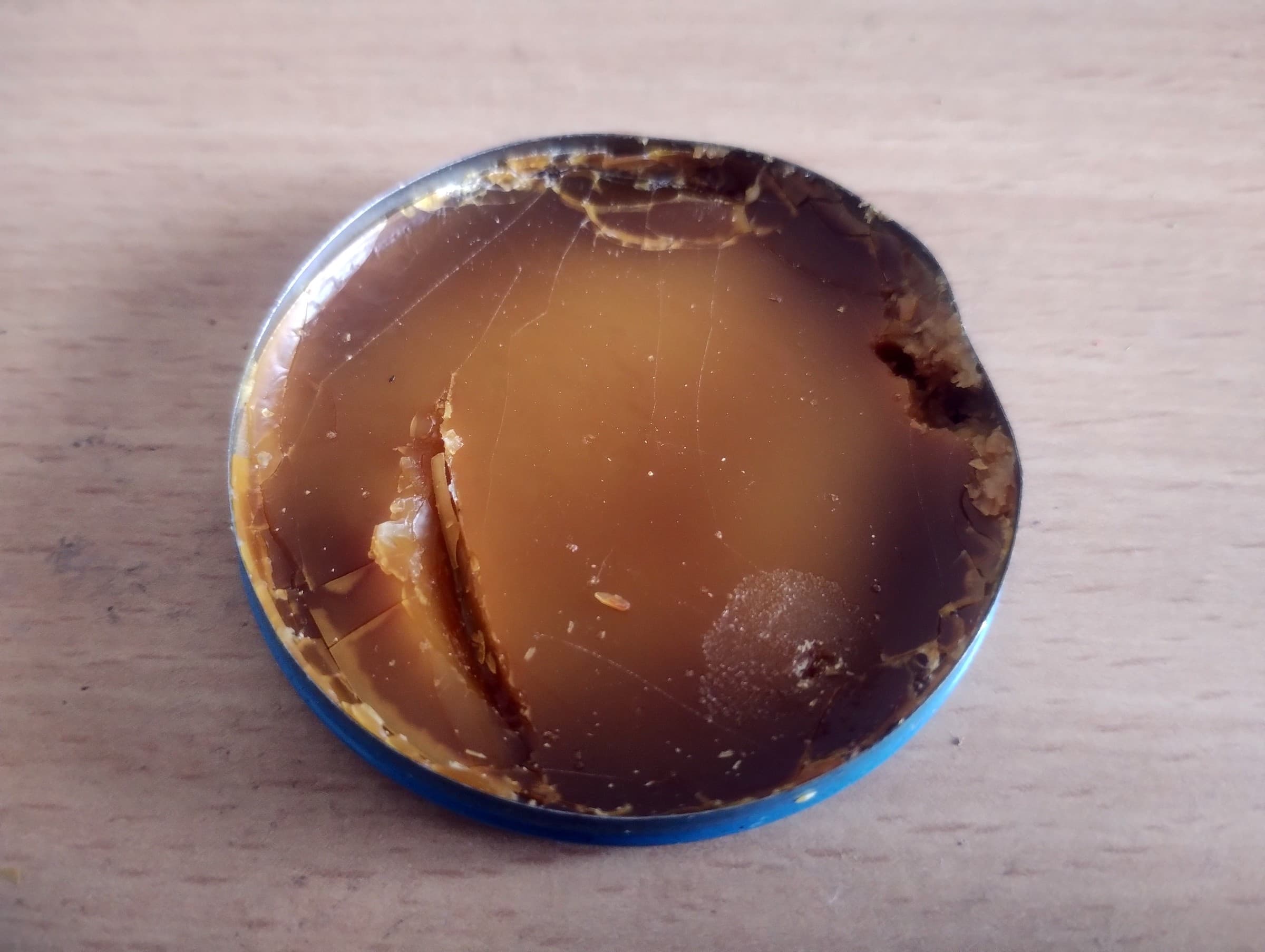
A tin of soldering paste flux. Volatile flux components evaporate during reflow and condense on cooler oven surfaces. Photo: Gpkp. Source on Wikimedia Commons, CC BY-SA 4.0. Resized from 4080 × 3072 px to 2400 × 1807 px and recompressed as JPEG for publication; not cropped. This file is shared under the same license.
Residue tends to collect in predictable places:
- The cooling section, where hot vapour meets colder surfaces first.
- Entry and exit tunnels, where oven air meets room air.
- Conveyor rails and chains, which carry residue along and can drag it onto board edges.
- Exhaust ducts, which narrow over time and change the balance between zones.
- Heater and blower assemblies, where buildup reduces heat transfer.
The visible symptoms are drips or spots on boards, sticky rails, rising blower load and a profile that slowly drifts. Our reflow defects guide covers how such drift shows up in solder quality.
What FAROAD lists for flux handling
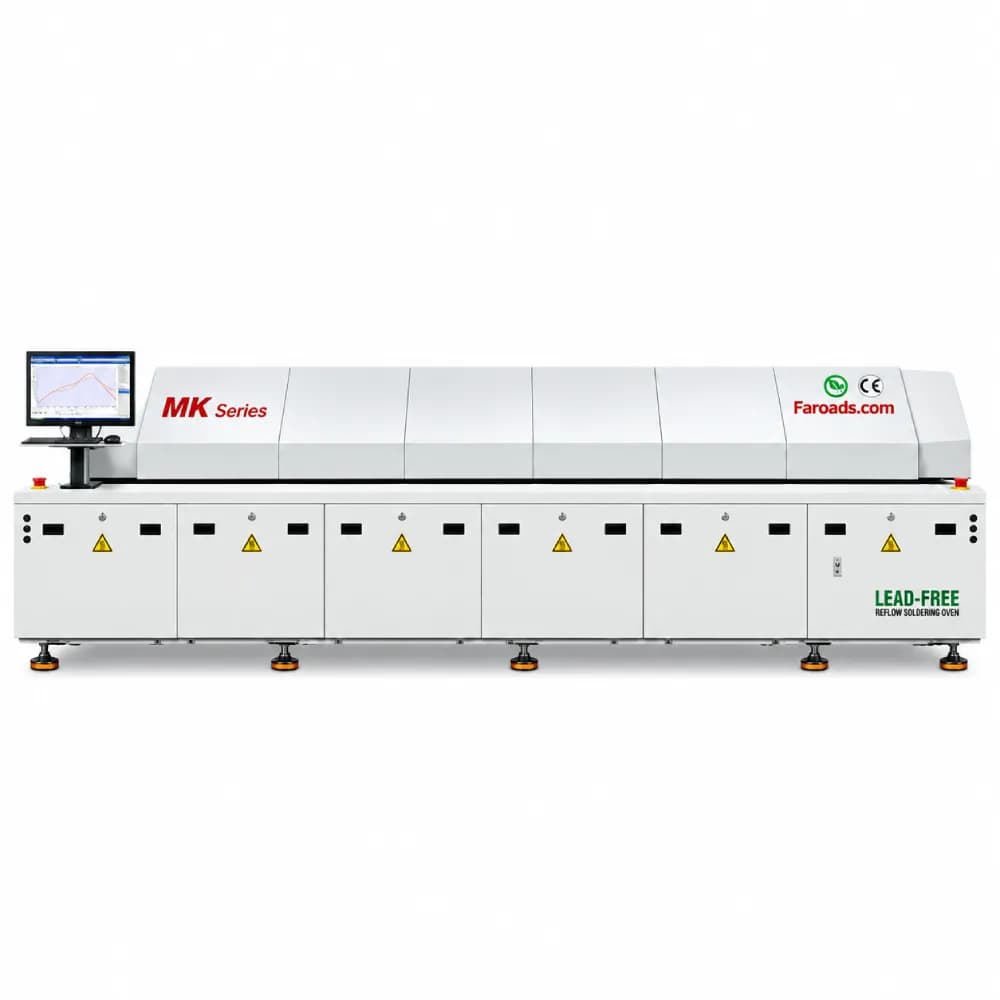
The three FAROAD oven families describe flux handling differently, and none of the pages publishes a collection capacity, filter type or cleaning interval.
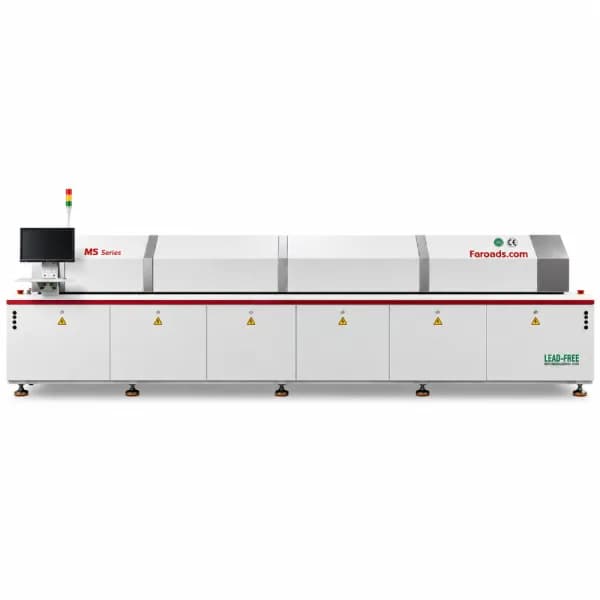
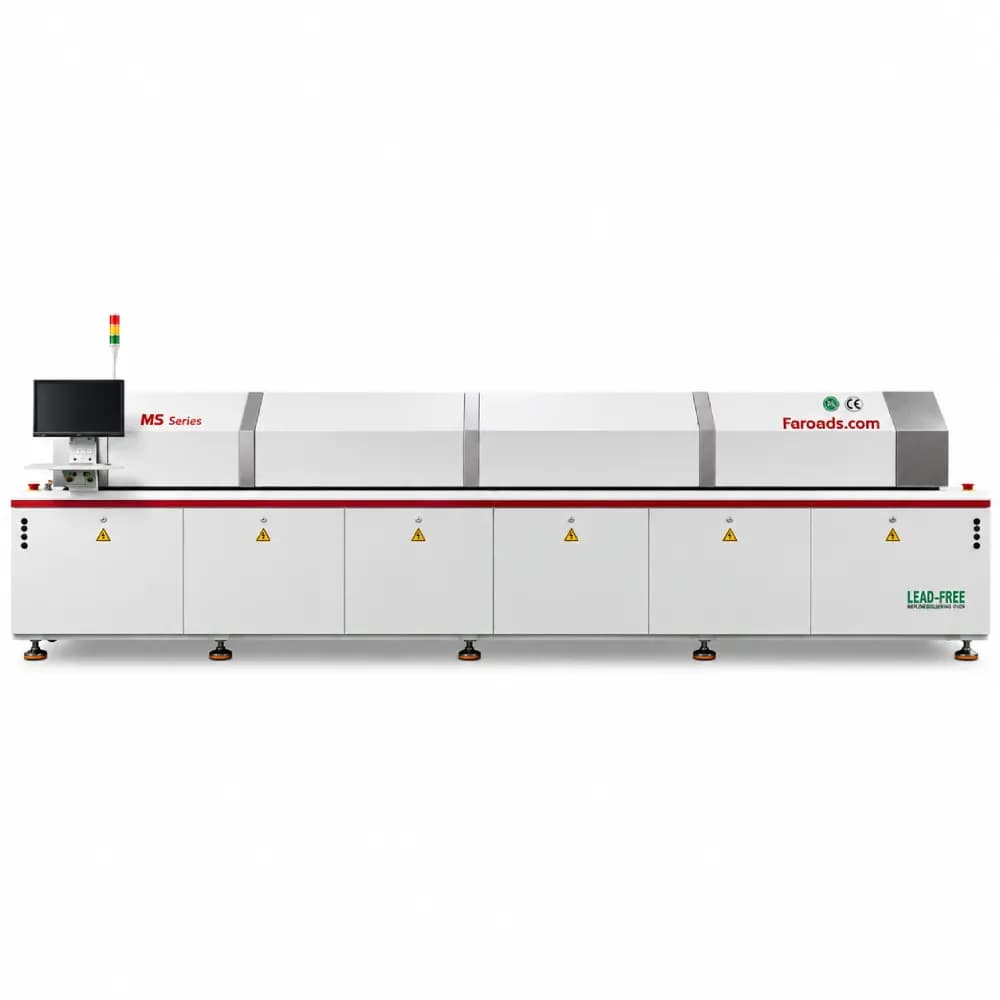
MS series. The pages list an efficient nitrogen-saving rosin recovery management system, and a nitrogen recovery system that returns nitrogen from the waste gas after rosin recovery. Rectifier plates are offered in galvanized, aluminum or stainless steel.
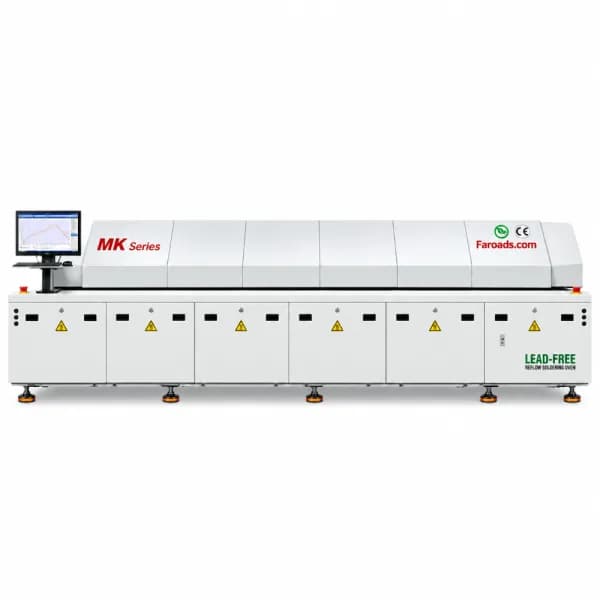
MK series. The pages list an upgraded flux recovery system, drawer-type heating modules with quick terminal blocks, a full modular design for easier maintenance and solenoid-valve automatic lubrication.
MK-MAX LED ovens. The pages list an inlet and outlet air extraction system that prevents oil dripping or leakage, described as a key pain point in LED lighting production, along with the MK flux recovery features.
Those features point in the right direction. What they do not tell you is how much residue your process will create and how often the system needs attention. The MK vs MS reflow oven guide explains the wider series differences.
Questions that reveal the real maintenance load
Ask each supplier to answer these for the exact model and your paste:
- Where is condensed flux collected, and how is it drained or removed?
- Which parts are consumables, such as filters or collection trays, and what do they cost to stock?
- What cleaning interval do they expect at your board volume and paste type, and what is it based on?
- How long does a full cleaning take, including cool-down and heat-up? Listed heating-up time is about 15–25 minutes depending on model.
- Can collection parts be emptied without a full shutdown?
- How does the nitrogen version change residue behaviour and recovery?
- What exhaust connection and flow does the oven need to keep vapour moving?
Answers given as "it depends" are reasonable, as long as the supplier explains what it depends on.
Your process sets the flux load
The oven is only half the equation. The amount of flux entering it depends on:
- Paste volume per board and boards per hour. Large thermal pads, step stencils and pin-in-paste deposits all raise it.
- Flux chemistry. No-clean, water-soluble and low-temperature pastes behave differently.
- Atmosphere. Nitrogen changes how residue forms and where it goes.
- Track count and board size. Dual-track ovens and long lighting panels carry more paste per minute.
Two plants with the same oven can see very different cleaning frequencies. That is why a quoted interval should be tied to a stated volume.
Make flux handling part of acceptance and training
During the acceptance trial, run a realistic load for an agreed period and inspect the cooling section, rails and collection points afterwards. Include a full cleaning procedure in operator and maintenance training, with photos of where residue collects on the delivered oven. Add the consumables to the spare parts plan; our spare parts and maintenance planning guide shows how to structure it.
Exhaust and the building
Flux management does not end at the oven. Recovery systems reduce what leaves through the exhaust, but the oven still needs a properly sized extraction connection, and the ductwork in your building will collect residue as well. Plan duct access for cleaning, keep runs short, and avoid long horizontal sections where condensate can settle. Ask the supplier for the exhaust connection size and the flow the oven expects, and give that to your facilities team or contractor early. In plants in the United States, Canada and Mexico, local codes and your environmental, health and safety team may also set rules for what is vented and how residues are disposed of. Treat the recovered flux as a waste stream with its own handling procedure.
Frequently asked questions
Why does flux drip onto boards? Vapour condenses on cooler surfaces above or beside the conveyor and falls back as droplets. Good extraction and regular cleaning of those surfaces reduce it. Do nitrogen ovens need less flux maintenance? Not necessarily. Nitrogen changes how residue forms, and a closed atmosphere can concentrate it. Ask how the recovery system handles your paste under nitrogen. How often should a reflow oven be cleaned? It depends on paste volume, chemistry, atmosphere and hours run. Ask for a starting interval tied to your volume, then adjust from inspections. Is the MK-MAX extraction only for LED boards? It is described for LED lighting production, where oil dripping is a known problem. Ask whether a comparable arrangement suits your other products.
Ask for a flux-handling review
Tell FAROAD your paste type, board volume and atmosphere. We will explain how the MS or MK recovery arrangement handles that load and what cleaning routine to plan. Request a quote to start the discussion.