SMT First Pass Yield: Which Equipment Choices Move the Number?
How to define and count first pass yield on an SMT line, why rework hides its real cost, where first-time failures usually start, and which printer, inspection and data features help raise it.
5 min read
First pass yield (FPY) measures how many boards get through all inspection and test steps at the first attempt, without touch-up, rework or a retest. It is one of the clearest measures of how healthy an SMT process is, and it is often lower than managers expect once it is counted honestly. This guide explains how to count FPY, why it matters when you are buying equipment, and which features on printers, inspection machines and line software help improve it.
Define the number before you report it
FPY can be measured at a single station or across the whole line, and the two answer different questions:
- Station FPY: boards passing SPI, AOI or test on the first attempt, divided by boards entering that step.
- Line FPY: boards that pass every step on the first attempt, divided by boards that entered the line.
When several steps each have their own first-pass rate, multiply them to see the line result. As an illustrative calculation, 98% at SPI, 97% at AOI and 96% at functional test gives 0.98 × 0.97 × 0.96 ≈ 91%. No single step looks alarming, yet about one board in eleven was touched by a person somewhere along the way.
Two counting rules keep the number honest. Any board that needed repair is counted as failed for FPY purposes, however good it is when it leaves the building. Boards that fail once and then pass a second check with nothing changed should be logged on their own, since they usually point to the inspection or test step rather than the product.
Why rework hides the real cost
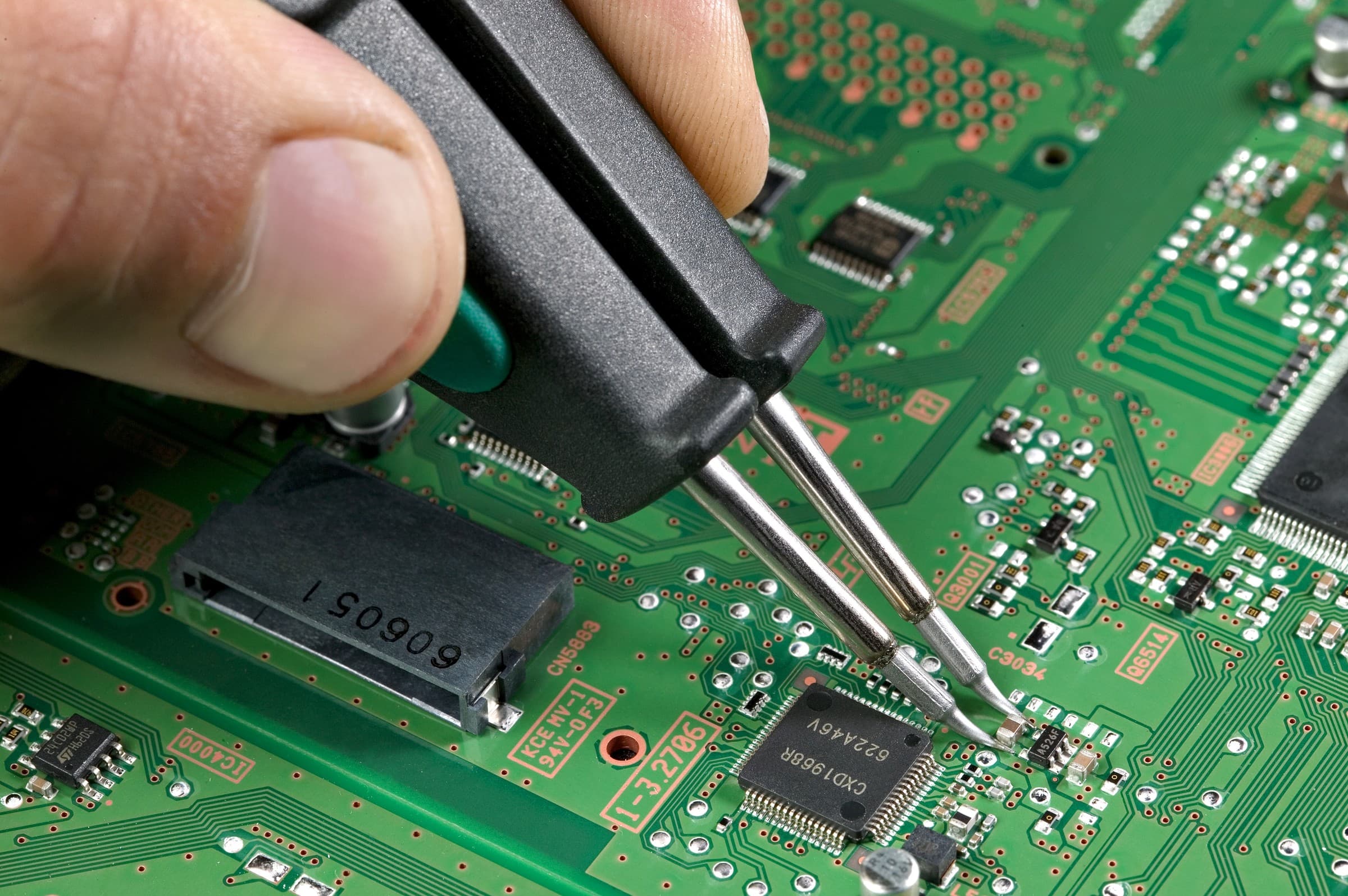
Reworking a small chip component with soldering tweezers. Every board that needs this kind of attention counts against first pass yield. Photo: Aisart. Source on Wikimedia Commons, CC BY-SA 3.0. Resized from 4064 × 2704 px to 2400 × 1596 px and recompressed as JPEG for publication; not cropped. This file is shared under the same license.
Final yield, the share of boards that eventually ship, can look excellent while FPY is poor, because rework recovers most failures. The cost is still there: technician time, extra handling, heat stress on reworked joints, delayed shipments and a risk that a repaired joint fails later. Rework also tends to hide the cause. If a station fixes problems quietly, the step that created them never gets corrected.
For this reason FPY belongs alongside throughput in any equipment business case. Our article on OEE and equipment decisions covers the quality factor inside OEE; FPY is the more direct view of first-time quality.
Where first-time failures usually start
On most SMT lines the causes fall into a few groups:
- Printing: insufficient or excess paste, offset deposits, bridging and smears. On a large share of lines, printing generates more first-time failures than any other step.
- Placement: missing, shifted or rotated parts, wrong polarity and wrong components, often traced to feeders, nozzles or library data.
- Reflow: cold joints, tombstoning, voids and solder balls linked to the profile or atmosphere.
- Materials: board warpage, oxidized components and paste that has been out too long.
The station that detects a defect is often not the one that caused it, so record where each failure was found and what caused it.
Equipment features that help raise FPY
Three kinds of features make the biggest difference.
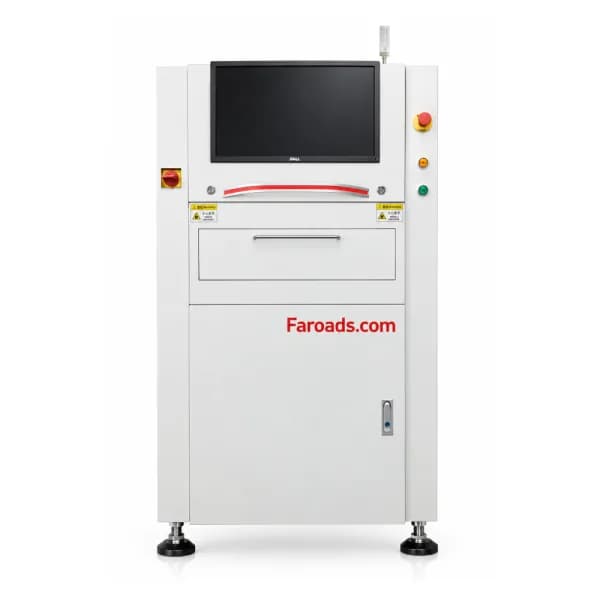
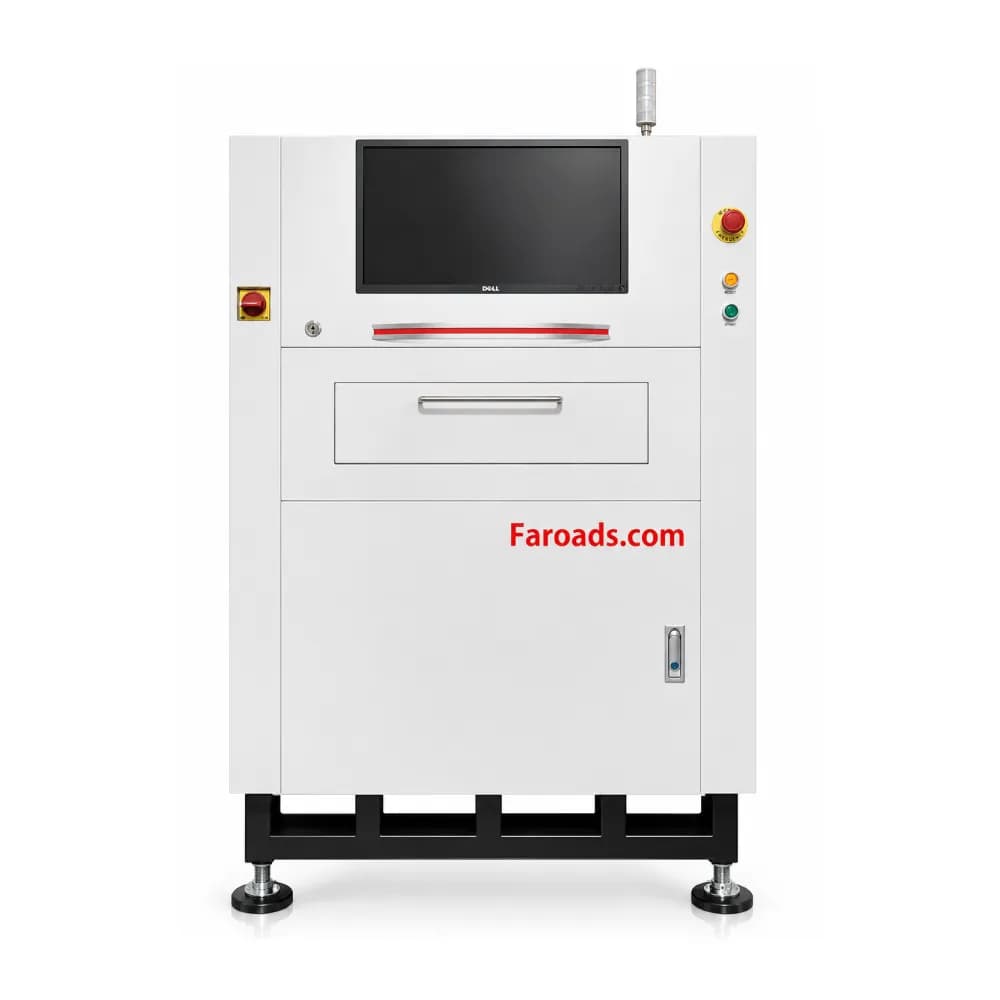
Catch print problems before placement. A 3D SPI measures every deposit before parts cover it. FAROAD's Inpex 510 3D SPI lists measurement of volume, area, height, XY offset and shape, and detection of missing print, insufficient or excess solder, bridging, offset, poor shape and surface contamination. It also lists closed-loop data sharing with printers and placement machines, bad-board mark recognition and SPC tools.
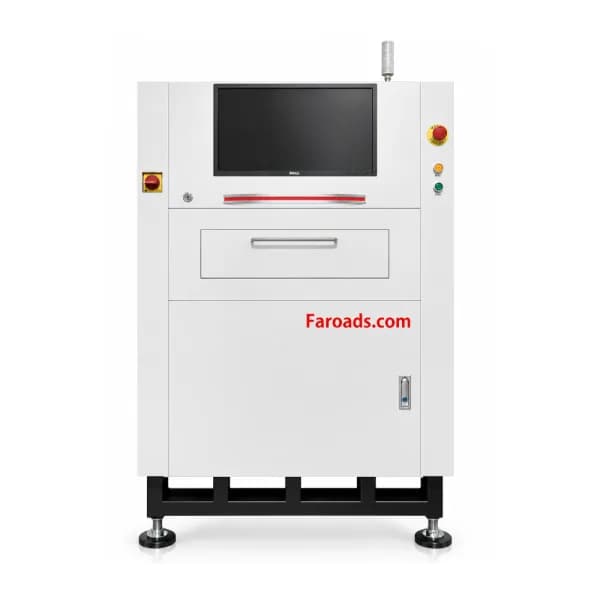
Inspect after reflow and keep the evidence. FAROAD's AOI listings are 2D inline machines. According to the S510 page, it flags absent or wrong parts, shifted parts, tombstones, solder faults, bent pins, pin bridges and exposed copper, and it can read board barcodes to load the right program, chart results for SPC and save an image of each whole board. The M400 adds double-sided projection. 2D AOI cannot see hidden joints under BGAs or shields; X-ray is a coming-soon category at FAROAD.
Keep false calls low. A machine that flags too many good boards inflates apparent failures, wastes review time and teaches operators to wave defects through. Our guide to AOI false calls explains how to measure this before purchase.
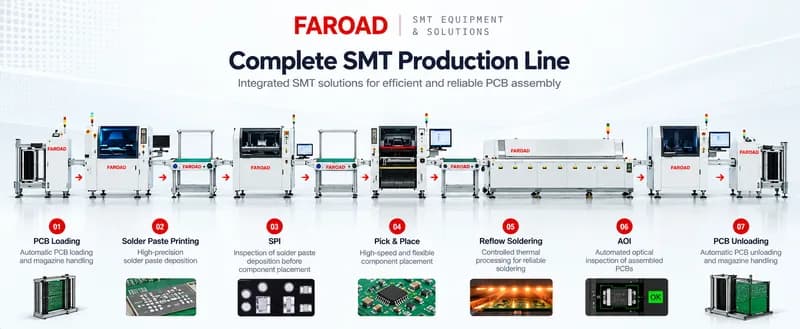
Upstream stability matters as much as inspection. Automatic printers with closed-loop alignment and scheduled stencil cleaning, mounters with vacuum monitoring, and ovens with repeatable profiles all reduce the failures that inspection would otherwise have to catch.
Turn inspection data into improvement
Inspection raises FPY only when someone acts on what it reports. Keep the loop short and specific:
- Rank products by FPY each week and choose the weakest high-volume one.
- Sort its failures by defect type and by the station where they were caught.
- Trace the top defect back to its likely origin, whether stencil, paste, feeder, nozzle, library entry or oven recipe.
- Make a single change, record it, and compare FPY on the following lots before trying anything else.
Ask any supplier how SPI and AOI results are tied to board serial numbers, whether images are kept for later review, and whether the data can be sent to MES.
Questions to ask in an equipment proposal
When FPY is a goal of the investment, put it in the request for quotation:
- Which defect types can each inspection station detect on your boards, and which can it not see?
- How are false calls and escapes measured during acceptance?
- Can SPI results adjust the printer automatically, and what exactly does the feedback change?
- How is a board's history across printer, SPI, mounter, oven and AOI linked?
- What training covers defect review and program tuning?
Answers to these questions show whether a proposal will help you raise FPY or only measure it.
Frequently asked questions
What is a good SMT first pass yield? It depends on board complexity, inspection strictness and how failures are counted. Track your own trend by product and line rather than chasing a published benchmark. Does adding AOI raise first pass yield? Not by itself. AOI finds failures, so FPY may appear to drop at first. It rises when the data is used to fix the causes upstream. Should a board that passes on retest count as a pass? For FPY, no. Log retest passes separately, because they often reveal an inspection or test problem. Where should I invest first to improve FPY? Start where your data shows most failures begin. On many lines that is printing, which is why SPI and stable automatic printing often come first.
Build a line around first-time quality
Share your current defect data and products with FAROAD, and we will suggest where SPI, AOI or printer upgrades would most improve your first pass yield. Request a quote to start the review.