AOI False Calls: How to Judge Them Before You Buy an Inspection Machine
Why AOI false calls cost more than they appear to, where they come from, what the FAROAD 2D AOI listings offer for review and data, and how to run a false-call trial before purchase.
4 min read
An automated optical inspection machine makes two kinds of mistakes. A false call flags a good joint or part as defective. An escape lets a real defect pass. Demonstrations rarely show either clearly, because the program has been tuned on a few known boards. This guide explains why false calls deserve a line in the purchase decision and how to measure them fairly. For choosing the machine itself, see our AOI inspection machine guide.
Why false calls cost more than they look
Every call needs a decision from a person at a review station. As an illustrative calculation, a line that inspects 1,500 boards per shift with an average of 0.5 false calls per board, at 6 seconds per review, spends 75 minutes of review time per shift on boards that were fine. Double the false-call rate and the reviewer becomes a bottleneck.
The larger cost is trust. When most calls are false, operators start passing them quickly, and that is how real defects escape. A machine with a slightly lower detection claim but a manageable call rate can deliver better outgoing quality than a machine whose reviewers have stopped looking.
Where false calls come from
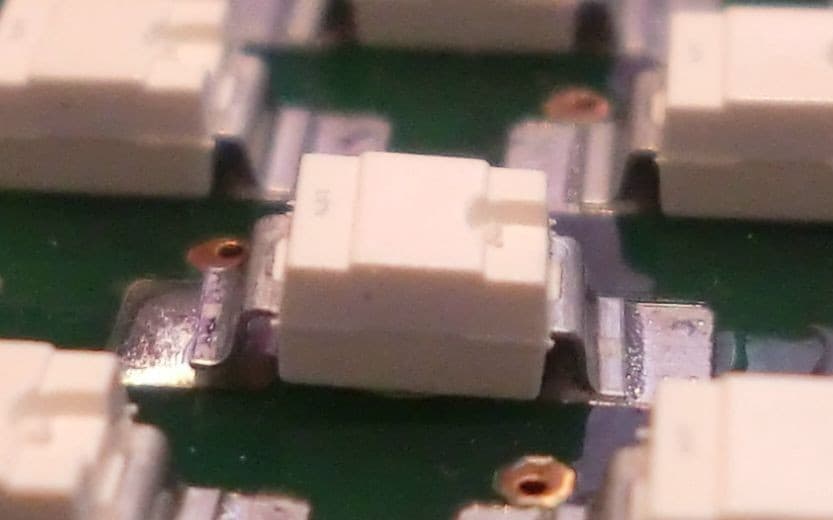
A tombstoned chip component lifted on one end: a real defect an AOI program must catch while still passing good joints. Photo: Haynes. Source on Wikimedia Commons, CC BY-SA 3.0. Recompressed as JPEG for publication; not cropped or resized. This file is shared under the same license.
Most false calls are not caused by the camera. Typical sources include:
- Program thresholds set tight on a small sample and never revisited.
- Component variation. A second-source capacitor with a different body colour or marking can fail a template built on the first source.
- Board appearance. Solder mask colour, silkscreen near pads and surface finish change what the camera sees.
- Shadows and reflections from tall parts, shiny fillets and connectors.
- Board position and warp, which shift parts relative to the inspection windows.
- Library quality. Generic part models that do not match your packages.
Knowing the source matters, because the fix is usually program, library and process work. A different machine will not fix a library nobody maintains.
What the FAROAD AOI listings offer for review and data
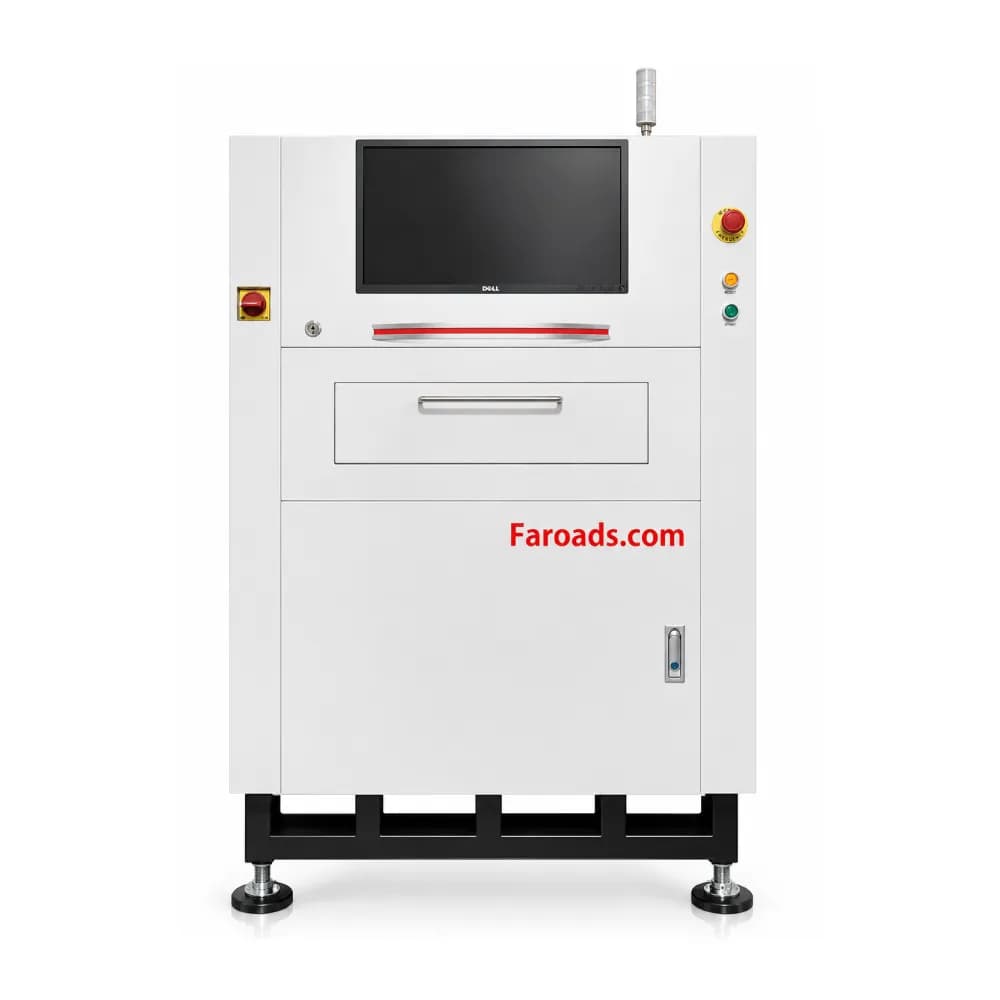
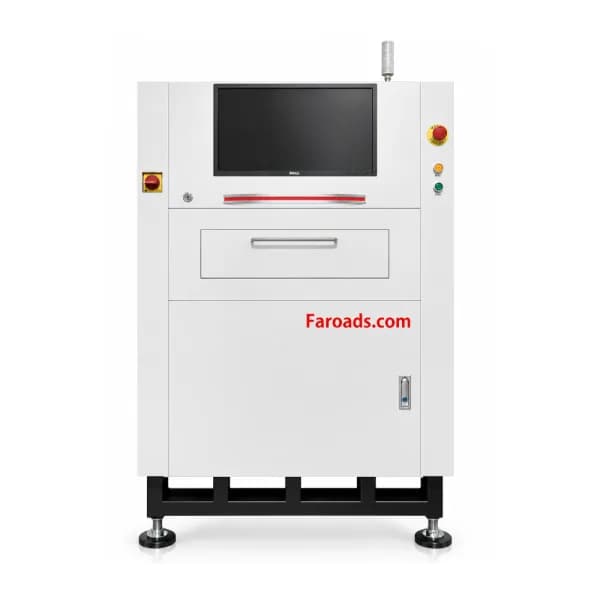
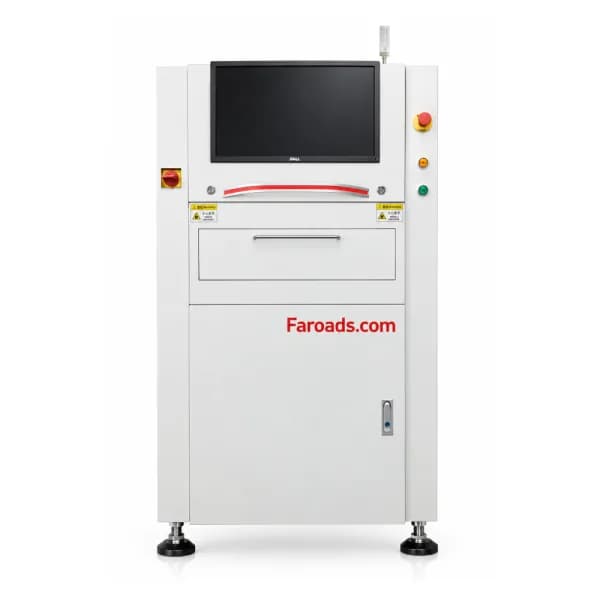
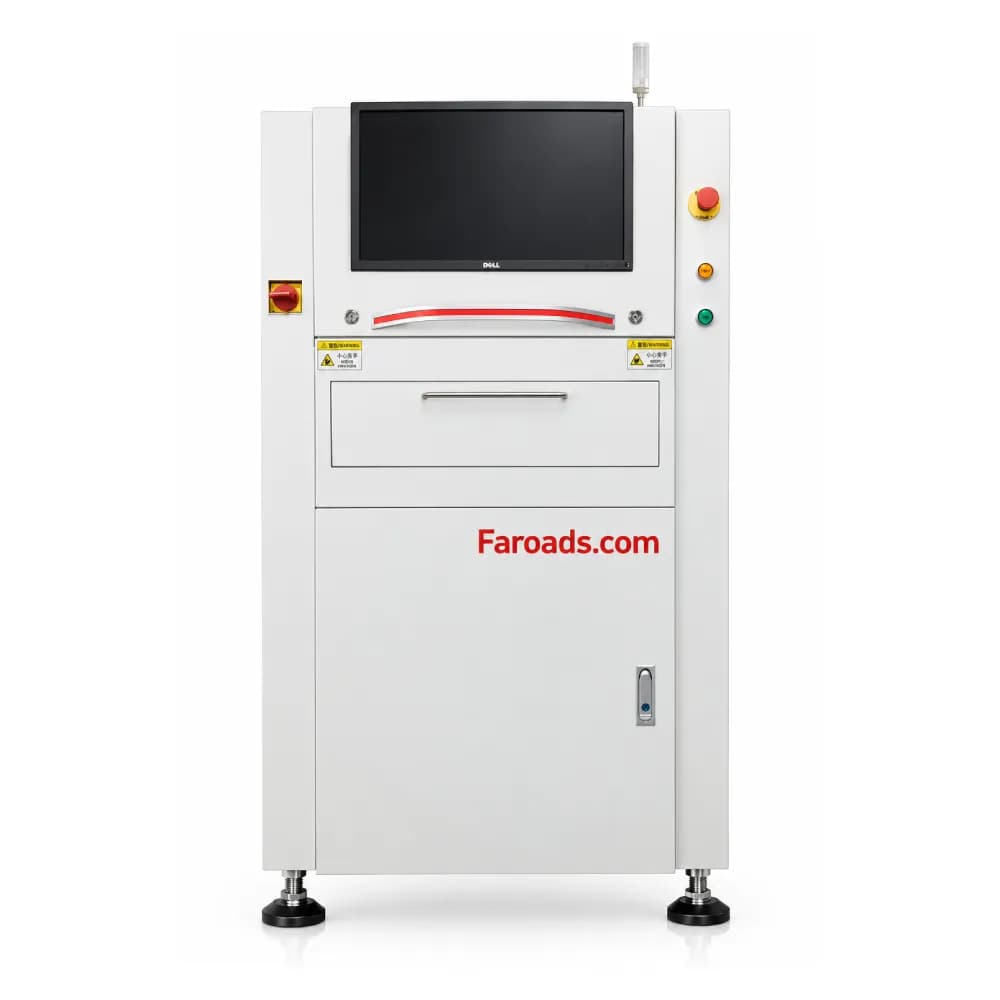
FAROAD lists 2D inline AOI, not 3D AOI. The S510 page lists a 5-megapixel camera (12-megapixel optional), telecentric lens, RGB three-colour lighting and 15 μm resolution (10 μm optional), and states that precise localization and automatic inspection-window positioning are intended to improve accuracy and reduce false alarms. The M400 lists a 12-megapixel camera, 16.5 μm standard resolution and double-sided projection inspection.
For the review workload, the AOI pages also list 1D and 2D barcode recognition with automatic program call-up, SPC data charts, and full-board images under different light sources saved after inspection. Remote review, offline programming and debugging are described as part of centralized line management. None of the pages publishes a false-call rate, so do not accept a figure that cannot be reproduced on your boards. If you are still deciding between technologies, our 2D vs 3D AOI guide explains what each can see.
Run a false-call trial that means something
Use production boards from more than one lot, including any alternate component sources. Add a set of boards with known, documented defects so escapes can be counted as well. Then follow one method for every candidate:
- Build the program from your CAD and BOM data, and record how long it takes.
- Allow an agreed tuning period, then freeze the program.
- Inspect a fixed number of good boards and the known-defect set.
- Count false calls per board, escapes, inspection time per board and review time.
- Repeat on a board from a new lot without re-tuning, to see how robust the program is.
Run the same boards through every machine you compare. If one supplier tunes for days and another for an hour, record both, because tuning time is a real cost after purchase.
Decide where review happens
False calls also depend on layout. An inline AOI with a review station beside it keeps feedback fast but ties a person to the line. Offline review from saved images can serve several lines but delays feedback. Our inline vs offline AOI guide covers that choice. Whichever you choose, assign who owns program changes, how changes are approved, and how call data is reviewed each week.
Write the targets into the purchase
Convert the trial into commitments you can check: the measurement method, the boards used, the maximum review time per board you will accept after tuning, the training included, and how program changes will be supported after installation. Avoid single headline numbers with no method behind them.
Finally, keep the trial data. Saved images of false calls and escapes from the evaluation become the starting library for training reviewers once the machine is installed.
Frequently asked questions
What is a good false-call rate for AOI? There is no universal figure. It depends on board density, component mix and how much review time the line can afford. Set a target from your own review capacity and measure it on your boards. Will a higher-resolution camera reduce false calls? Sometimes, for very small parts. Many false calls come from thresholds, libraries and component variation, which resolution alone does not fix. Should we tune the program to zero false calls? No. Over-loosened thresholds raise escapes. The goal is a balanced program that catches real defects with a review load the team can sustain. Does the FAROAD AOI offer 3D inspection? No. FAROAD lists 2D AOI models (S510, S510D, M300 bottom projection and M400 double-sided projection). For paste height and volume, pair them with the Inpex 510 3D SPI.
Plan an AOI trial with your boards
Send FAROAD your board files, defect history and expected throughput. We will propose a 2D AOI configuration and a trial method that measures false calls and escapes. Review the S510 specifications or request a quote.