SMT Line OEE: How Equipment Choices Set Your Efficiency Ceiling
Overall equipment effectiveness on an SMT line is shaped long before production starts. See how line balance, changeover design and inspection placement set the limit.
5 min read
Overall equipment effectiveness, or OEE, is one of the most common ways to judge how well a production line is used. On an SMT line it is often discussed as an operations metric: something managed through training, scheduling and maintenance. Those things matter. But many of the losses that hold OEE down are built in when the line is specified and bought.
This guide explains OEE in buyer terms and shows which equipment decisions raise or lower the ceiling your team will work under for years.
OEE in plain terms
OEE multiplies three ratios:
- Availability: the share of planned production time the line is actually running.
- Performance: how fast the line runs while it is running, compared with its ideal speed for that product.
- Quality: the share of boards that are good the first time, without rework.
A line that runs most of the time, at close to its ideal rate, and produces few defects scores well. Weakness in any one factor pulls the total down, because the three are multiplied together.
For buyers, the useful insight is that each factor has an equipment side. Operators can recover some losses, but they cannot make an unbalanced line balanced or add inspection the line does not have.
Why line design sets the upper limit
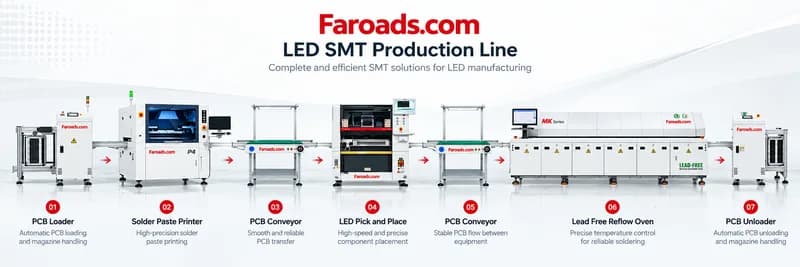
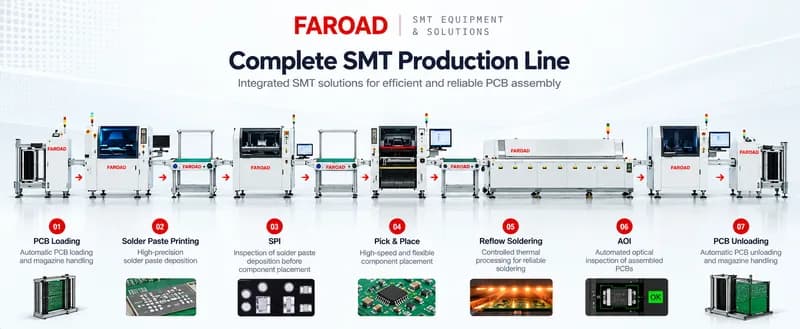
A line's output is limited by its slowest station for each product. If the printer, placement, reflow and inspection stations have very different cycle times, the faster ones wait. That waiting does not always show up as downtime; it often appears as a performance loss that seems impossible to fix.
The same is true for changeovers and defects. A line without the means to prepare the next job offline will lose time at every product change. A line that finds print defects only after reflow will carry those defects through two more process steps. These are design characteristics, and they are cheaper to address at purchase than after installation.
Availability: equipment choices that reduce downtime
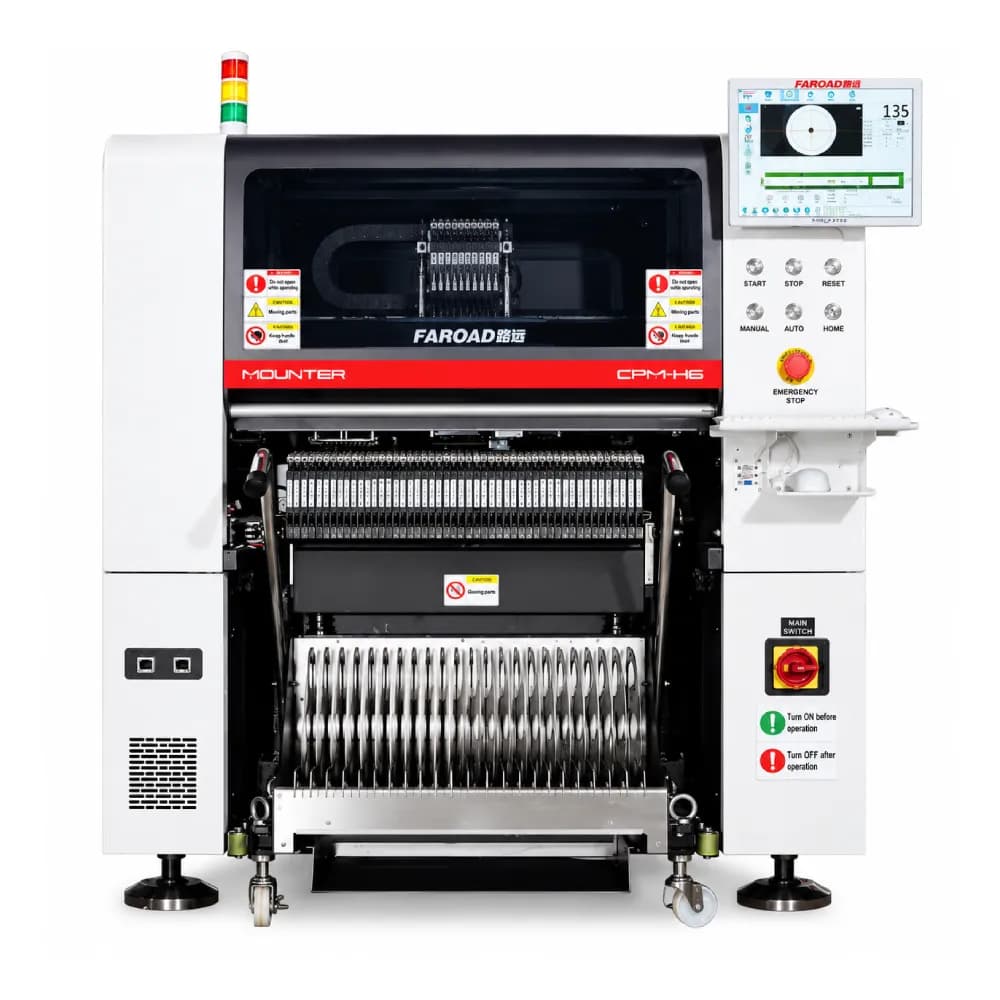
Availability losses on an SMT line come mainly from changeovers, material replenishment, unplanned stops and waiting for boards or programs. Equipment choices that help include:
- Offline programming and setup so the next product can be prepared while the current one runs.
- Feeder carts or exchange systems that let material be staged away from the machine.
- Monitoring that warns before a stop. Real-time vacuum monitoring and an optional ATC automatic nozzle exchange station both appear on the FAROAD CPM-H6 product page.
- Automatic board handling at the line ends, so the line does not stop when an operator steps away.
If changeover is a major loss in your factory, our guide to SMT changeover and feeder investment covers how to size that improvement.
Performance: balance the stations, not just the mounter
The most common performance trap is buying the fastest placement machine available and building the line around it. If the printer cycle, oven length or inspection time cannot keep pace, the expensive mounter spends part of every hour waiting.
Ask suppliers to show the cycle time of every station for your representative boards, not just the placement rate. Look for the station that sets the pace and check how close the others are to it. A well-balanced line with moderate machines can outperform an unbalanced line with one very fast machine. The modeling method is explained in our SMT line capacity planning guide.
Quality: catch defects where they start
Quality losses grow the longer a defect travels. A print defect found at the printer costs a board wipe; the same defect found after reflow may cost rework or scrap.
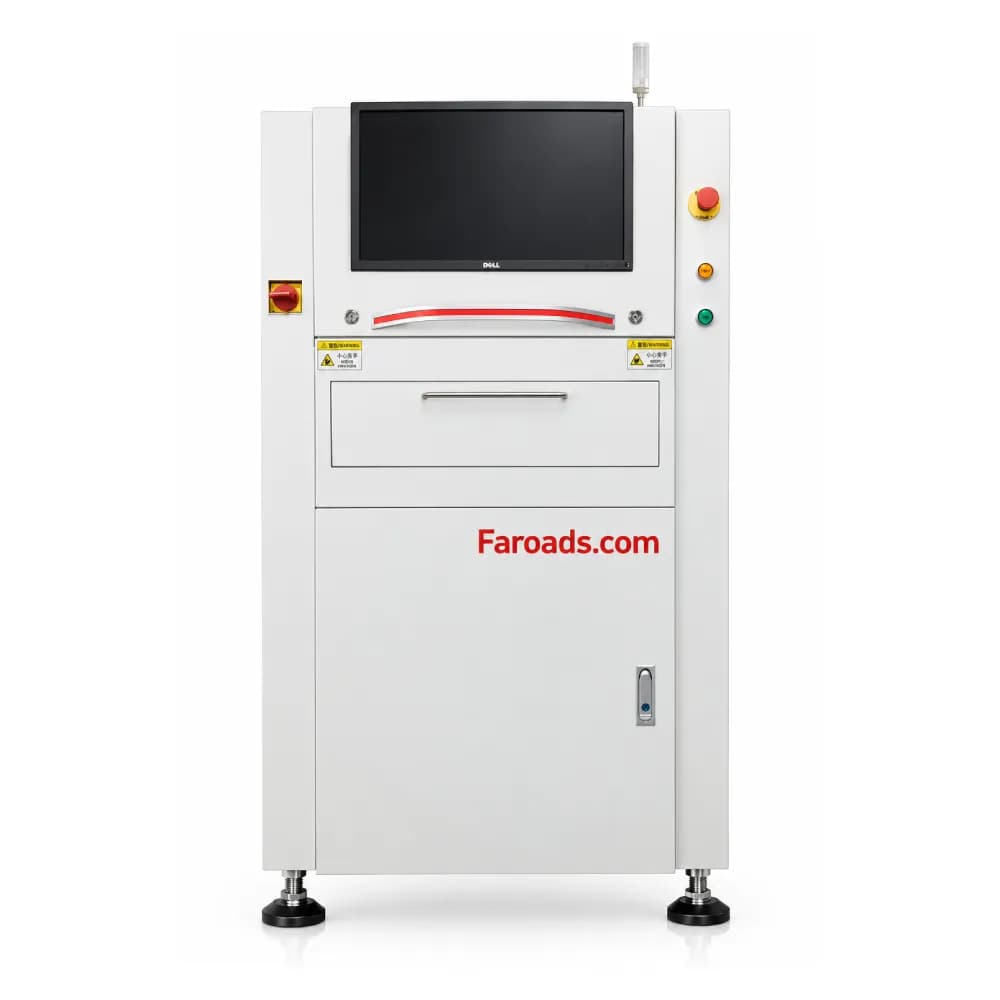
Inspection placement therefore affects OEE directly. Solder paste inspection after printing catches paste problems before components are placed. AOI after reflow confirms the finished joints. Some systems also share data with upstream machines. FAROAD's 3D SPI inspection machine page describes closed-loop process control in which inspection data can be shared with printers and pick-and-place machines for real-time adjustment, as well as data integration with pre- and post-reflow AOI.
For help deciding which inspection stations your products need, see our comparison of SPI and AOI investments.
An illustrative OEE calculation
The figures below are illustrative only and do not describe any specific line.
Suppose a line has 16 hours of planned production. Changeovers and stops take 2 hours, so it runs for 14 hours. Availability is 14 ÷ 16, or 87.5%.
The ideal cycle time for the product is 30 seconds per board, and the line builds 1,500 boards in those 14 hours. At the ideal rate, 1,500 boards would take 12.5 hours. Performance is 12.5 ÷ 14, or about 89%.
Of the 1,500 boards, 1,455 pass first time. Quality is 97%.
OEE is 0.875 × 0.89 × 0.97, or roughly 76%. Now ask which factor equipment changes could improve most. If the 2 hours of stops are mostly changeovers, offline setup may help availability. If the performance gap comes from a slow printer, rebalancing the line matters more than a faster mounter.
What to ask for in a line proposal
- Cycle time for each station on your representative boards.
- The station expected to set the pace, and the margin at the others.
- Changeover features and the expected setup workflow.
- Inspection positions and what data each station records.
- How the line connects to your MES or production records, if required.
Frequently asked questions
What is a good OEE for an SMT line? It depends on product mix, changeover frequency and how planned time is defined. Track your own baseline and compare improvements against it rather than against a general benchmark.
Does adding inspection lower OEE? It can add a station to balance, but catching defects earlier usually protects the quality factor. Size the inspection station so it does not become the pace-setter.
Is OEE the same as line capacity? No. Capacity is what the line can produce in theory; OEE measures how much of that potential is actually used.
Can an existing line's OEE be improved through equipment changes? Often, yes. Start by identifying which factor is lowest and which station causes it.
Request a line designed around your OEE target
Send FAROAD your representative boards, product mix, shift pattern and current loss data if you have it, and request a quotation. Ask for station-by-station cycle times so you can see how the proposed line is balanced before you buy.