Medical PCB Assembly: An SMT Equipment Checklist for Buyers
What medical electronics customers expect from an SMT line, and how to evaluate printers, mounters, reflow ovens and inspection for process control, traceability and documented repeatability, without relying on equipment to make a product compliant.
5 min read
Medical electronics range from patient monitors and diagnostic instruments to wearable sensors and home-care devices. What these boards share is a customer who expects proof: proof that the process is controlled, that every board can be traced, and that a change to the line will not quietly change the product. Equipment cannot make a device compliant on its own, but the wrong equipment can make the evidence very hard to produce. This checklist covers what to look for at each step of an SMT line when medical work is part of your plan.
Start with the quality system, not the machines
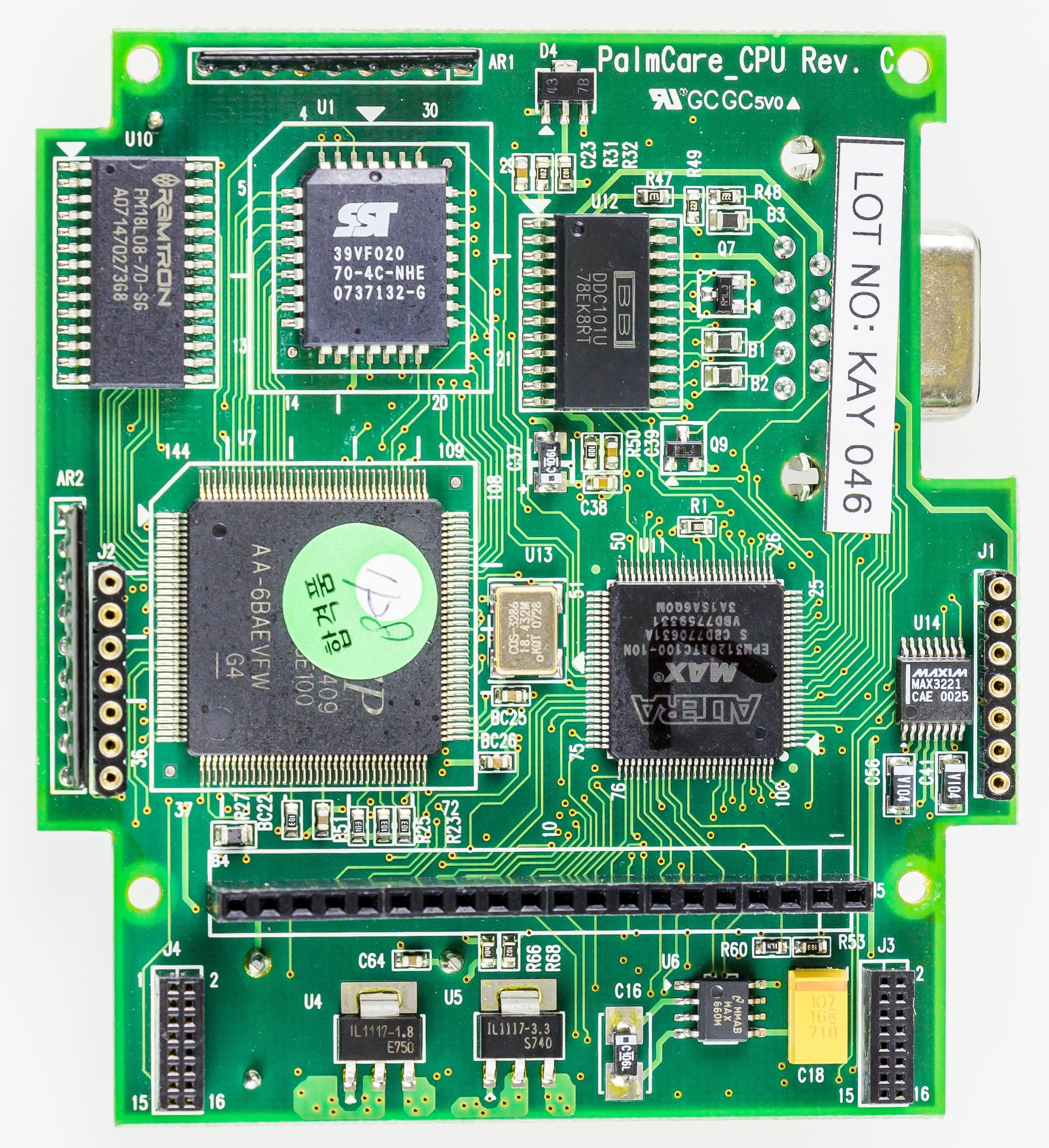
The CPU module of a Medical Econet PalmCare device, a densely populated board of the kind assembled for medical equipment. © Raimond Spekking / CC BY-SA 4.0 (via Wikimedia Commons). Source on Wikimedia Commons, CC BY-SA 4.0. Resized from 3075 × 3363 px to 2194 × 2400 px and recompressed as JPEG for publication; not cropped. This file is shared under the same license.
In the United States, medical device makers work under the FDA's Quality Management System Regulation, which now incorporates ISO 13485 by reference. Many device makers outside the US also use ISO 13485, and workmanship is often specified to IPC-A-610, with Class 3 used for high-reliability products. These obligations fall on the manufacturer and its quality system. Your customers will pass requirements down to you, usually through a quality agreement.
For equipment, that translates into three practical needs:
- Controlled processes: settings that are defined, recalled and protected from casual changes.
- Records: evidence of what each board saw at each step.
- Validation support: the ability to show that a process gives consistent results, and to repeat that proof after changes.
Keep these in mind as you review each machine. FAROAD's medical electronics page is the place to start a conversation about your boards.
Materials and handling
Many medical failures start before a board reaches the printer. Customers will ask how you control the materials that enter the line, so plan these controls alongside the machines:
- Moisture-sensitive parts: track floor life after bags are opened, and bake or dry-store parts that exceed it.
- Solder paste: record lot numbers, refrigerator storage, warm-up time and time on the stencil.
- ESD protection: grounded workstations, carts and packaging throughout the line.
- First-article inspection: check the first board of each lot against the BOM and drawing before running the rest.
Dry cabinets and other storage equipment sit in FAROAD's material storage category, which is listed as coming soon, so source them separately if you need them. Whatever system you use, make sure lot and floor-life data can be tied to the boards that consumed the parts. That link turns a component recall from a guess into a short, defined list of affected serial numbers.
Printing and SPI
Print defects are a major source of first-time failures, so medical customers often expect paste inspection. Look for an automatic printer with vision alignment, recipe storage and stencil cleaning that can be set per product, followed by a 3D SPI that records results against each board. Check that program changes are logged and that operators cannot change critical settings without authorization.
Placement
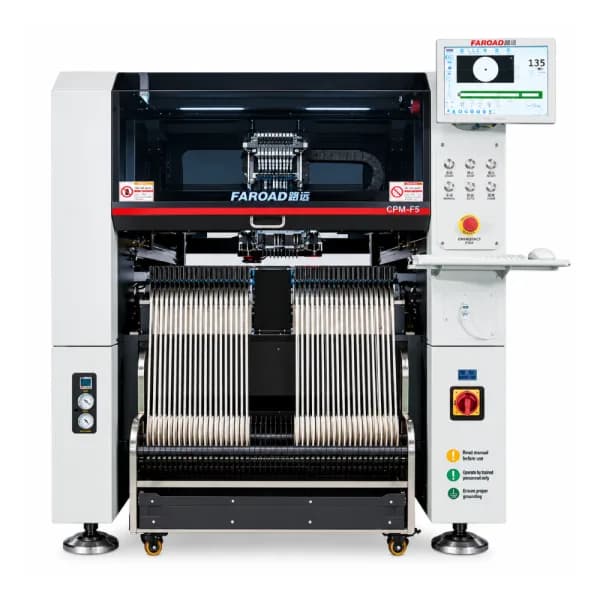
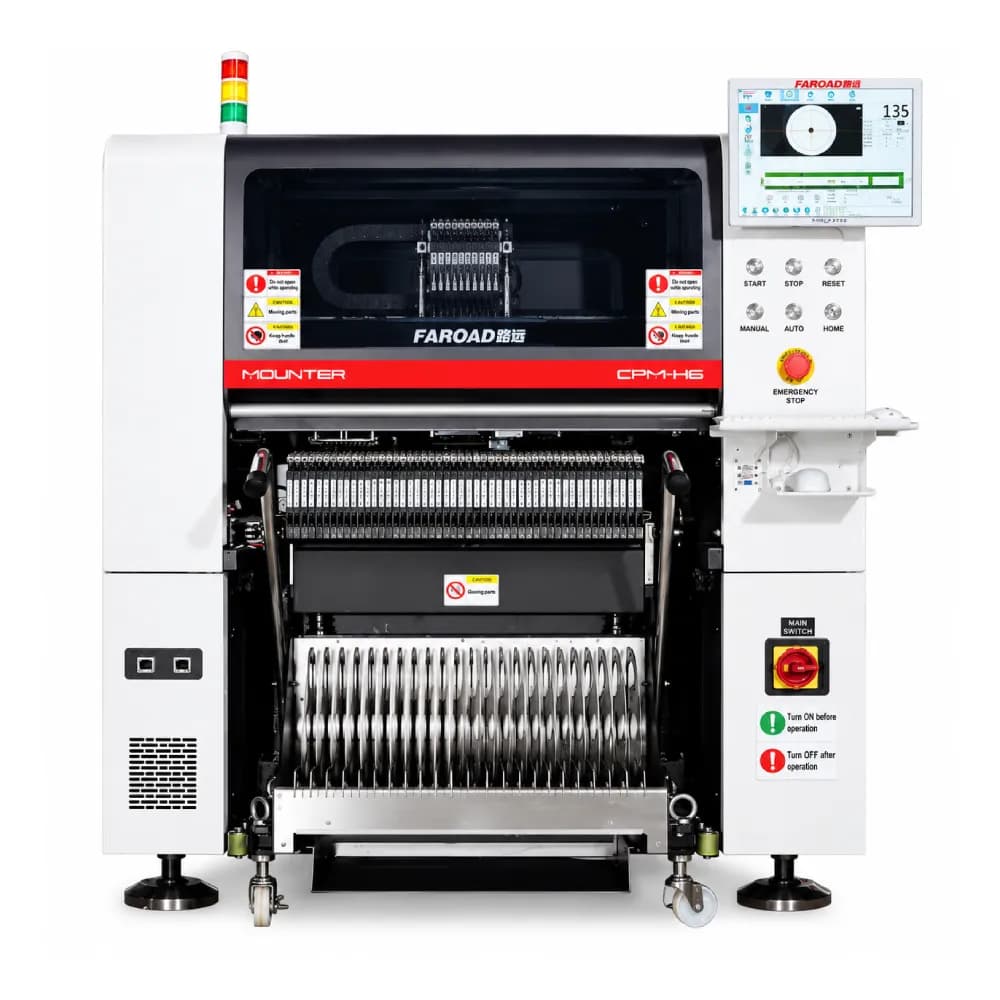
Medical boards are frequently high-mix, low-volume, so programming discipline and feeder verification matter as much as speed. Ask for barcode-based feeder and reel verification to prevent wrong-part loading, nozzle and vacuum monitoring, and the ability to link placement data to a board serial number. FAROAD lists medical devices among the applications for the CPM-H6, a dual-track machine whose listed accuracy is ±0.035 mm in its high-speed setup and ±0.03 mm in its multi-functional setup, where a fixed camera covers larger packages.
Reflow
The reflow profile is one of the process settings customers most often ask to see validated. A suitable oven should store recipes, alarm on abnormal conditions and record what happened. FAROAD's MS-series listings include storage of multiple setting parameters, alarms for temperature abnormalities and board drop or jam, automatic power monitoring and recording, and MES upload over TCP/IP, with boards identified by QR code or barcode. Nitrogen versions add an oxygen analyzer and nitrogen flow meter, useful where atmosphere must be documented. Profile each product with thermocouples, keep the profile report, and re-profile after maintenance or recipe changes.
Inspection

AOI after reflow is the minimum for most medical customers. FAROAD's S510 AOI is a 2D inline system. Its listing covers the common visible defects, from missing, wrong or shifted parts and tombstones to solder faults, bent or shorted pins and exposed copper. It reads 1D and 2D barcodes to call the right program, supports SPC analysis and saves full-board images, which helps when a customer later asks to see the evidence for a specific board.
Be clear about limits. 2D AOI cannot see joints under BGAs, QFNs or shields. Where these joints matter, plan for X-ray inspection, a category FAROAD lists as coming soon, and consider whether your customers require cleanliness testing, since PCB cleaning equipment is also not yet offered.
Traceability that holds together
Individual machine records only help if they connect. Our guide to SMT line traceability and MES explains how to link board serial numbers with component lots, print and placement programs, oven recipes and inspection results. For medical work, confirm early:
- Which data each machine can export, and in what format.
- How serial numbers are applied and read at each station.
- How long records must be kept, and where.
- How rework is recorded against the original board.
Validation and change control
Medical customers usually expect installation, operational and performance qualification of critical processes. Equipment suppliers can help with installation and machine documentation, but the validation plan belongs to you and your customer. Plan for:
- A documented acceptance test on representative boards.
- Calibration and preventive maintenance records for each machine.
- A change-control process for programs, recipes and hardware.
Ask suppliers what documentation comes with each machine, such as manuals, specifications and settings lists, so your quality team can reference it.
Frequently asked questions
Does FAROAD equipment make my line ISO 13485 compliant? No equipment can do that. Compliance depends on your quality system. Machines with recipe control, alarms and data records make the evidence easier to produce. Is AOI enough for medical boards? It covers visible joints. Boards with BGAs, QFNs or shields often need X-ray as well, depending on customer requirements. What records should the oven provide? At minimum, stored recipes and alarm history, with profile reports for each product. MES upload makes linking these to boards easier. Can a high-mix line serve medical customers? Yes, if programming, feeder verification and changeover are controlled and documented.
Plan a medical-ready SMT line
Tell FAROAD about your medical boards, volumes and traceability requirements, and we will propose printer, placement, reflow and inspection equipment to match. Request a quote to start the discussion.