Starting a PCB Assembly Business: Planning Your First SMT Line
For new contract assemblers in North America: how to define the work you will win, size a first SMT line to it, choose a flexible configuration, build quality evidence from day one and phase the investment.
5 min read
Demand for regional PCB assembly in the US, Canada and Mexico has encouraged engineers and small manufacturers to set up as contract assemblers. The first SMT line is the largest single commitment in that plan. Unlike an OEM building its own products, a new assembler does not know exactly which boards will arrive next month, so the line has to be planned around the work it is likely to win rather than a single product. This guide sets out the decisions in a practical order.
Decide what kind of assembler you will be
Before comparing machines, write down the market you intend to serve:
- Prototype and quick-turn work: many small jobs, frequent changes, short lead times.
- Low- to mid-volume production: repeat orders of tens to a few thousand boards for industrial, instrumentation or LED customers.
- Specialist niches: long LED boards, power boards or high-reliability work that needs more documentation.
Each choice changes the line. Quick-turn work rewards fast programming and changeover. Repeat production rewards throughput and stable processes. Niches set specific limits on board size, part types or records. The FAROAD page for EMS and contract manufacturing is a starting point for discussing your mix with us.
Size the line to the work you can win
Estimate a realistic first-year order book, then convert it into placements per shift. As an illustrative example only: 20 jobs a month averaging 300 boards with 250 parts each is 1.5 million placements a month. Spread over 20 single-shift days, that is about 75,000 placements a day, or roughly 10,000 per hour of production time. That is a modest load for a modular mounter, which leaves room for changeovers and growth.
Do the same for board sizes. List the largest panel you expect, the thickest board and the tallest part, because these set limits on every machine. Our guide to budgeting an SMT line explains which costs sit outside the machine prices.
A sensible first-line configuration
For most new assemblers, a single inline line covers the core process:
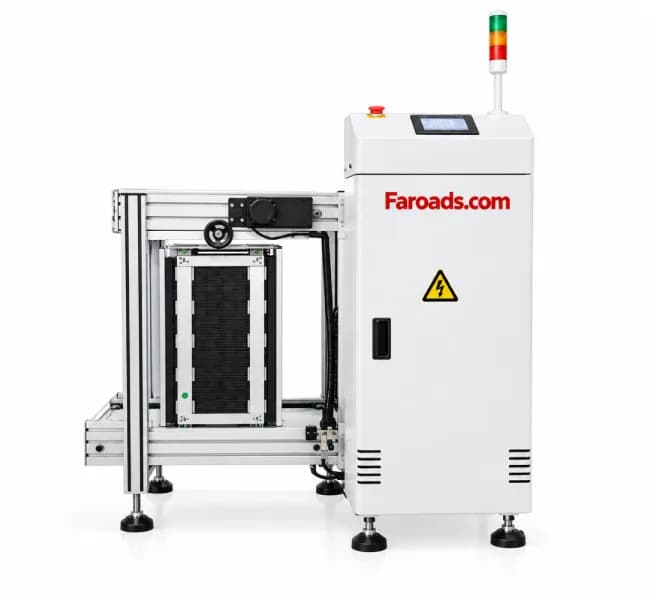
- A loader to feed bare boards.
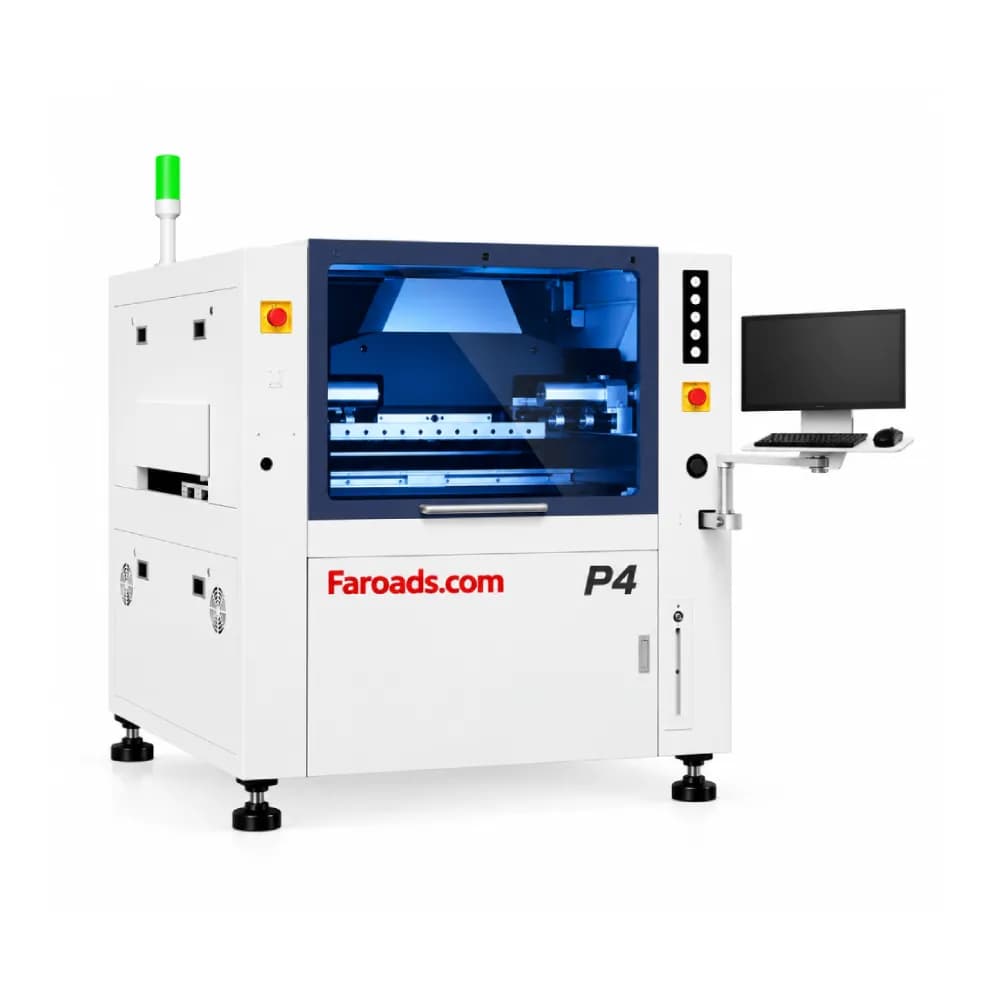
- A fully automatic stencil printer.
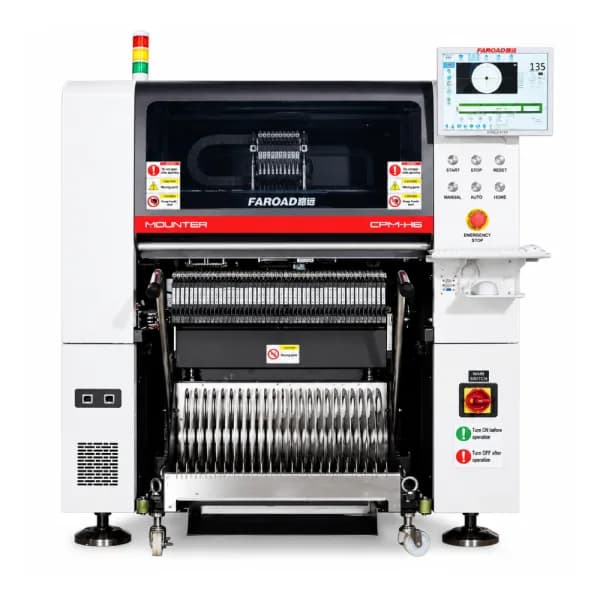
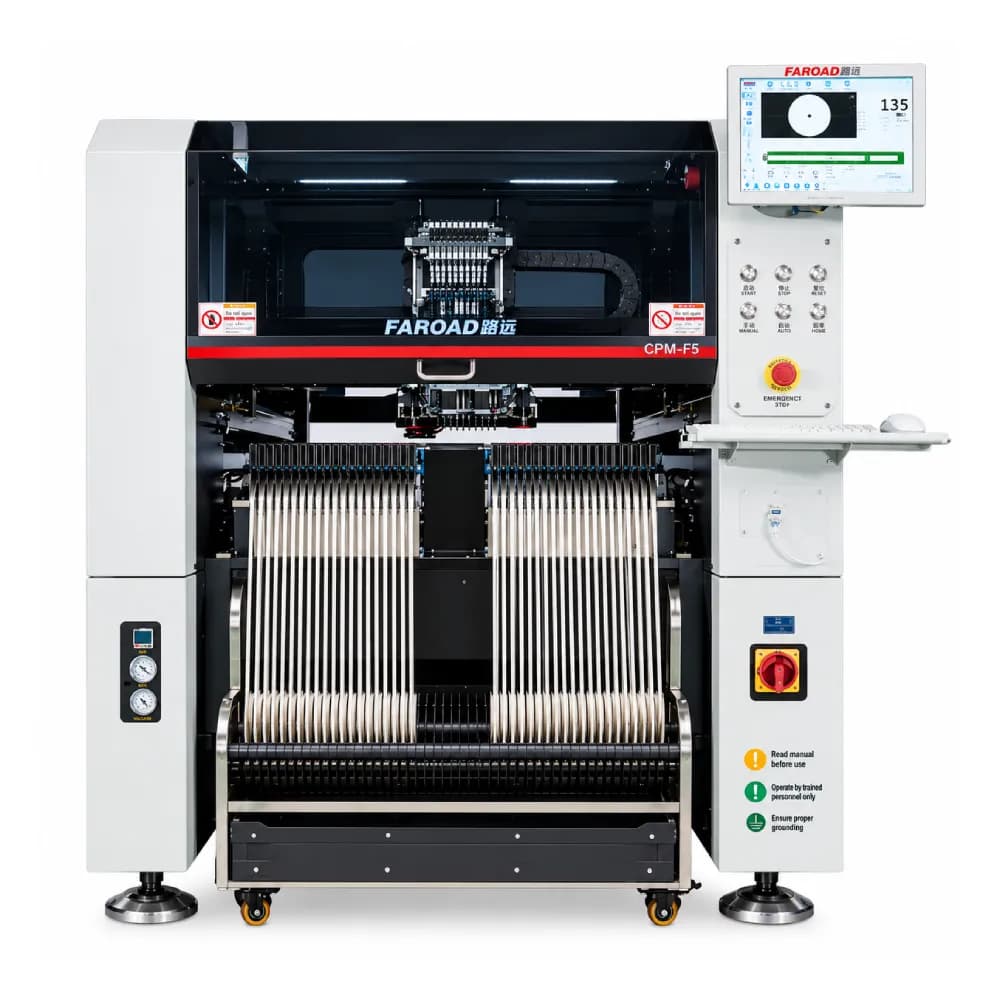
- One flexible pick-and-place machine, with space reserved for a second.
- A convection reflow oven.
- Inspection, starting with AOI after reflow and adding SPI as fine-pitch work grows.
- An unloader or simple buffer at the end.
FAROAD's complete SMT line page describes the standard sequence of loader, printer, SPI, placement, reflow, AOI and unloader, configured to board size, component mix, volume and factory space. Relevant listed models include the compact ML400 mini loader (50 boards, 0.2 m² floor space), the P4 printer (headline print area 340 × 400 mm), the CPM-F5 modular mounter (42,000 CPH optimal, 50 feeder slots single side, 100 optional) and the energy-saving MK-8 oven (8 + 8 zones, 3,142 mm heated length).
Avoid building a paid-work business on desktop placement machines. They are useful for prototypes, but their feeder capacity, speed and repeatability rarely suit customer production.
Flexibility matters more than top speed
A new assembler rarely runs one product all day. Features that save time on every job are worth more than peak CPH:
- Offline programming and a well-managed component library.
- Enough feeder slots to keep common parts loaded between jobs.
- Automatic width adjustment on printer, conveyors and oven.
- A placement component range wide enough for connectors and larger ICs.
Our article on high-mix, low-volume SMT lines goes deeper into these trade-offs.
Plan quality evidence from day one
Customers will judge you on delivered quality and on the evidence behind it. From the first job, plan for:
- Printed and placed first articles checked against the BOM.
- Recorded reflow profiles for each product.
- AOI results linked to board serial numbers or lot numbers.
- A clear rework and nonconformance log.
These records cost little to set up early and are hard to add later, and they are often what wins the second order. Keep a short written procedure for each step as well. When a customer audits your shop, simple, followed procedures and complete records carry more weight than an impressive equipment list.
Phase the investment
Few new assemblers need the full line on day one, but every phase should fit the final layout. A practical sequence:
- Phase 1: loader, automatic printer, one placement machine, reflow oven and AOI. This is enough to take paying jobs with traceable results.
- Phase 2: SPI in front of placement once fine-pitch or hidden-joint parts become routine, or when print defects dominate your rework log.
- Phase 3: a second placement machine, more feeders when the first machine runs most of the shift.
Reserve floor space, power and conveyor height for later stations now. Moving an oven or re-cabling a line later costs production days. Ask any supplier to show the final layout, not only the first purchase, so that today's machines will integrate with tomorrow's.
Facility, people and the first customers
Confirm power, compressed air, floor loading and exhaust before the machines ship; FAROAD ovens such as the MS and MK series list three-phase 380 V supplies, so plan transformers where needed. Hire or train at least one process engineer who owns programming and profiles, plus operators who can load feeders and review inspection results. Start with a few friendly customers whose boards suit the line, and use their jobs to refine your quoting, setup and documentation before you chase larger contracts.
Frequently asked questions
How many pick-and-place machines does a new assembler need? Usually one flexible machine to start, with the line layout leaving space for a second when volume justifies it. Should I buy SPI on day one? If your early customers use fine-pitch, BGA or QFN parts, yes. Otherwise many assemblers start with AOI after reflow and add SPI later. Can a first line handle both prototypes and production? Yes, if programming and changeover are fast. Plan feeder capacity and offline programming around the prototype work, since that is where time is lost. What should I send FAROAD for a first-line proposal? Typical board sizes and thicknesses, a sample BOM, expected monthly volume, shifts and factory floor space.
Plan your first line with FAROAD
Tell FAROAD the work you expect to win, your largest board and your floor space, and we will propose a first SMT line that leaves room to grow. Request a quote to start planning.