SMT Line Ramp-Up: From First Boards to Stable Output
What happens between line acceptance and full production: how to stage product introduction, which measures to track each week, how to build operator skills, and how to recognize when a new SMT line has really stabilized.
5 min read
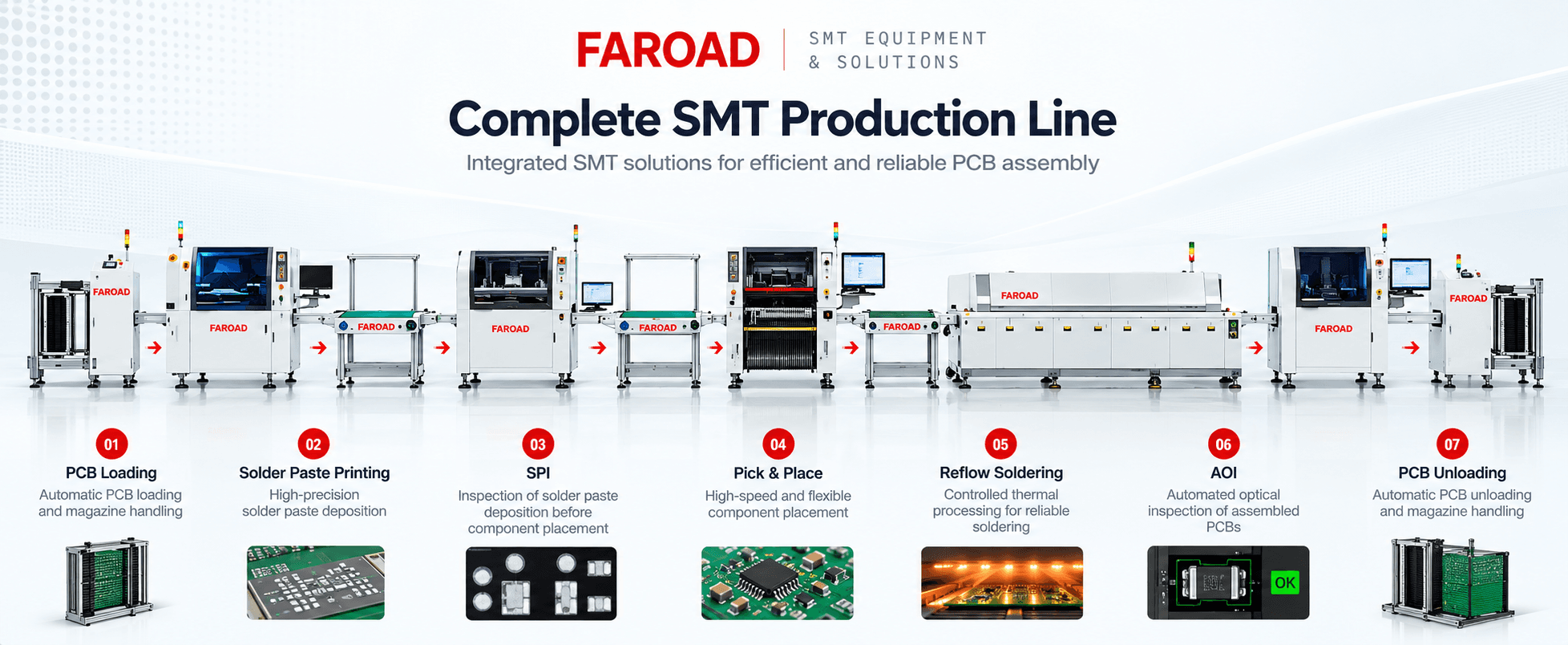
Signing off a new SMT line is a milestone, but it is not the finish. Acceptance proves the machines can run a test board; ramp-up is the period in which your team learns to run your real products at the planned rate, with predictable yield, on every shift. Lines that ramp well usually follow a plan written before installation. Lines that ramp badly tend to load every product at once and spend months firefighting. This guide explains how to structure the weeks after acceptance and how to tell when the line is truly stable.
Acceptance and ramp-up are different jobs
Acceptance answers a narrow question: does the equipment meet the agreed specification on the agreed boards? Our SMT line integration and acceptance checklist covers that stage. Ramp-up asks a broader one: can your people, materials, programs and procedures deliver your products at target cost and quality?
Problems found during ramp-up are rarely machine failures. More often they involve component library gaps, feeder setup mistakes, unprofiled products, missing work instructions and unclear responsibility for decisions. Planning for these is what shortens the ramp.
Stage products from simple to demanding
Loading the full product range on day one hides the cause of every problem. A staged plan introduces products in order of difficulty:
- Pilot product: a stable, mid-complexity board with a mature BOM and good design data. Run it repeatedly until setup and results are predictable.
- Volume products: the boards that will fill most of the line's hours.
- Demanding products: fine-pitch packages, large or heavy parts, double-sided boards and tight profiles.
- Low-volume and prototype work: once changeover routines are proven.
For each new product, complete a first-article build, a reflow profile with thermocouples and a short trial run before releasing it to regular production. Our article on reflow oven profiles explains the profiling step.
An illustrative ramp-up plan
Every factory differs, so treat the following as an illustrative outline rather than a standard. For a single line introducing a handful of products, the plan might look like this:
- Weeks 1–2: pilot product only, day shift, engineers present at all times. Confirm programs, feeder setups and profile. Record every stoppage.
- Weeks 3–4: add the main volume products. Begin daily review of yield and downtime. Write work instructions as procedures settle.
- Weeks 5–8: introduce demanding products, extend to a second shift if planned, and hand routine tasks to operators.
- Weeks 9–12: low-volume products and changeover practice. Engineers move from running the line to improving it.
The milestones that matter are not the dates but the conditions: move to the next stage when the previous one is stable, not when the calendar says so.
Measure the same things every week
A small, consistent set of measures shows whether the ramp is working:
- First pass yield by product, and the top three defect types.
- Availability: planned time lost to stoppages, with causes.
- Changeover time from last good board to first good board.
- Output against plan in boards per shift.
- Open issues with owners and due dates.
Review these in a short weekly meeting with production, process engineering, quality and maintenance. Trends matter more than single days. A line that holds steady results for several weeks across shifts is approaching stability.
Build skills alongside output
The skills that matter most during ramp-up are practical: loading and verifying feeders, starting and stopping programs correctly, reading inspection results, cleaning stencils and recognizing when a process is drifting. Train operators on the actual products, pair new staff with experienced ones, and keep written instructions at each station.
Assign clear owners. One person should be responsible for placement programs and the component library, another for printing and reflow recipes, and another for maintenance schedules. Unclear ownership is one of the most common reasons the same problem keeps returning.
Typical ramp-up problems and first responses
Most early problems fall into familiar patterns, and having a first response ready saves time:
- Frequent placement stops or mispicks: check feeder setup, tape pitch settings and nozzle choice before suspecting the machine.
- Repeated vision rejects on one part: review the library entry, lighting and package dimensions against the data sheet.
- Bridging or insufficient solder on fine pitch: inspect stencil cleaning settings, board support and paste handling, and use SPI data to confirm the trend.
- Tombstones or cold joints on a new product: re-profile with thermocouples on the smallest and heaviest parts.
- Long changeovers: prepare feeders offline, standardize program names and use a written changeover checklist.
Log each problem with its cause and fix. By the end of the ramp, that log becomes a troubleshooting guide for new staff and a record of what the line has learned.
When is the line stable?
Agree on the definition before the ramp starts, so the answer is not a matter of opinion. A practical definition combines several conditions held over consecutive weeks: first pass yield at or above target for each product, availability within plan, changeovers meeting target times, and no open issues that block production. Once these hold, the line moves from ramp-up into continuous improvement.
What to agree with your equipment supplier
FAROAD's complete SMT line planning covers requirements review, equipment selection, line configuration, factory layout, and installation and commissioning support according to the project scope. Before ordering, confirm in writing what is included: training content and duration, documentation, spare parts, and what help is available after commissioning. Clear scope avoids surprises during the ramp.
Frequently asked questions
How long does an SMT line ramp-up take? It depends on product complexity, team experience and how many products are introduced. Plan in stages and move on when results are stable rather than by fixed dates. Should we run a second shift during ramp-up? Only after the first shift is stable and work instructions exist. Adding shifts too early spreads experienced staff thin. What causes most ramp-up delays? Programming and library gaps, unprofiled products, material issues and unclear ownership, more often than machine faults. Which measures matter most? First pass yield, availability, changeover time and output against plan, reviewed weekly.
Plan your ramp-up before the line arrives
Share your products, volumes and timeline with FAROAD when you plan a new line, and we will help you match the configuration to a realistic introduction plan. Request a quote to begin.