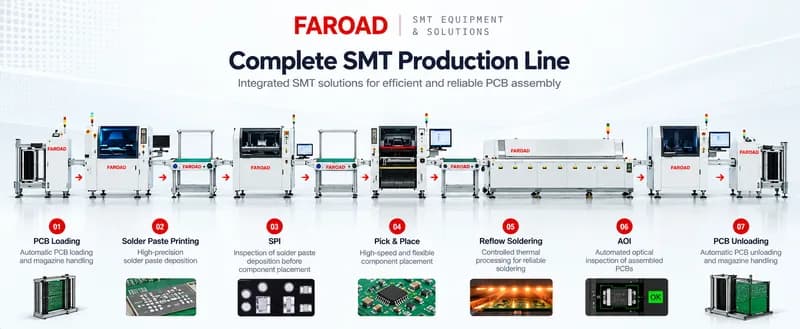
Double-Sided SMT Assembly: What to Specify Before You Buy
How to specify a double-sided SMT line: the second-side process route, oven and AOI clearance for already-populated bottoms, inspection on both sides, and the flip and handling equipment you must plan for.
5 min read
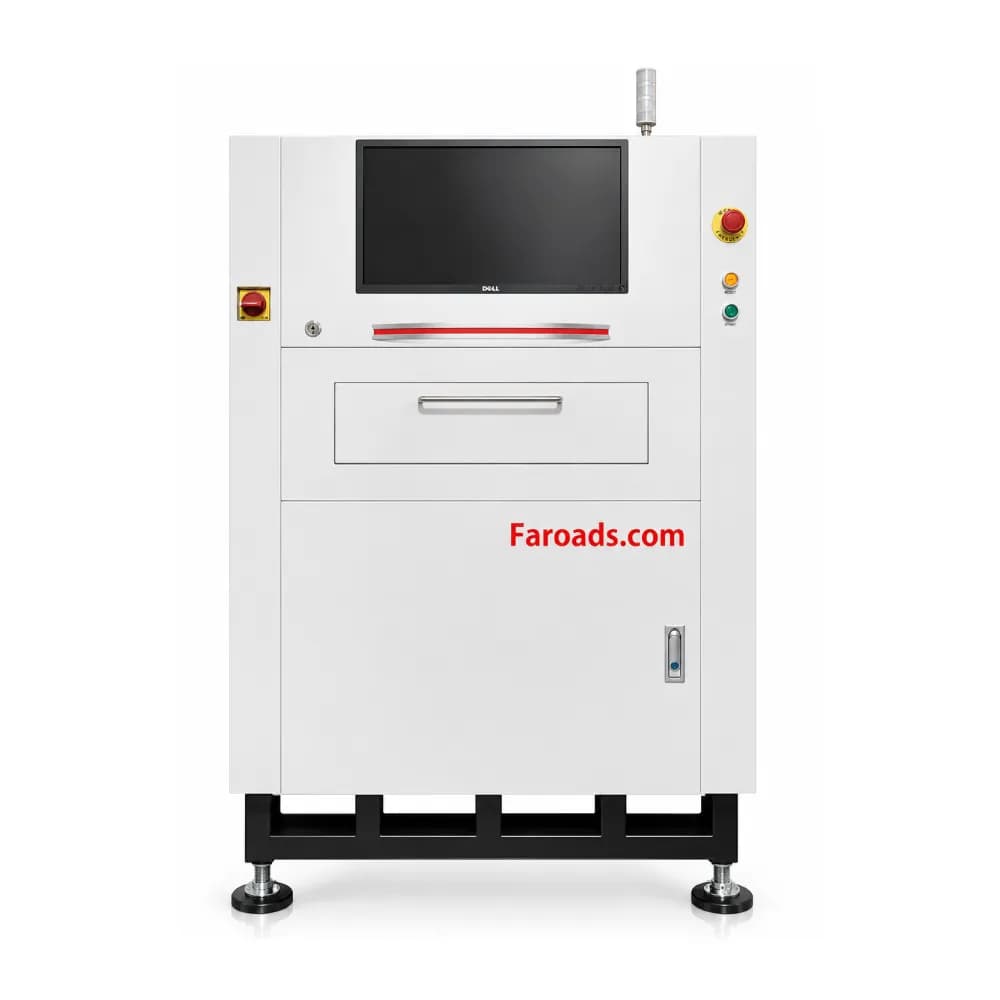
This article is about specifying an SMT line that must process both sides of the board: the second-side process route, clearance for parts that have already been reflowed, inspection of two populated faces, and the flip and handling steps that sit between the two passes. It is not a 2D-versus-3D technology comparison, and it is not a decision about whether the station sits in the line or offline. Place those questions in inline or offline AOI.
Map the second-side route before you buy
Write the route down before you compare machines. A typical two-sided flow is first-side print, placement and reflow, a flip, then second-side print, placement and reflow. Some parts are restricted to one side because they cannot take a second reflow, and some boards need inspection after one pass or both. If that sequence is not written into the quotation, you can end up with a capable printer and mounter that still cannot run the second pass without a later retrofit.
The flip itself is part of the line, not an afterthought. FAROAD's listed PCB handling models are a magazine loader, a magazine unloader and a compact mini loader. The handling category text mentions conveyors and buffers, but no conveyor, buffer or board flipper is listed as a sold model. If your process needs an inverter, plan that machine with a handling supplier and require it to match the line's transfer height, direction and fixed edge. Do not assume the loader or unloader will turn the board.
What changes after the first reflow
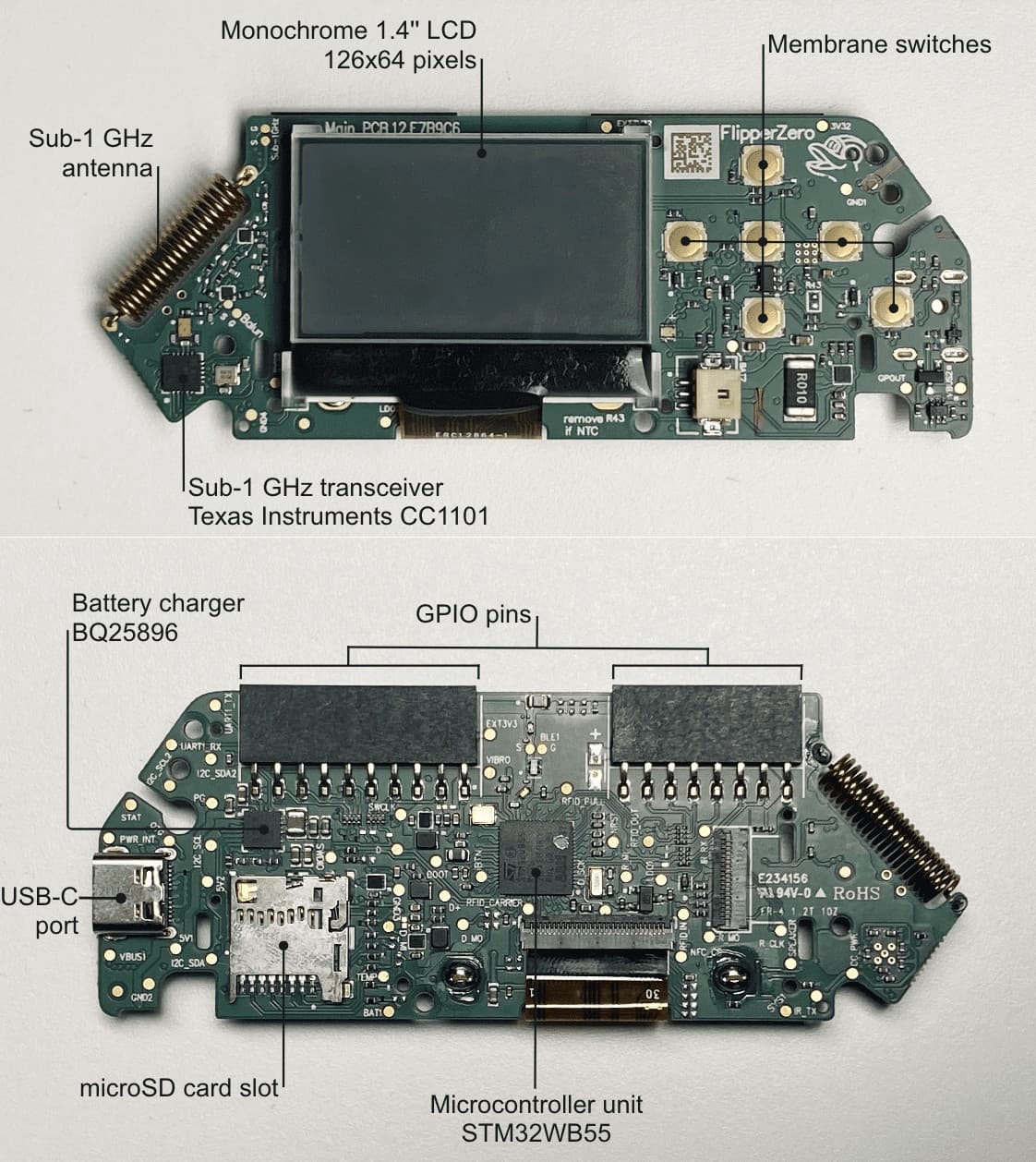
Both sides of a densely assembled SMT board. Photo: Turbospok. Source on Wikimedia Commons, CC0 1.0. Converted from PNG to JPEG for publication; not cropped or resized.
Once the first side is populated, the second pass is no longer a bare-board problem. The oven, the inspection station and any support tooling have to clear the parts that now hang underneath, and they have to do it without knocking, scratching or overheating those joints.
On FAROAD's listed Inpex M400, standard top clearance is 50 mm and standard bottom clearance is 30 mm, with a maximum adjustable bottom clearance of 50 mm. The S510 lists 30 mm standard on both sides, adjustable to 50 mm. Those figures are only useful if you compare them with the tallest first-side component in the second-pass orientation, including any residual warpage. Use the checks in PCB warpage on the SMT line when the first reflow already bows the panel.
Conveyor choice matters for the same reason. A mesh-belt oven can be the right answer for some lighting and long boards, but underside components are a documented caveat for mesh-belt transport. If the second pass must carry a populated bottom across the oven, read the conveyor trade-off in rail or mesh-belt reflow and confirm the support method on a loaded profile, not on an empty belt.
Inspection for two populated sides
A two-sided board can require inspection of the bottom, the top, or both, and the station you buy has to match that plan. FAROAD lists the Inpex M300 for bottom projection and the Inpex M400 for double-sided projection. The S510 is listed as a single-track inline machine; a dual-track S510D is listed as an option on that page. All of the listed FAROAD AOI models are 2D. They can inspect visible features on the side they are built to see. They cannot measure hidden solder joints under a BGA or a similar bottom-termination package.
If you need a bottom-side or double-sided 2D station, say so in the quotation and confirm the clearance, board envelope and cycle time on your actual panels. Use the inline-versus-offline guide when you are choosing projection type, and use the published machine-specification checks when you are buying the station itself. If the second-side process depends on height measurement or hidden-joint inspection, you will need equipment FAROAD does not list.
Keep both passes inside one envelope
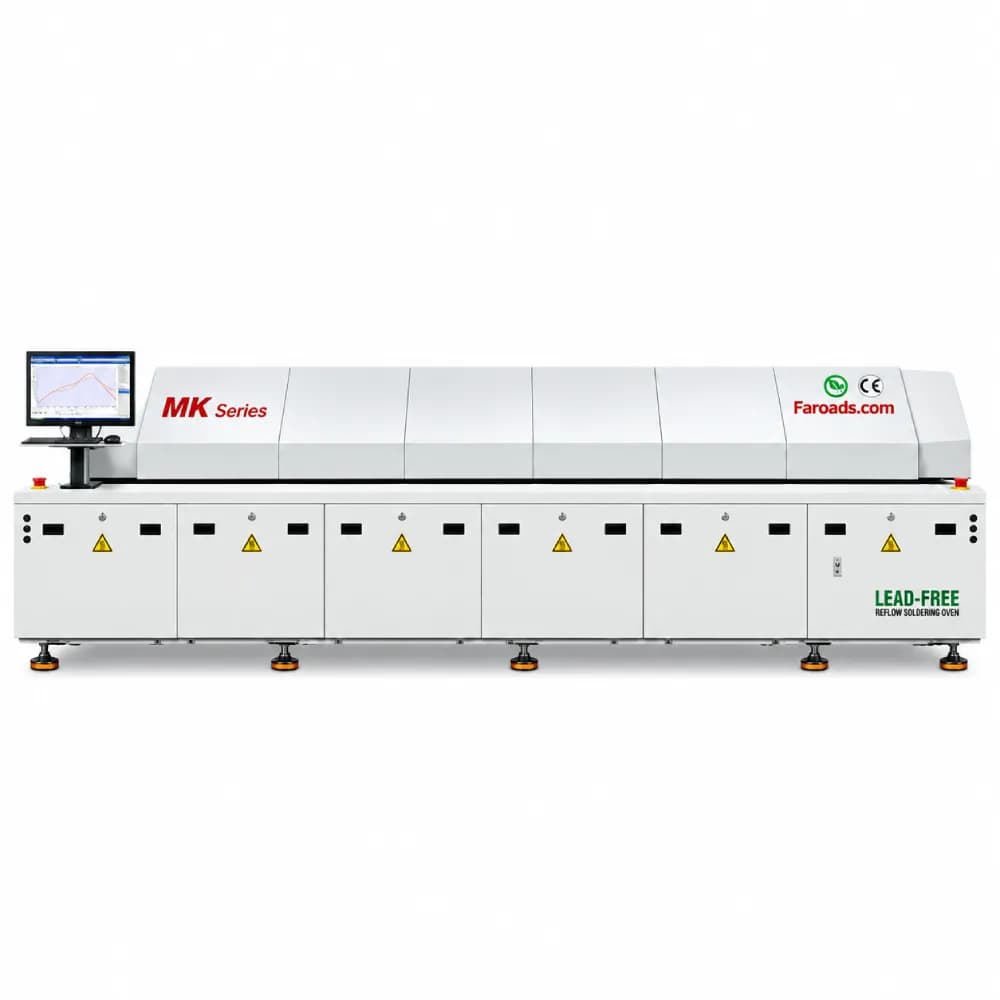
FAROAD MK series rail reflow oven.
The same panel has to pass every station twice, and a non-square panel may present a different length and width after the flip. Collect one envelope—the shortest and longest edges, the width limits, thickness, mass and edge keep-out—and apply it to the printer, placement machine, oven, AOI and handling equipment in both orientations. FAROAD's listed magazine loader and unloader accept boards from 50 × 50 mm to 400 × 330 mm. Several printers and placement machines list larger envelopes than that, so a board that fits the mounter can still fail at the loader if you have not checked the magazine.
The mini loader lists a permitted height for double-sided PCBs of 0.1–20 mm. That is a useful figure to test against a populated second-side stack, but it is not a substitute for a trial on your magazines and your tallest assemblies. Details of how to compare loaders and unloaders are in the PCB loader and unloader buying checklist.
Confirm the line on a two-sided trial
Ask for a timed trial that includes both passes, not only a first-side demonstration. Set the pass criteria before the demo: registration of the second-side print to first-side features, clearance of underside parts through the oven and AOI, handling without damage at the flip, and cycle time for the complete route. Include a board at the edge of your size and height window, and include any product that already causes warpage or tombstoning after the first reflow.
If the flipper is bought from another supplier, make one party responsible for the hand-off height, direction and signals between that machine and the FAROAD stations on either side. A successful first-side trial does not prove the second pass.
Frequently asked questions
Does FAROAD sell a board flipper or inverter? No. The listed handling models are a magazine loader, a magazine unloader and a mini loader. If your route needs a flip, specify that machine separately and require it to match the line's transfer height, direction and fixed edge.
Can I inspect both sides of the board with a FAROAD AOI? The listed M400 is a double-sided projection machine, and the M300 is listed for bottom projection. Both are 2D. Confirm clearance, board size and the inspection program on your panels. Hidden joints still need a method FAROAD does not list.
Do I always need a rail oven for double-sided boards? Not always, but underside components are a reason to be careful with a mesh belt. Compare the conveyor with the tallest first-side parts and prove the second-pass profile on a loaded board.
Will my standard magazine loader still work after the second side is populated? Only if the populated height, weight and size still sit inside the loader or unloader envelope, including magazine clearance. The mini loader's listed double-sided height range is a starting check, not a proof. Test the actual magazines.
Request a double-sided line review
Send FAROAD the first-side and second-side process route, the tallest components on each side, panel size in both orientations, and any flip or inspection requirement. We will propose a configuration that stays inside the listed envelopes and identify any handling item that must be sourced separately. Request a quote to start that review.