SMT Line Facility Requirements: Power, Air, Exhaust and Floor Space
What to prepare in the factory before SMT equipment arrives: electrical supply, compressed air, exhaust and nitrogen, floor loading and access, and transfer height across the line.
6 min read
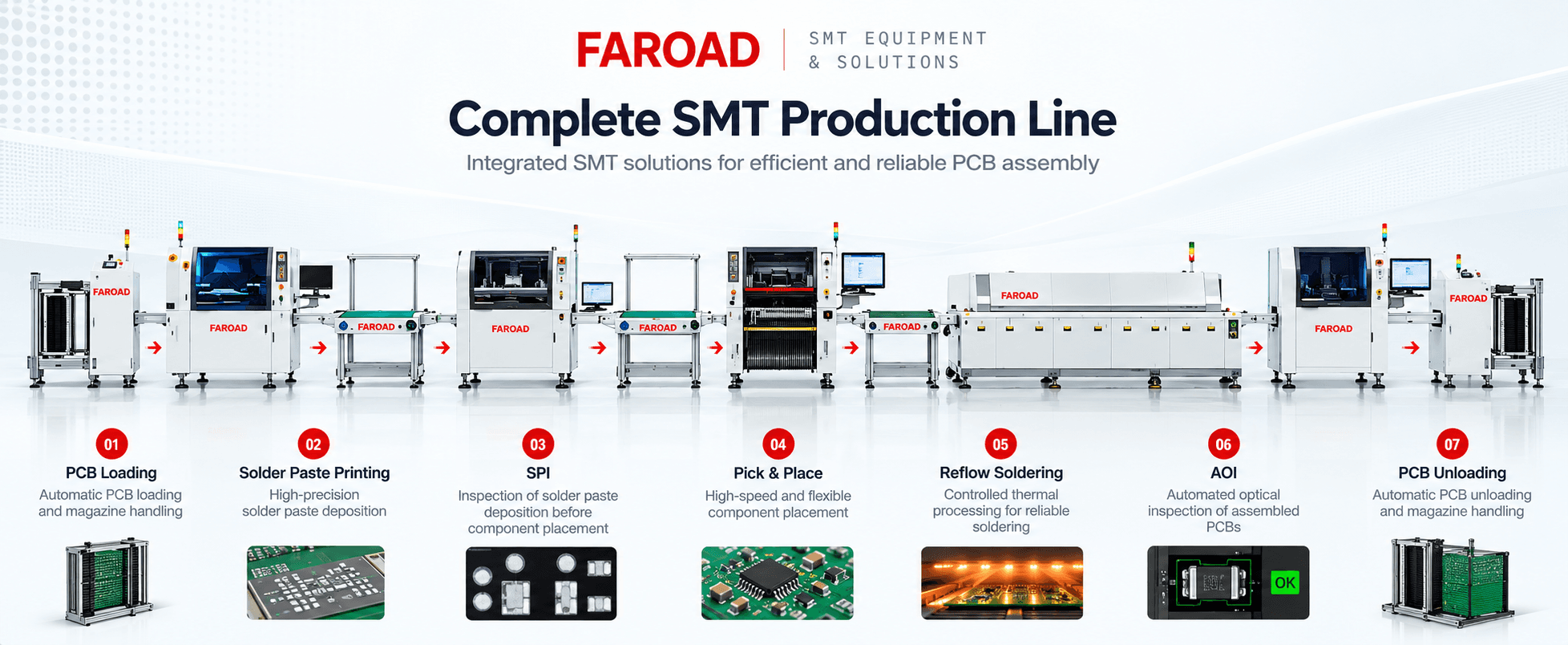
This article is about making the factory ready for the machines: electrical supply, compressed air, exhaust and nitrogen, floor space and access, and a common transfer height. It is not about proving SMEMA hand-shakes or factory acceptance after the line is installed. Those tests belong in SMT line integration and acceptance. A line that passes a demonstration and then waits for power, air or an exhaust duct is not ready for production.
Finish the utility brief before the machines ship
Build one utility brief that travels with the purchase: voltage and available capacity at the proposed feeder, compressed-air pressure and flow, any exhaust or nitrogen connection, floor loading and the route the machines will take into the building. Then map every machine in the quotation onto that brief. If a figure is not on the product page, require it in writing. Do not copy generic factory tables from another supplier and treat them as FAROAD requirements.
A mismatch is cheaper to fix before the oven is in place than after. Facility work also belongs in the budget, as set out in how to build an SMT line equipment budget.
Electrical supply
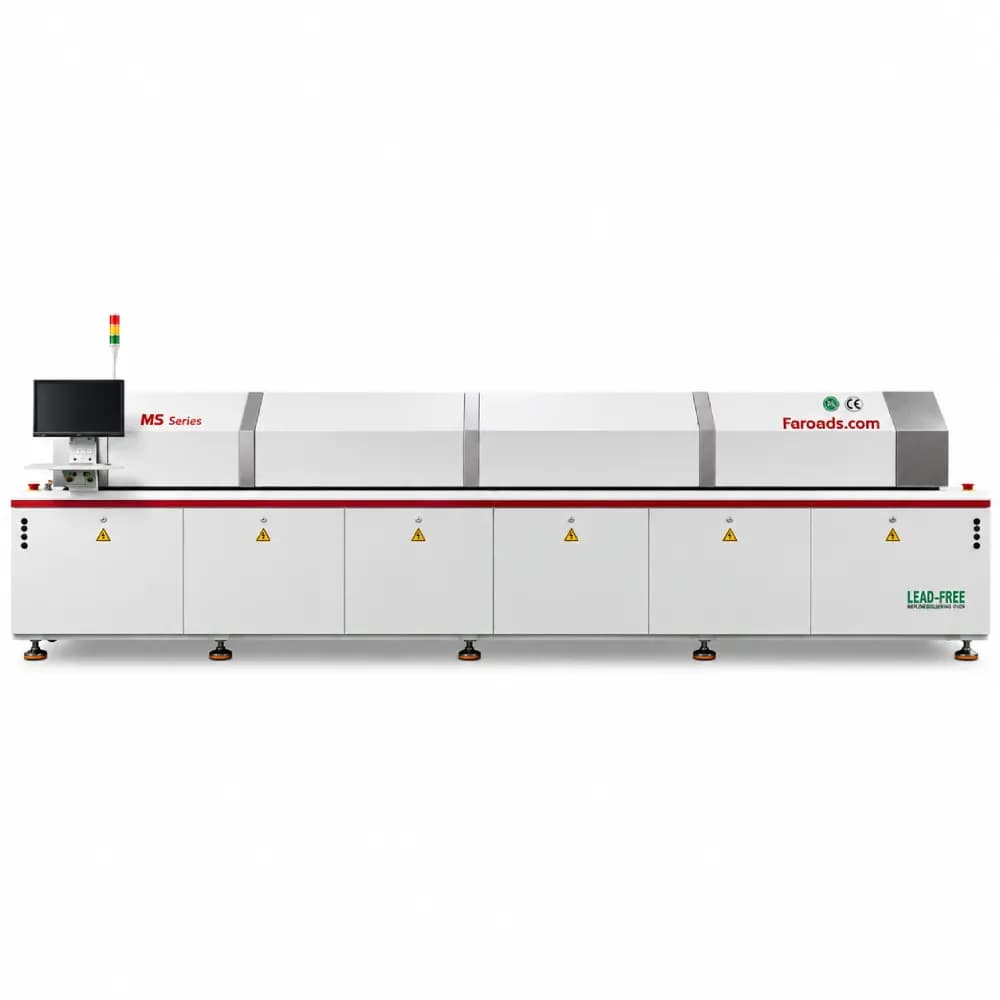
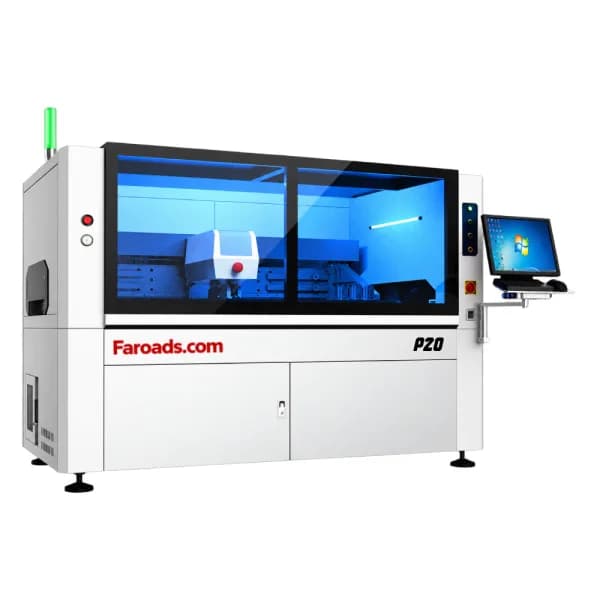
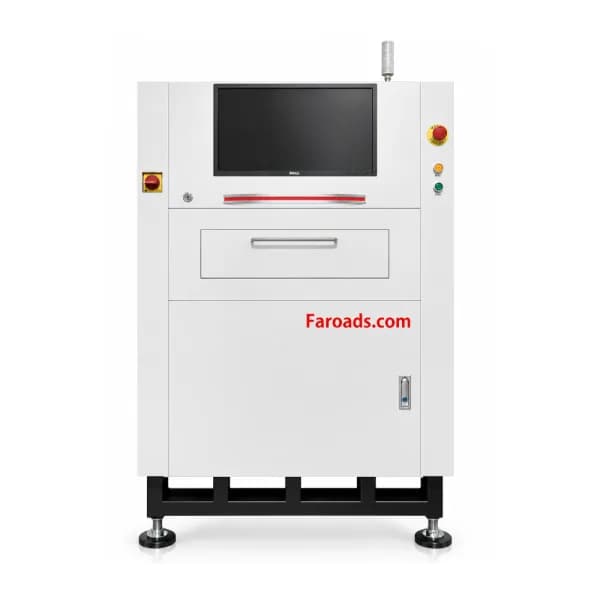
FAROAD lists different supplies on different machines, so a single "shop power" assumption is not enough. The CPM placement machines list AC 380/420/480 V, with consumption of 2 kW on the F6, 2.5 kW on the F5, 4 kW on the HX40, and 5 kW on the H6 and S5. The P5 and P6 printers list 2 kW; the P20 lists 3 kW on 220 V ±10%, single phase, 50/60 Hz. The MS-10 oven lists a three-phase 380 V, 50/60 Hz supply, with 32 kW starting power and 9 kW normal operating power. The MK-10 lists 30 kW starting power and 9 kW normal operating power. Inpex AOI pages list AC 220 V, 50/60 Hz. The L400 loader and UL400 unloader list 100–230 VAC, single phase, with a maximum of 300 VA. The mini loader lists single-phase 220 V and less than 36 W.
The starting load of a reflow oven is much higher than its listed running load. Size the feeder and any transformer for the starting figure, and confirm how many ovens or machines may start at once. North American sites should also confirm whether the listed 380/420/480 V options match the plant supply, or whether a transformer is included in the project. Put the actual supply on the quotation rather than inventing a panel schedule here.
Compressed air
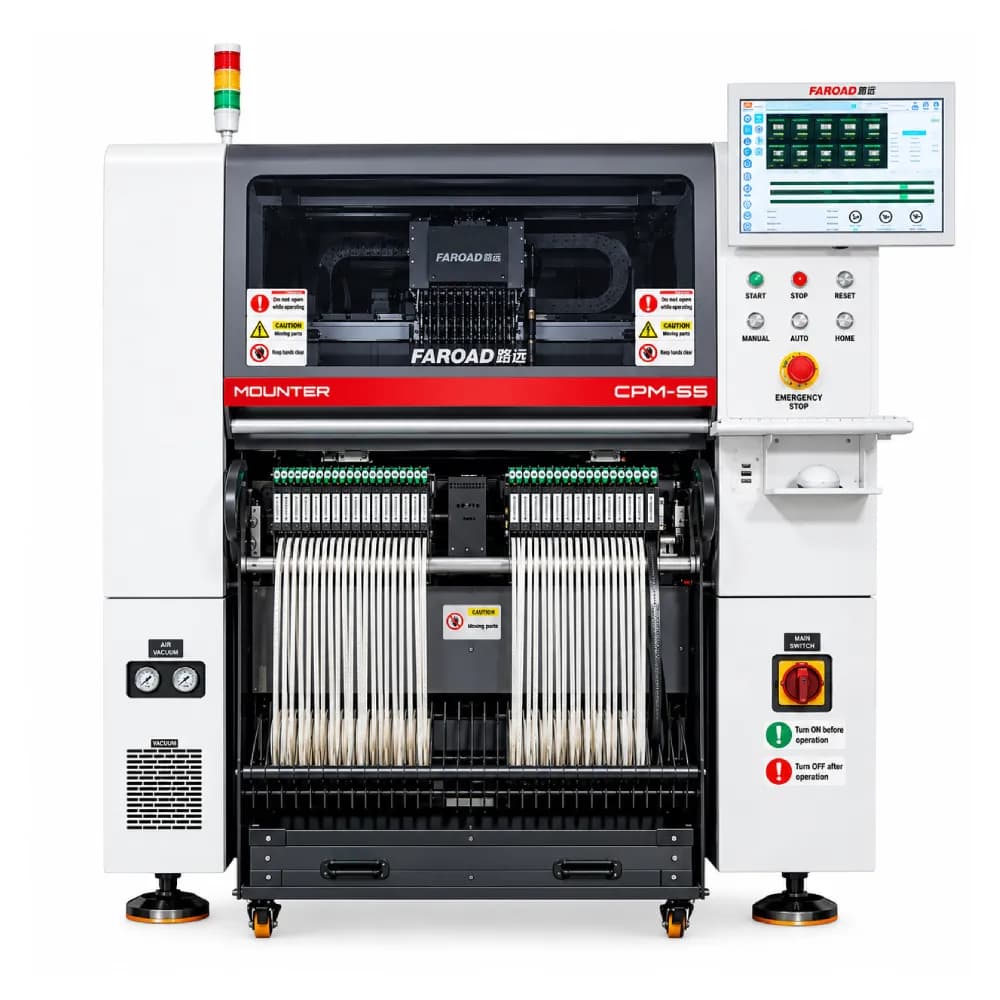
Published air figures also arrive in mixed units. The F5 and F6 list 0.5 MPa at 150 L/min. The H6, S5 and HX40 list 0.5 MPa at 300 L/min. The P-series printers list 4.5–6 kgf/cm². The L400 and UL400 list 4–6 bar at a maximum of 10 L/min. Inpex AOI pages list 0.5 MPa. These numbers sit in the same pressure family, but they are not written the same way, and the flow figures are not interchangeable.
Have the supplier convert every published value to the units your compressor and dryer use, then add the machines that will run at the same time. Ask whether the machines require oil-free, dry air; FAROAD's listed product tables do not all state that quality, so it should be confirmed rather than assumed. A printer that sees oil or water in the air will not be saved by a correct pressure reading.
Exhaust, nitrogen and heat
Reflow ovens add heat and process atmosphere to the room. The MS-10 lists an air volume of 25 m³/min. That figure is published under the oven's heating and cooling specification. It is not a listed building-exhaust connection, and it should not be treated as a duct CFM requirement. FAROAD's product pages used for this article do not publish a clear facility exhaust flow for the oven discharge. Require the exhaust duty, duct size and connection point in the installation data, and have your mechanical contractor size the duct from that data, not from a generic rule of thumb.
Nitrogen is a separate utility, and only when you buy it. The MS-10N page names an O2 analyser, a nitrogen flow meter, and an externally mounted water cooler. If that option is in the order, plan generator or bulk supply, purity, and the cooler services before the oven ships. The investment case is covered in the nitrogen reflow cost model. Do not infer a nitrogen drop from the energy-saving MK pages; those pages do not list it. Operating power still matters for the electrical and heat load, as discussed in energy-efficient reflow ovens.
Floor space, weight and access
The machines have to fit the room, and they have to get into the room. The MS-10 is listed at 6136 × 1450 × 1540 mm and about 3,050 kg. The MK-10 is listed at 5,990 × 1,420 × 1,490 mm in the single-track version. Placement machines in the CPM series are listed at roughly 1,380 mm long, about 1,800 to 2,760 kg depending on the model and whether a cart is included. The P20 printer is listed at 2,600 × 1,235 × 1,545 mm. The L400 loader is listed at 1,670 × 850 × 1,250 mm and about 150 kg; the mini loader is listed at 460 × 450 × 1,750 mm and 0.2 m² of floor space.
Use the listed dimensions and weights, then add service access, electrical and air drops, and the path from the dock to the final position. FAROAD does not publish a floor-loading rating on these pages. Have your facilities engineer convert the listed weights and footprints into a floor load and confirm it against the slab. An oven that fits on a drawing can still be blocked by a door, a lift or a trench.
Transfer height and the room environment
Most FAROAD transport heights cluster around 900 mm, but the tolerance is not identical on every page. Ovens and Inpex AOI list 900 ± 20 mm. The P-series printers list 900 ± 40 mm. The L400 and UL400 list 900 ± 30 mm, or a customized height. A few millimetres of mismatch at every hand-off will show up as jams and edge damage. Specify one line height and require every station, including any third-party flipper or conveyor, to match it.
FAROAD's listed product tables used for this article do not publish a factory temperature or humidity window. Do not adopt another vendor's environmental table as a FAROAD specification. Ask for the environmental limits in the installation documentation, and keep paste, stencil and moisture-sensitive parts inside the controls you already use for those materials.
Frequently asked questions
Can I size the oven feeder from the listed running power? No. Use the listed starting power as well. The MS-10 lists 32 kW starting and 9 kW operating; the MK-10 lists 30 kW starting and 9 kW operating. Confirm how the oven starts and whether more than one machine can start together.
Is the MS-10's 25 m³/min air volume a building exhaust requirement? No. That figure is listed with the oven's heating and cooling specification. Ask for the building-exhaust connection and duty in the installation data and size the duct from that.
Do I need a nitrogen supply for every FAROAD oven? No. Nitrogen is listed on MS-series N models. If you have not ordered that option, do not install a drop on the assumption that the oven requires it.
Will a standard 900 mm line height match every FAROAD machine? It is the common listed height, but the tolerances differ, and some pages allow a custom height. Specify one height for the whole line and confirm it on every station, including any non-FAROAD handling equipment.
Request a facility-ready line proposal
Send FAROAD your available supply voltage, compressor capacity, floor area, access route and the line height you intend to hold. We will map the listed utilities and footprints for the proposed machines and flag any figure that must be confirmed in the installation data. Request a quote to start that review.